




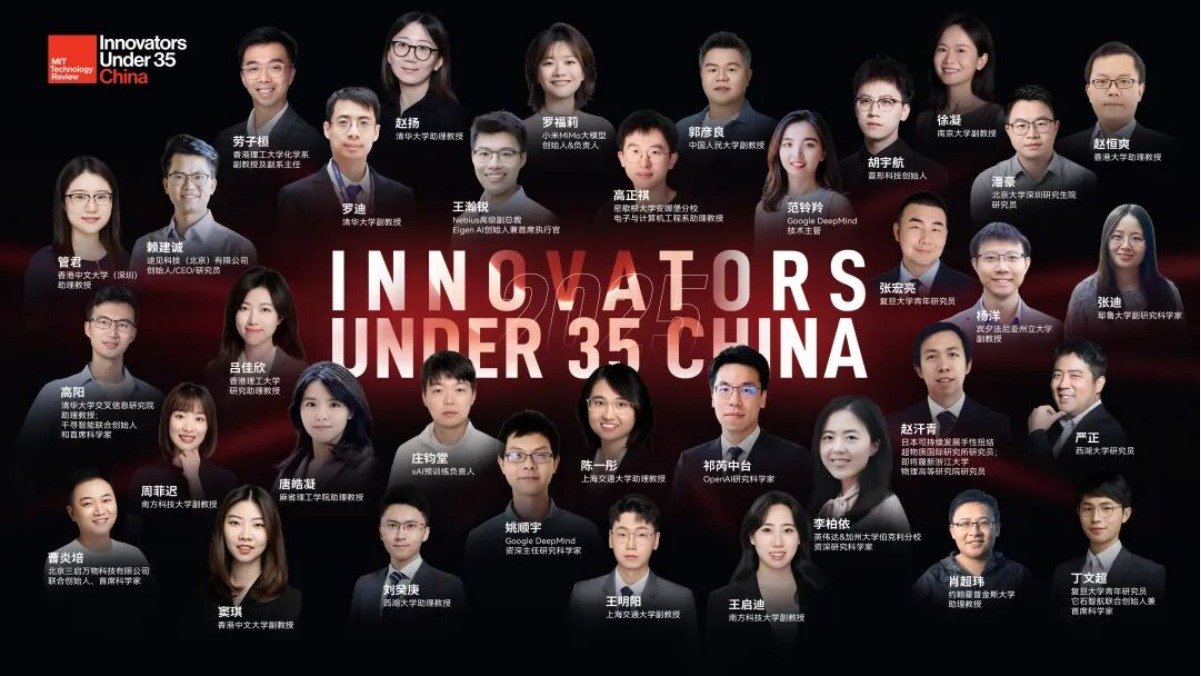
EduAsiaNews, Cina – Pan Hao, a researcher and assistant professor at the School of New Materials, Peking University (PKU) Shenzhen Graduate School, was named to the 2025 MIT Technology Review Innovators Under 35 (TR35) China list on July 25.
The list is part of the broader “Innovators Under 35” program, launched by MIT Technology Review in 1999 to annually recognize outstanding innovators worldwide who are under 35.
This year’s honorees represent a variety of scientific fields including artificial intelligence, life sciences, quantum technology, and new materials. They fall in five categories: Pioneers, Visionaries, Inventors, Entrepreneurs, and Humanitarians. Pan, named as an Inventor, was listed among 35 young tech leaders including Yao Shunyu, a scientist at Google DeepMind, and Luo Fuli, a PKU alumna and the founder of Xiaomi’s Mimo large language model.
Pan’s research tackles a critical challenge in modern electronics: as microchips get smaller and more powerful, they consume more energy and generate excessive heat. To address this, he developed new types of thin dielectric films that can store and release electrical energy with very little loss. His key breakthrough lies in designing these films at the nanoscale so that they can switch between different electrical states efficiently, without wasting power.
This approach can help dielectrics become more competitive with batteries for energy storage, potentially offering a solution for the reliability and environmental concerns often associated with batteries.
The China list has previously featured leading Chinese scientists and entrepreneurs including Lu Chaoyang, a professor at the University of Science and Technology of China, and Yang Zhilin, founder of Moonshot AI.
His breakthroughs have been published in world-leading journals including Science and Nature Materials, earning him major domestic and international honors such as the Second Prize of the State Natural Science Award (Pan Hao was the third author) and the Dimitris N. Chorafas Prize.
The recognition also underscores PKU Shenzhen’s progress in training young talent. The graduate school said it will continue to support early-career researchers to drive original innovation.