




EduAsiaNews, Bogor — The Faculty of Computer Science (FIK) at Universitas Pembangunan Nasional “Veteran” Jakarta (UPNVJ) welcomed 569 new students through its 2026/2027 Faculty-Level Introduction to Campus Life for New Students (PKKMB). Held on August 12–13, 2026, at the Ministry of Primary and Secondary Education’s Human Resources Development Center (PPSDM Kemendikdasmen) on Jalan Raya Parung, Bogor Regency, West Java, the program carried the theme “Innovative and Impactful Digital Generation.”
The two-day program focused on introducing the academic system, strengthening Bela Negara character, developing student competencies, introducing student organizations, and preparing students to compete in the digital era.
The 569 new students are enrolled across four study programs: 203 in the Bachelor’s Program in Information Systems, 199 in Informatics, 31 in Data Science, and 136 in the D3 Information Systems program. The faculty-level PKKMB served as a continuation of the university-level campus orientation and an opportunity for students to become familiar with UPNVJ’s academic culture and identity as a Bela Negara Campus.
FIK UPNVJ Dean Prof. Dr. Ir. Supriyanto, S.T., M.Sc., IPM., said the PKKMB was designed not only to introduce study programs and academic procedures but also to begin cultivating students’ Bela Negara character from their first days on campus.
“Through this PKKMB, in addition to introducing the study programs and academic system, we are also building the character of Bela Negara. Since ours is a Bela Negara Campus, we want students to understand from the moment they first set foot on campus that this character is essential for competing in the future,” Supriyanto said.
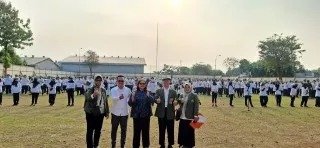
He explained that character development was not limited to classroom sessions but was also reinforced through activities promoting discipline and teamwork. Students participated in field activities and group exercises, including marching drills, to develop a sense of discipline and togetherness.
FIK UPNVJ also introduced students to three learning spaces. The first is classroom learning with lecturers, the second involves practical experiences and internships, and the third encompasses learning through communities, student organizations, and Student Study Groups (KSM).
“Learning does not take place only in the classroom. In one credit hour, interaction with a lecturer is only around 50 minutes. There are other learning spaces that students need to make use of, including internships and communities,” Supriyanto said.
Beginning in the first semester of the 2026/2027 academic year, FIK UPNVJ is also requiring students to participate in at least one student organization and/or KSM. Participation will serve as one of the requirements for registering for a final thesis or final project defense. The policy reflects the faculty’s view that organizational and community experiences provide important added value, particularly in developing collaboration, leadership, communication, and teamwork skills.
Supriyanto described the faculty’s student development framework through the concept of 5K: Knowledge, Competence, Character, Work, and Connection. Knowledge is acquired through classroom learning; competence is strengthened through KSMs and skills development; character is built through student organizations; work is demonstrated through innovation and creative output; and connections are developed through networking.
“If students do not have added value, they will struggle to compete. That is why we summarize student development through the 5K concept: knowledge, competence, character, work, and connection,” he said.
On the first day, Wednesday (Aug. 12), the program began with registration and the PKKMB opening ceremony. The Dean officially opened the event and handed the new students over to the Capacity Building Team for character development activities. Students were then introduced to the faculty’s vision and mission, campus culture and character, academic and financial administration, university partnerships, student exchange programs, and talent development through Student Study Groups.
Student organizational life was also introduced through a presentation on the FIK Student Executive Board (BEM) and an inter-organization discussion. The first day also featured Yusep Maulana, S.Kom., M.Kom., M.B.A., as a speaker in a session scheduled from 1:20 to 2:20 p.m.
The second day, Thursday (Aug. 13), began with a morning assembly and exercise, followed by sessions on learning under the Merdeka Belajar Kampus Merdeka (MBKM) framework, the semester credit system, the Study Plan Card (KRS), study duration, and procedures for taking academic leave. Leadership development was further strengthened through character-building activities with the Capacity Building Team.
The PKKMB also featured Amiira Mazaya as a speaker. Students received information on laboratory learning preparation, laboratory standard operating procedures, and were introduced to FIK FAIR, the library, LINUKS, LOGIC, and Gelaraksa as part of the faculty’s academic and student-activity ecosystem.
The 2026 FIK UPNVJ PKKMB concluded on Thursday afternoon with character development activities, a closing assembly, and student performances. UPNVJ Vice Rector for Student Affairs and Cooperation, dr. Ria Maria Theresa, Sp.KJ., M.H., attended the closing ceremony, demonstrating the university’s support for student development from the beginning of their higher education journey.
Through the 2026 FIK UPNVJ PKKMB, the 569 new students are expected not only to adapt to university life but also to grow into an innovative and impactful digital generation with strong character, professional networks, and the ability to produce meaningful work. The initiative supports UPNVJ’s broader commitment to developing students with Bela Negara character, strong competencies, and the readiness to navigate rapid technological and societal change.(www.upnvj.ac.id)