




EduAsiaNews, Bandung – The Ministry of Forestry continues to strengthen the capacity of its human resources in public diplomacy and international negotiations as part of implementing the policy direction of Minister of Forestry Raja Juli Antoni to reinforce Indonesia’s leadership in global forest governance. Strengthening diplomatic capacity has become increasingly important to ensure that Indonesia’s achievements in sustainable forest management are not only recognized but also trusted and regarded as global best practices in addressing climate change, biodiversity conservation, and green economic development.
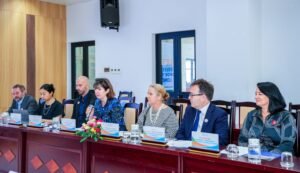
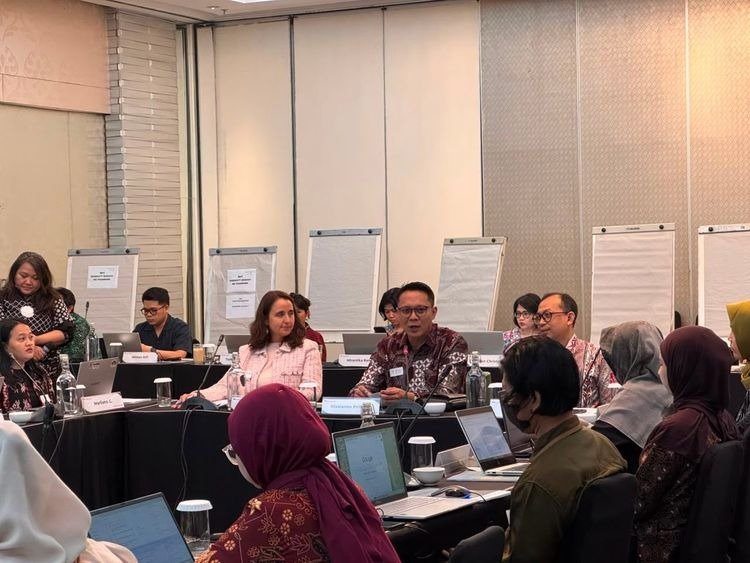
This commitment was demonstrated through the Public Diplomacy and Negotiation Training (Beginner Cohort), held on August 4–5, 2026, in Bandung. The training was organized by the Ministry of Forestry in collaboration with the Multistakeholder Forestry Programme Phase 5 (MFP5) and supported by the International Institute for Sustainable Development (IISD) and Universitas Gadjah Mada (UGM). The program brought together representatives from the Ministry of Forestry, the Ministry of Environment, the Ministry of Foreign Affairs, the Ministry of Trade, the Ministry of Industry, and the Ministry of National Development Planning (Bappenas) to strengthen collective capacity in strategic communication and negotiation for international forestry and trade forums.
Opening the program, Dr. Ristianto Pribadi, S.Hut., M.Tourism, Head of the Bureau of Public Relations and International Cooperation at the Ministry of Forestry, emphasized that modern diplomacy is no longer solely defined by negotiation skills but begins with the ability to build trust.
“Trust is the most valuable currency in diplomacy.”
According to him, diplomacy is fundamentally not about merely delivering information or winning arguments, but about fostering public trust, gaining the confidence of international partners, and strengthening the global community’s trust in Indonesia’s commitment to sustainable forest management.
“Indonesia is home to vast tropical forests, the world’s largest mangrove ecosystem, extraordinary biodiversity, and numerous best practices in sustainable forest management. However, these achievements will not generate their full impact unless they are effectively communicated to the international community. A good product must be recognized, trusted, and recommended,” he said.
He further noted that every government official participating in international forums serves as a diplomat for the nation. Consequently, Indonesia’s diplomatic success depends on the ability of all government institutions to consistently communicate national priorities through credible, evidence-based messages that build trust.
This approach aligns with the policy direction of Minister of Forestry Raja Juli Antoni, who has consistently emphasized that Indonesia must position itself as a solution provider in addressing global forestry issues. As the country with the world’s third-largest tropical forest area, Indonesia is not only committed to safeguarding its own forests but also to actively promoting best practices, policy innovations, and international cooperation that contribute to global climate goals, biodiversity conservation, and sustainable development.
In his remarks, the Head of the Bureau of Public Relations and International Cooperation also highlighted four strategic forestry priorities that require strong public diplomacy: expanding international recognition of the Timber Legality and Sustainability Verification System (SVLK+); strengthening the International Tropical Peatland Center (ITPC) as a platform for cooperation in tropical peatland management; advancing the establishment of the World Mangrove Center (WMC) as a global hub for learning and collaboration in mangrove management; and reinforcing Indonesia’s position as one of the world’s leading countries in developing a high-quality carbon market.
These four priorities reflect Indonesia’s commitment to demonstrating that sustainable forest management can simultaneously deliver environmental, economic, and social benefits.
The two-day training program was designed around three comprehensive modules covering international regulations affecting Indonesia’s forest-product trade, the development of effective strategic messaging for diverse international audiences, and practical exercises in negotiation, coalition-building, responding to challenging questions, and cross-ministerial negotiation simulations. This integrated approach is expected to foster a shared understanding and strengthen interministerial coordination in advancing Indonesia’s interests in international forums.
The Ministry of Forestry believes that Indonesia’s diplomatic success depends not only on the quality of its policies but also on the ability of government officials to communicate those policies professionally, persuasively, and with integrity. Strengthening public diplomacy capacity is therefore viewed as a strategic investment in supporting the implementation of the Minister of Forestry’s policy agenda, expanding international partnerships, enhancing global confidence in Indonesia’s forest governance, and further consolidating the country’s position as a global leader in sustainable forest management.