




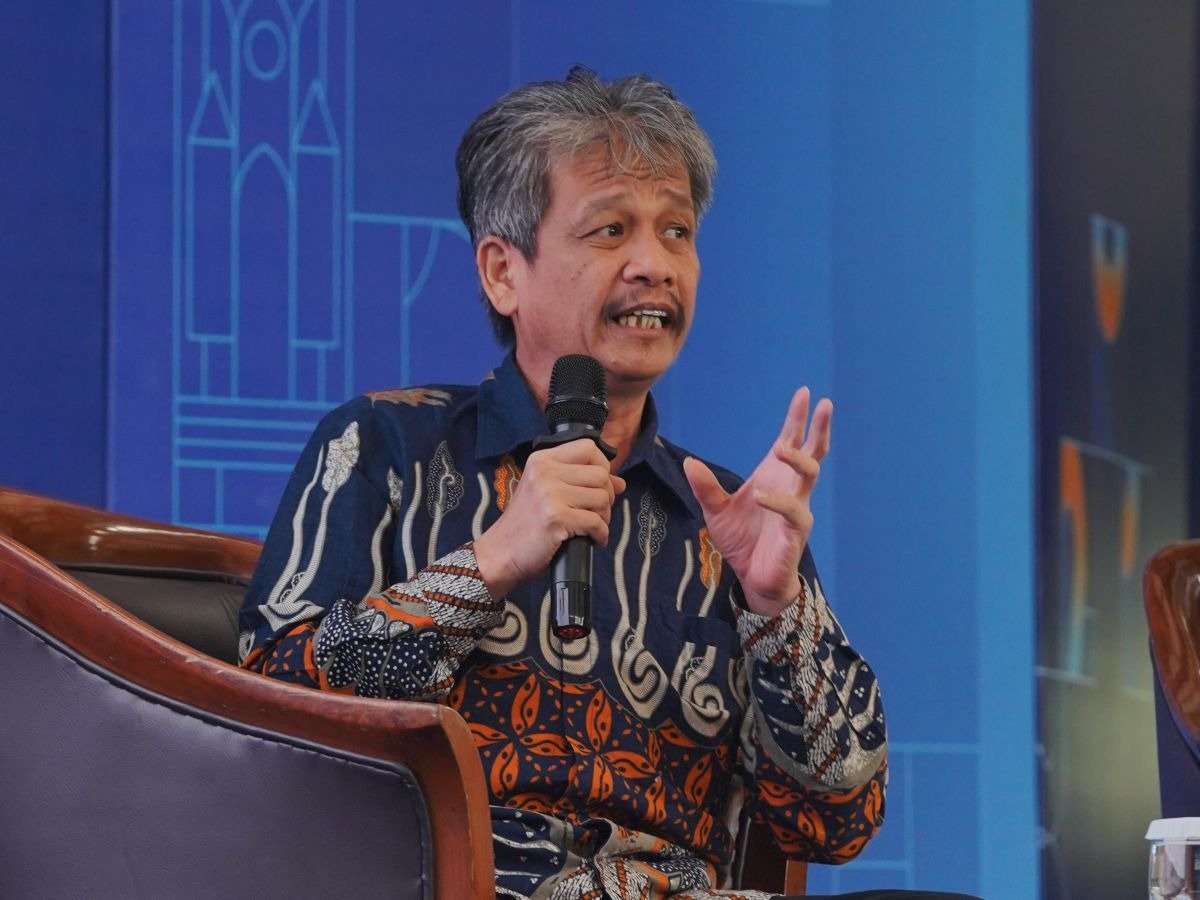
EduAsiaNews, Bandung – The Rector of the Institut Teknologi Sumatera (ITERA), Prof. Dr. Elfahmi, S.Si., M.Si., an alumnus of ITB’s Master’s Program in Pharmacy, encouraged alumni of Institut Teknologi Bandung (ITB) postgraduate and professional programs to strengthen their contributions to education, research, innovation, entrepreneurship, and national development during the 2026 ITB Postgraduate and Professional Alumni Symposium, held at ITB’s West Hall on Saturday (July 18, 2026).
According to Prof. Elfahmi, postgraduate alumni possess tremendous potential because they are actively engaged across diverse sectors and have extensive professional networks.
“The potential of our postgraduate alumni is truly extraordinary. If we maximize it, the benefits will extend not only to the alumni themselves but also to ITB,” he said.
Postgraduate Education as a Driver of Impactful Innovation
Prof. Elfahmi reflected on his academic journey, including his pursuit of a master’s degree at ITB. Although he was initially unsuccessful in gaining admission to ITB’s undergraduate program, he later received a scholarship to pursue postgraduate studies after completing his bachelor’s degree and professional pharmacist qualification.
He noted that postgraduate education at ITB enhanced not only his academic knowledge but also his critical thinking, communication skills, and self-confidence. Those experiences prepared him to pursue doctoral studies at the University of Groningen, the Netherlands, and later build a career as a lecturer, researcher, innovator, and university leader.
“I can honestly say that ITB transformed me. I used to struggle with public speaking. ITB gave me the confidence to speak, to learn, and to continue developing myself,” he remarked.
After returning from the Netherlands, Prof. Elfahmi held several strategic positions at ITB, including Head of the Master’s and Doctoral Programs, Head of the Biosciences and Biotechnology Research Center, Vice Dean of the School of Pharmacy, and Director of Research and Innovation. He currently serves as Rector of ITERA.
He emphasized that university research should evolve into innovations and practical solutions that deliver tangible benefits to society.
“We must always consider the impact of our research. University research should genuinely benefit society and create meaningful change,” he stated.
Promoting Self-Reliance in Health-Related Raw Materials
Prof. Elfahmi also highlighted Indonesia’s heavy dependence on imported pharmaceutical raw materials. Despite the country’s extraordinary biodiversity and abundant natural resources, he observed that these assets have not yet been fully utilized through science and technology, forcing Indonesia to continue importing research compounds, reference standards, and pharmaceutical ingredients.
He cited bioactive compounds derived from nutmeg and other Indonesian medicinal plants as examples. Although these natural resources are readily available domestically, researchers and industries often continue purchasing the purified compounds from foreign suppliers.
Through sustained research efforts, Prof. Elfahmi and his team have successfully developed several purified compounds and research materials that were previously imported. These innovations have been commercialized through research-based enterprises and are now being used as domestic alternatives to imported products, demonstrating Indonesia’s growing scientific and industrial capabilities.
He stressed that mastery of science and technology is essential for the downstream commercialization of research outcomes. Without it, Indonesia risks remaining merely a supplier of raw materials while other countries capture the greater added value.
“High added value is created through the application of science and technology. High-quality research and innovation are indispensable to achieving that goal,” he said.
Alumni as Ambassadors and Catalysts for Collaboration
Prof. Elfahmi emphasized that alumni serve as vital links between ITB and industry, government agencies, research institutions, and international partners. Such networks can generate opportunities for research funding, student exchanges, internship programs, laboratory development, and the commercialization of research outcomes.
He cited ITB’s collaboration with international industrial partners in the field of drug delivery systems, which has evolved into the establishment of a joint research laboratory.
These efforts, he explained, are reinforced through global collaborations involving universities, industry, government, and research organizations, particularly in biodiversity-based health research supported by national and international funding to advance research, commercialization, and sustainable development.
“International networks bring us closer to achieving our goals. As ITB alumni, we must dare to dream big,” he said.
Prof. Elfahmi also noted that every alumnus naturally becomes an ambassador for the university. ITB’s reputation is shaped not only by the institution’s achievements but also by the integrity, professionalism, and accomplishments of its graduates.
“Whether we realize it or not, we are all ambassadors of ITB. When alumni excel in their careers and contributions, people recognize them as ITB graduates,” he remarked.
Beyond networking, alumni can contribute by supporting curriculum development, mentoring students, providing internship opportunities, advancing research, and supporting startup development, thereby strengthening collaboration between alumni and ITB while creating meaningful societal impact.
Scholarships and University Endowment Funds
Prof. Elfahmi also highlighted scholarships and university endowment funds as important avenues for alumni contributions.
According to him, alumni support for endowment funds can help ensure the long-term sustainability of education, research, innovation, and campus infrastructure development. Such contributions need not be limited to direct donations but may also take the form of collaborative research projects, commercialization of intellectual property, corporate equity participation, and corporate social responsibility initiatives.
“Contributions can take many forms, including donations, collaborative research, commercialization of research outcomes, company shares, scholarships, and various other forms of support,” he explained.
Prof. Elfahmi expressed hope that the 2026 ITB Postgraduate and Professional Alumni Symposium would serve as the starting point for more concrete collaborative initiatives. In his view, relationships between alumni and their alma mater should be nurtured continuously through academic, social, professional, and institutional development activities.