




EduAsiaNews, Shezhen China – Indonesia reaffirmed its commitment to strengthening global forest governance by promoting the trade of legal and sustainable forest products while inviting APEC member economies to enhance collaboration in mangrove conservation through the World Mangrove Center (WMC).
The commitment reflects the policy direction of Indonesia’s Ministry of Forestry under the leadership of Minister of Forestry Raja Juli Antoni, which seeks to strengthen Indonesia’s role in international forums, enhance forest governance, improve the competitiveness of legal and sustainable forest products, and expand global collaboration in climate change mitigation, biodiversity conservation, and green economic development.
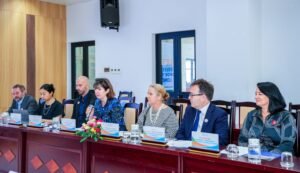
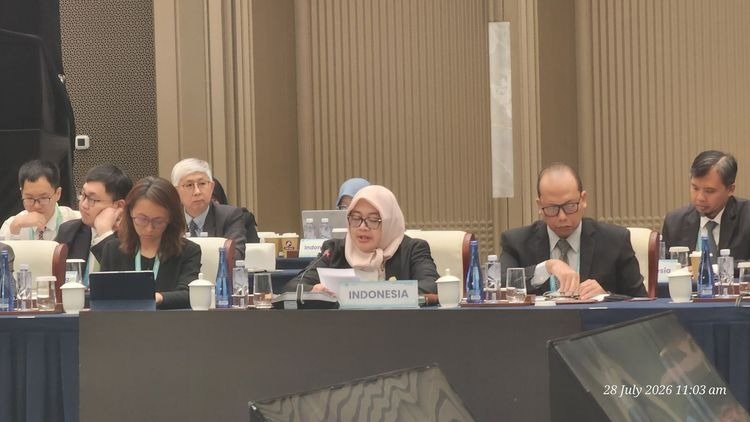
Representing Indonesia at the 2026 APEC Ministerial Meeting on Forestry in Shenzhen, China, Laksmi Wijayanti, Director General of Sustainable Forest Management, participated in the ministerial-level meeting held under the theme “Building a Green Asia-Pacific for Shared Ecological Well-being.” The meeting focused on advancing sustainable forest management, promoting green economic development, improving community welfare, and leveraging innovation and technology to strengthen resilience across the Asia-Pacific region.
During the meeting, Laksmi emphasized that Indonesia has established a strong foundation through its Timber Legality and Sustainability Verification System (SVLK). The system has gained international recognition as an effective mechanism for ensuring the legality of forest products, enhancing market confidence, and facilitating sustainable timber trade.
“SVLK demonstrates that sustainability is not merely an environmental commitment, but also the foundation of credible trade and trusted green supply chains,” Laksmi said.
She noted, however, that law enforcement alone is insufficient to combat illegal logging. Indonesia advocates a more comprehensive approach by promoting the development of Non-Timber Forest Products (NTFPs) as sustainable sources of income for forest-dependent communities.
“By creating economic value from forests while keeping them intact, local communities have stronger incentives to conserve forests rather than exploit them. This is the transformation we need to build together across the Asia-Pacific region,” she said.
Indonesia also called on APEC economies to strengthen cooperation in expanding market access, enhancing interoperability of forest product traceability systems, reducing technical barriers to trade, and encouraging green investment to support sustainable NTFP value chains throughout the region.
Beyond forest product governance, Indonesia underscored the importance of protecting mangrove ecosystems. As home to approximately 23 percent of the world’s mangrove forests, Indonesia highlighted that threats to mangroves—including the illegal harvesting of mangrove timber for charcoal production—represent transboundary challenges that require international cooperation.
To advance these efforts, Indonesia introduced the World Mangrove Center (WMC) as a global collaboration platform bringing together governments, research institutions, international organizations, civil society, and other stakeholders to promote sustainable mangrove management.
“The WMC does not belong solely to Indonesia. It is a shared platform designed to strengthen research, innovation, knowledge exchange, and resource mobilization for global mangrove conservation and restoration,” Laksmi said.
Indonesia also invited all APEC member economies to join the WMC to strengthen research networks, enhance technical capacity, develop nature-based solutions, and accelerate collective efforts to address climate change, biodiversity loss, and the resilience of coastal ecosystems.
Indonesia’s participation in the forum reflects the Ministry of Forestry’s strategic commitment, under the leadership of Minister Raja Juli Antoni, to strengthening the country’s role as a global leader in forestry. Through proactive diplomacy, stronger forest governance, and collaborative initiatives such as the SVLK and the World Mangrove Center, Indonesia continues to promote practical solutions to climate change, biodiversity loss, and green economic development. This leadership reaffirms Indonesia’s commitment not only to safeguarding the world’s tropical forests but also to advancing international collaboration for sustainable forest management for future generations.