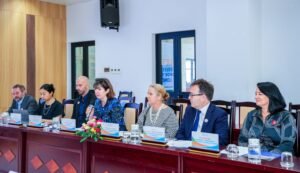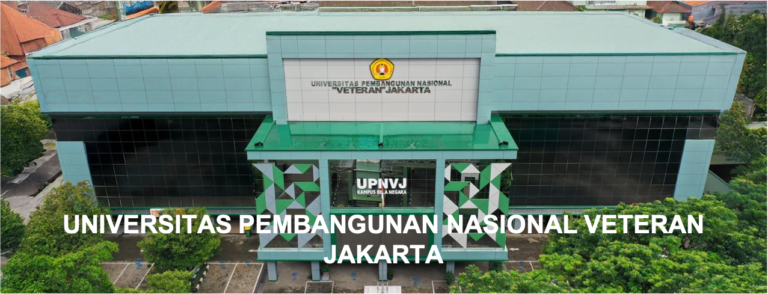





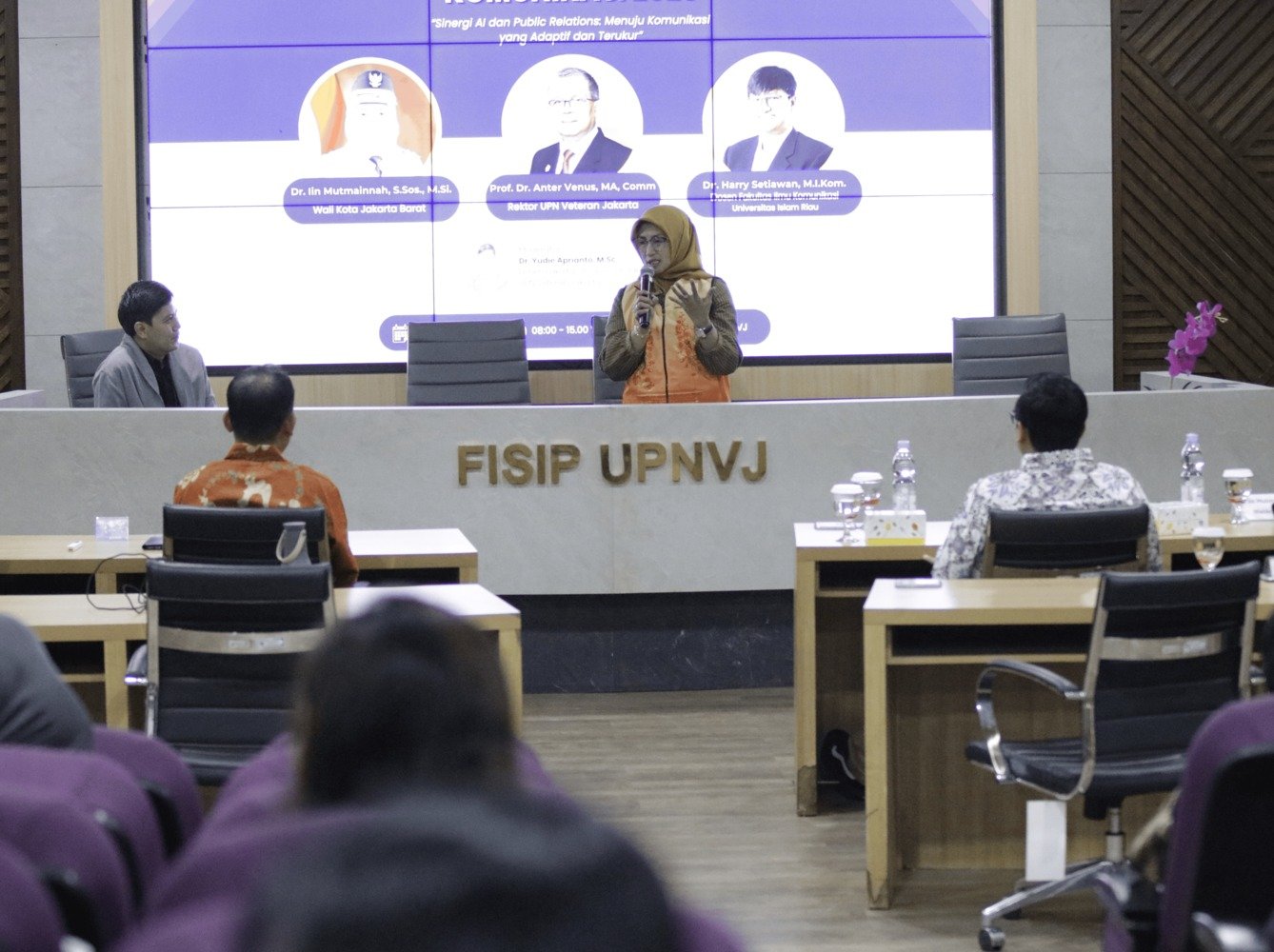
EduAsiaNews, Jakarta – The Undergraduate Communication Studies Program of the Faculty of Social and Political Sciences (FISIP), Universitas Pembangunan Nasional “Veteran” Jakarta (UPNVJ), successfully organized the National Communication Studies Seminar (Semnaskom) titled “The Synergy of AI and Public Relations: Towards Adaptive and Measurable Communication” on Thursday (June 11).
Held at the FISIP Auditorium of UPN “Veteran” Jakarta, the event brought together academics and practitioners to discuss the transformation of communication in the era of Artificial Intelligence (AI). The seminar featured two distinguished speakers: Dr. Harry Setiawan from Universitas Islam Riau and Dr. Iin Mutmainah, Mayor of West Jakarta. The event was officially opened by Dr. Azwar, M.Si., Acting Dean of FISIP UPN Veteran Jakarta.
“Beyond enriching students’ academic knowledge, this event represents a strategic initiative by FISIP UPN Veteran Jakarta to bridge academic perspectives with empirical practices from government administrators in order to foster more effective communication,” said Dr. Azwar.
He further emphasized that collaboration among various stakeholders is essential to improving societal well-being. Such collaboration should involve academics, government institutions, media organizations, private sector entities, and community leaders.
In his presentation titled “PR with Eyes: Communication Evaluation and the Transformation of Public Relations,” Dr. Harry Setiawan explained that contemporary Public Relations practices have undergone significant changes.
“The success of communication is no longer measured solely by the number of publications, media exposures, or social media followers. It is increasingly evaluated based on its impact on public perception, levels of trust, and institutional reputation,” stated the lecturer from the Faculty of Communication Sciences at Universitas Islam Riau (UIR).
He emphasized that the utilization of AI enables Public Relations practitioners to conduct real-time sentiment analysis, monitor public conversations, detect potential crises more rapidly, and develop data-driven communication strategies. According to him, this transformation has shifted the role of PR from being merely reactive to becoming more adaptive and predictive in responding to the dynamics of the digital environment.
“Technology and AI are not substitutes for PR practitioners; rather, they are tools that help organizations understand public dynamics more accurately. Empathy, ethics, and decision-making remain in human hands,” he explained.
In the subsequent session, Dr. Iin Mutmainah, M.Si., Mayor of West Jakarta, discussed the role of AI in strengthening the creative industry and enhancing community economic resilience.
“AI technology is not the central element of our lives, but it serves as a valuable tool that can help entrepreneurs and creative industry players improve operational efficiency, better understand consumer behavior, develop product innovations, and expand the reach of digital marketing,” she stated.
Dr. Iin further highlighted the importance of collaboration among government, academia, industry, communities, and media in building an inclusive digital ecosystem. She noted that the adoption of AI must be accompanied by improvements in digital literacy, ethical technology use, and policies that support sustainable digital transformation.
Through this national seminar, students and participants gained valuable insights into how the synergy between AI and Public Relations can foster communication that is more adaptive, measurable, and responsive to public needs. The event also reflects the commitment of the Undergraduate Communication Studies Program at FISIP UPN Veteran Jakarta to providing academic forums that remain relevant to technological advancements and contemporary communication challenges.(www.upnvj.ac.id)