




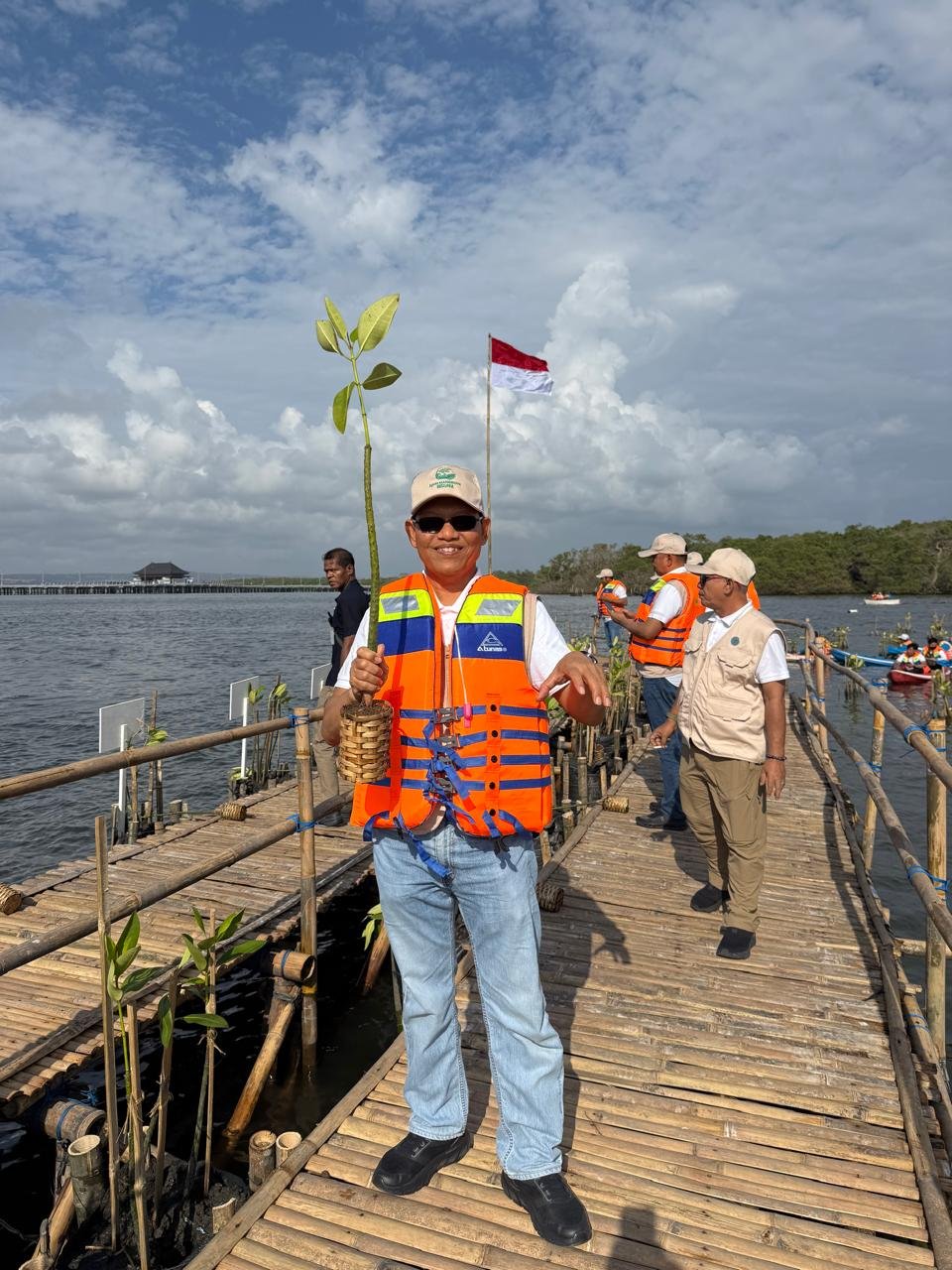
EduAsiaNews, Denpasar – The commemoration of World Mangrove Day 2026 served as a momentum to strengthen collaboration among the government, the private sector, and local communities in restoring mangrove ecosystems while improving the livelihoods of coastal communities. Held under the theme “Protecting Mangroves, Securing Future Generations,” the event took place in Bali on Sunday (July 26, 2026), featuring a mangrove planting activity at the Batu Lumbang Mangrove Ecotourism Area and the main ceremony at the Wantilan Hall, Ngurah Rai Forest Park.
The event was attended by Minister of Environment and Head of the Environmental Control Agency Moh Jumhur Hidayat, Deputy Minister of Forestry Rohmat Marzuki, Minister of Marine Affairs and Fisheries Sakti Wahyu Trenggono, Governor of Bali Wayan Koster, and various stakeholders, including Soewarso, Chairman of the Indonesian Forest Concession Holders Association (APHI).
Soewarso welcomed the government’s strengthened collaboration in mangrove management. He noted that the extensive mangrove ecosystems located within forest areas underscore the importance of forestry policies in ensuring their protection, rehabilitation, and sustainable utilization.
“Mangroves must be recognized as a strategic national asset. These ecosystems not only store carbon and protect coastal areas, but also provide livelihoods and economic opportunities for local communities,” Soewarso said.
He emphasized that the success of mangrove rehabilitation should not be measured solely by the number of seedlings planted or the total area restored, but also by the survival rate of the planted trees, the recovery of ecosystem functions, the strengthening of local institutions, and improvements in the income of coastal communities.
According to Soewarso, the forestry sector can contribute through seedling production, planting, maintenance, monitoring, technological innovation, community empowerment, and the development of non-timber mangrove products.
“The private sector must go beyond symbolic tree-planting initiatives. Rehabilitation efforts must include ongoing maintenance, impact assessment, community assistance, and assurance that both ecological and economic benefits are sustained over the long term,” he stated.
The World Mangrove Day 2026 commemoration featured mangrove planting at the Batu Lumbang Mangrove Ecotourism Area, a nationwide simultaneous planting campaign, and discussions on the management of Mangrove Landscape Units.
APHI expressed hope that the observance of World Mangrove Day 2026 would further strengthen cross-sector collaboration and lead to measurable, sustainable mangrove restoration programs that deliver tangible benefits for both the environment and coastal communities.