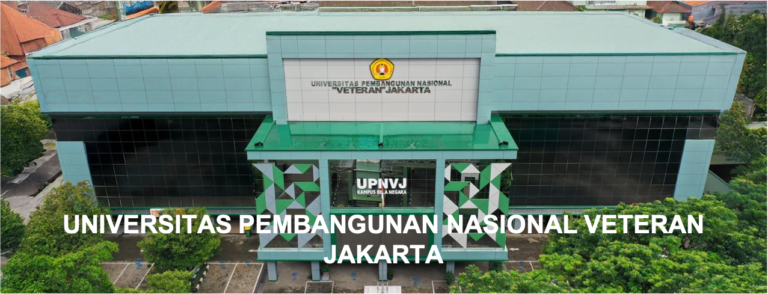






EduAsiaNews, Jakarta – Rectorial candidate No. 1 for the 2026–2030 term at Universitas Pembangunan Nasional “Veteran” Jakarta (UPNVJ), Dr. Sakroni, S.ST., M.Pd., unveiled a vision for transforming the university through a Bela Negara (State Defense)-based framework anchored by nine strategic programs and a 100-Day Agenda. Presented during the public vision, mission, and work program session at the Bhinneka Tunggal Ika Auditorium, UPNVJ Pondok Labu Campus, Jakarta, on Thursday (July 30, 2026), the initiative is titled “Impactful UPNVJ: Defending the Nation, Serving the People, Delivering Impact for Indonesia.”
Through this vision, Dr. Sakroni is committed to advancing UPNVJ as a State Defense University founded on the values of Pancasila, while promoting ethics, excellence, innovation, inclusivity, and international recognition. He emphasized that the university’s development should generate tangible benefits for society, strengthen social justice, and contribute to Indonesia’s national progress.
According to Dr. Sakroni, UPNVJ’s transformation must extend beyond organizational reform and performance indicators by placing human values at its core. He stressed that lecturers, administrative staff, students, and the entire academic community should grow together within a collaborative, healthy, and integrity-driven environment.
He noted that the rapidly evolving higher education landscape, technological advancements, and increasing societal expectations present a timely opportunity for UPNVJ to accelerate its development. While acknowledging that the university has established a solid institutional foundation, he identified the need to further strengthen governance, service quality, human resource welfare, asset management, and financial sustainability.
To guide UPNVJ’s development through 2030, Dr. Sakroni outlined ten strategic challenges, including improving academic quality and differentiation, aligning graduate competencies with labor market demands, strengthening research and innovation commercialization, enhancing staff welfare, and increasing institutional financial independence.
Other priority challenges include optimizing institutional assets, establishing a teaching hospital, advancing digital transformation and the application of Artificial Intelligence (AI), creating a safe and inclusive campus environment, and enhancing the university’s global reputation and international partnerships.
In response to these challenges, Dr. Sakroni proposed six core missions: delivering high-quality, character-based education; strengthening impactful research, innovation, and community engagement; establishing clean, digital, and accountable governance; and creating an inclusive, safe, healthy, and environmentally sustainable campus.
The remaining two missions focus on expanding national and international collaboration while developing professional, prosperous, and integrity-driven human resources. Together, these missions are intended to reinforce UPNVJ’s identity as a State Defense University that remains responsive to advances in science, technology, and societal needs.
The proposed transformation framework is built upon the principles of Pancasila, State Defense, the PIKIR institutional culture, integrity, academic freedom, and social responsibility. These foundations are supported by strategic investments in human capital, digital services, AI integration, strengthened governance under the Public Service Agency (BLU) model, sustainable financing, and cross-sector collaboration.
These priorities are translated into nine flagship programs, covering future-oriented education, impactful research, an inclusive campus environment, integrity-based governance, internationalization, institutional independence, a green and digital campus, human resource development and welfare, and the establishment of the BELA.NEGARA AI & Knowledge Ecosystem.
In education, the transformation agenda emphasizes adaptive learning, future-ready curricula, and the strengthening of the State Defense character. Meanwhile, the research agenda prioritizes high-quality research, innovation commercialization, and the application of research outcomes to address real societal challenges.
Dr. Sakroni also highlighted human resource welfare as a central pillar of institutional transformation. Strengthening competencies, implementing transparent career development systems, fostering a healthy workplace, and introducing performance-based recognition are expected to improve productivity while strengthening institutional commitment among staff.
If elected Rector, Dr. Sakroni plans to implement his 100-Day Agenda through five stages: listening, auditing, improving, launching, and reporting. The initial phase will include forums to gather input from the academic community and comprehensive audits of academic affairs, finance, human resources, and institutional assets.
The audit findings will serve as the basis for establishing institutional performance benchmarks, forming cross-functional acceleration teams, and improving university service standards. Subsequent initiatives include developing a complaint management dashboard, preparing an integrated management system blueprint, implementing a single sign-on platform, and launching the Impactful UPNVJ Dashboard.
The outcomes of the 100-Day Agenda will be publicly reported to demonstrate transparency and accountability. This reporting mechanism is intended to facilitate ongoing evaluation while enabling the academic community to monitor the implementation of institutional programs.
Dr. Sakroni also proposed a comprehensive risk mitigation strategy encompassing stronger regulatory compliance, diversified funding sources, project management based on feasibility studies, and enhanced cybersecurity. He emphasized that expanding the university’s business activities should be pursued without compromising the implementation of the Tri Dharma of Higher Education.
He concluded by stressing that meaningful transformation can only be achieved through a gradual, transparent, and participatory process involving all members of the university community. Accordingly, he advocates a collegial leadership model that positions the University Senate as a strategic partner in safeguarding academic integrity and shaping institutional policy.
The presentation formed part of the official selection process for the UPNVJ Rector for the 2026–2030 term, conducted in an open, transparent, and accountable manner. The forum provides the University Senate and the academic community with an opportunity to evaluate each candidate’s vision, leadership capacity, and strategic approach to advancing UPNVJ as an outstanding State Defense University that delivers meaningful impact for Indonesia.(www.upnvj.ac.id)