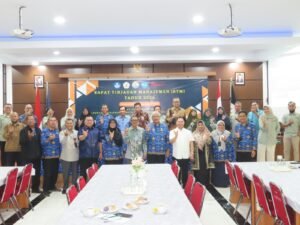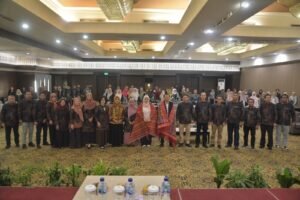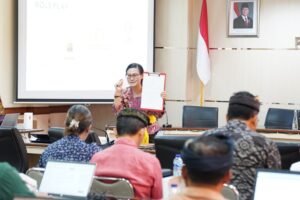





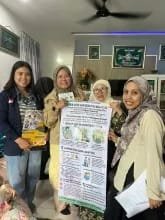
EduAsiaNews, Jakarta – Dr. Fathinah Ranggauni Hardy, S.K.M., M.Epid., a lecturer at the Faculty of Health Sciences, UPN “Veteran” Jakarta, conducted an international community service program in Malaysia from April 8–11, 2026, focusing on empowering the Indonesian diaspora through a public health approach and multidisciplinary collaboration. The activity involved the Minang Entrepreneurs Association in Malaysia (Minang Saiyo) as well as Indonesian migrant communities under the auspices of the Special Branch Leadership of Nahdlatul Ulama (PCI NU) Malaysia. The program was aimed at strengthening community capacity, improving health and occupational health literacy, and expanding social networks that support the well-being of Indonesians living abroad.
This community service initiative is part of efforts to expand the role of UPNVJ academics in addressing the real needs of Indonesian communities overseas. Through a community-based approach, the program emphasizes not only education but also the development of collaborative spaces that are relevant to the challenges faced by the diaspora, ranging from healthy lifestyle practices and occupational health awareness to access to sustainable healthcare services.
In its implementation, the series of activities included public health education, interactive discussions with community members, and efforts to raise awareness about the importance of preventing health risks in daily life. The materials delivered also highlighted the importance of occupational health for migrant communities, considering its direct relation to productivity, safety, and quality of life among the Indonesian diaspora in Malaysia.
The approach adopted was participatory in nature, positioning the community as the primary subject in the learning and capacity-building process. Through this model, participants not only received information but were also actively involved in identifying their needs, sharing experiences, and developing contextual solutions suited to their conditions in the host country.
In addition to addressing health issues, the program also emphasized the importance of social solidarity and strengthening inter-community networks. Collaboration with Minang Saiyo and PCI NU Malaysia demonstrates that diaspora empowerment must be built through cross-sectoral synergy involving social, religious, and economic communities. Such networks are considered essential for enhancing social resilience while also creating opportunities for more sustainable economic empowerment for Indonesians in Malaysia.
Dr. Fathinah emphasized that international community service should go beyond the mere delivery of material and must contribute to strengthening community independence. “This community service is not only about knowledge transfer but also about building collaboration and strengthening the capacity of diaspora communities to become more self-reliant and empowered,” she stated.
Through this initiative, UPNVJ reaffirms its commitment to delivering impactful, adaptive, and responsive community service in line with global dynamics. Strengthening the Indonesian diaspora community in Malaysia is expected to provide not only short-term benefits in improving health literacy but also to generate a collaborative empowerment model that can be replicated in other Indonesian diaspora communities.
In line with the university’s internationalization policy and the strengthening of the tridharma of higher education, this activity demonstrates that the contribution of universities extends beyond classrooms and laboratories, reaching directly into communities. From the perspective of university leadership, international community service initiatives such as this reinforce the position of UPN “Veteran” Jakarta as an institution that promotes global collaboration, expands the impact of knowledge, and delivers tangible solutions for Indonesian communities, including those abroad.(www.upnvj.ac.id)