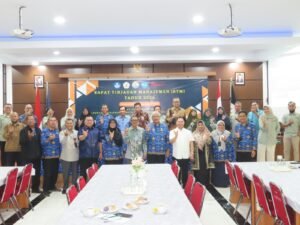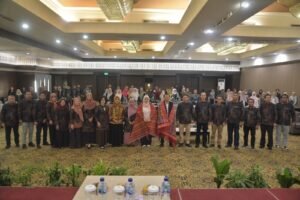





EduAsiaNews, Malang – The Indonesian Civil Servants Corps (KORPRI) of Universitas Negeri Malang (UM) organized a funeral management training session for Heads of Faculty Subunits on Friday (April 17) at the 9th Floor Hall of GKB A20. The activity was designed to enhance practical skills while fostering religious awareness in fulfilling social obligations.
The Chair of KORPRI UM, Ridwan Joharmawan, emphasized that this training serves as a strategic step in strengthening internal solidarity among employees.
“This training is an effort by KORPRI UM to prepare cadres who are capable of assisting when a member passes away. It is also a form of early jihad in fulfilling the religious obligation of fardhu kifayah,” he stated.
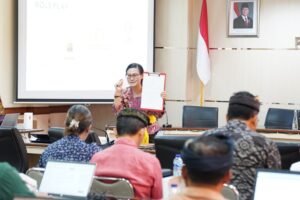
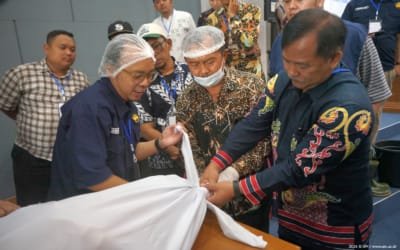
The training was systematically initiated with the delivery of materials on funeral management from both religious and medical perspectives. From the religious standpoint, Moh. Khasairi explained the main stages of funeral rites, including washing the body, shrouding, performing the funeral prayer, and burial. He also highlighted the differences in handling martyrs.
“The body of a martyr does not need to be washed; it is sufficient to cleanse it without removing the clothing attached,” he explained.
This perspective was further reinforced by Erianto Fanani, who examined the issue from a medical standpoint. He emphasized that bodies under certain conditions, such as accident victims with open wounds, require special handling.
“In such conditions, the preparation process is carried out by cleaning the wounds without full washing,” he said.
Furthermore, he addressed the handling of infectious bodies, which requires strict procedures.
“Ideally, the washing process should be conducted in a hospital. However, if it is performed at a residence, the family must use Personal Protective Equipment (PPE) and minimize direct contact,” he added.
Following the theoretical session, participants engaged in hands-on practice guided by the instructors. This active involvement enabled participants to gain a more comprehensive and applicable understanding.
This training not only enhances technical competence but also strengthens values of empathy, solidarity, and respect for others. The initiative aligns with the Sustainable Development Goals (SDGs), particularly in promoting good health and well-being, as well as fostering inclusive and resilient communities.
Through this activity, KORPRI UM hopes that each faculty subunit will be able to serve as the frontline in building a caring, responsive, and harmonious work environment.