




EduAsiaNews, Maluku — The Vice Rector for Academic Affairs of Pattimura University, Prof. Dr. Dominggus Malle, S.Pt., M.Sc., emphasized the importance of a data-driven approach in formulating poverty alleviation strategies in Maluku Province.
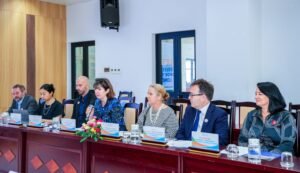
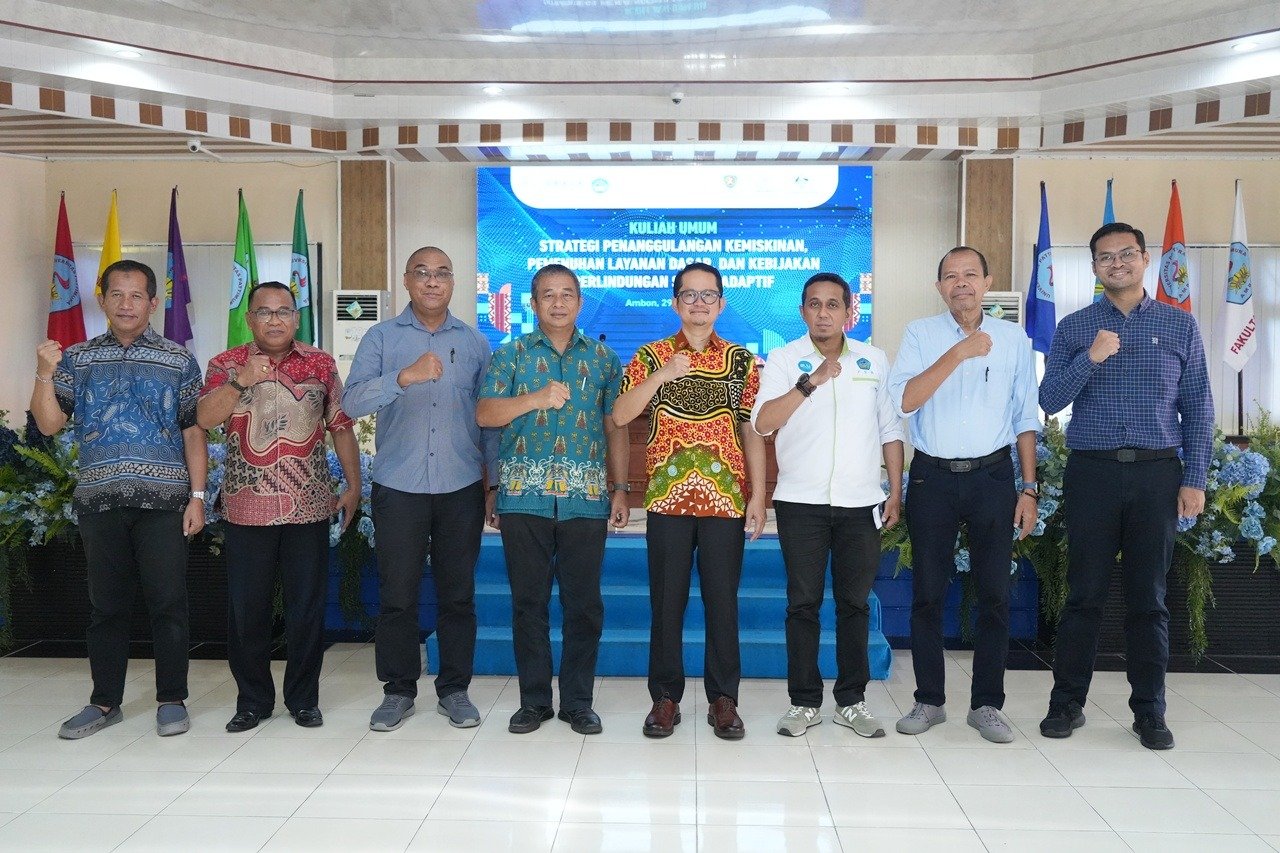
The statement was delivered while opening a public lecture titled “Strategies for Poverty Alleviation, Fulfillment of Basic Services, and Adaptive Social Protection Policies”, organized by the Faculty of Economics and Business on Wednesday, April 29, at the Rectorate Hall of Pattimura University.
In his remarks, the Vice Rector highlighted Maluku’s geographical characteristics as an archipelagic region dominated by vast marine areas, which have not yet been matched by proportional development budget allocations. He added that the challenges of poverty in Maluku cannot be equated with those in other regions of Indonesia, given the limitations in access, resource distribution, and inter-regional connectivity, which remain major obstacles to equitable welfare.
Furthermore, he explained that poverty in Maluku must be viewed comprehensively—not only from statistical figures but also from the social realities within communities. According to him, some segments of society already have access to technology and basic assets; however, this has not been accompanied by improvements in productivity or adequate market access. Therefore, more contextual policy formulations are required, including strengthening the education and health sectors, as well as adaptive social protection tailored to regional conditions.
At the conclusion of his remarks, the Vice Rector expressed hope that the forum would serve as a productive academic platform for students to develop critical thinking and generate research-based solutions.
At the same venue, the Dean of the Faculty of Economics and Business, Prof. Dr. Teddy Christianto Leasiwal, S.E., M.Si., affirmed that the public lecture represented an important momentum to strengthen the role of academics in regional development. He also noted that poverty levels in Maluku Province remain above the national average, with the highest concentration in island and remote areas. He stressed that inter-regional disparities pose a serious challenge, particularly in districts with high poverty rates.
In addition, limited access to basic services—such as electricity, clean water, education, and healthcare—continues to be a critical issue requiring collective attention. He further explained that Maluku’s archipelagic geography makes it vulnerable to the impacts of climate change and natural disasters, thus necessitating adaptive social protection policies. Government programs are expected not only to be responsive but also anticipatory in addressing risks faced by communities, particularly in coastal and remote areas.
In closing, the Dean expressed hope that the public lecture would encourage students to think critically and produce research-based solutions to various issues in Maluku. He also called on the entire academic community to actively contribute to regional development through scholarly work, research, and community service, ensuring that poverty alleviation efforts are sustainable and have tangible impacts.
The event featured a keynote speaker, Maliki, S.T., M.S.I.E., Ph.D., Deputy for Community Empowerment, Population, and Employment at the Ministry of National Development Planning/Bappenas, who serves as a strategic partner in national policy formulation. The forum also functioned as a collaborative platform between higher education institutions and the government in addressing various socio-economic challenges in the region.