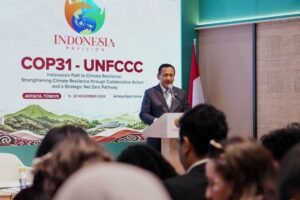





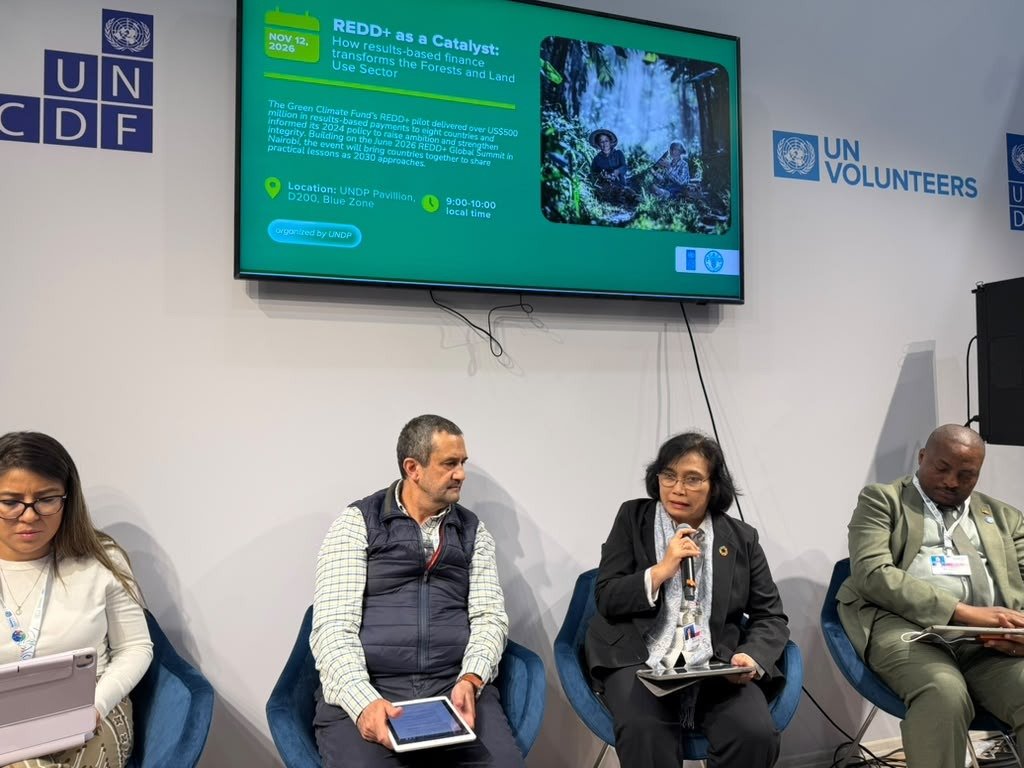
EduAsiaNews, Antalya Türkiye – Indonesia shared its experience in accessing and utilizing REDD+ results-based payments (RBP) at the 31st United Nations Climate Change Conference (COP31) in Antalya, Türkiye. The country’s experience has shown that results-based financing not only rewards emissions reductions but can also strengthen forest governance and support the continuity of climate action.
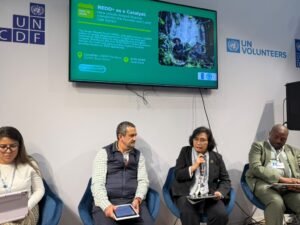
The experience was presented by Forestry Ministry Expert Staff for Climate Change Haruni Krisnawati during a discussion session titled “REDD+ as a Catalyst: How Results-Based Finance Transforms the Forests and Land Use Sector,” organized by the United Nations Development Programme (UNDP) at the UNDP Pavilion in the Blue Zone at COP31 on Thursday (Nov. 12).
At the forum, Haruni outlined Indonesia’s experience as one of the recipient countries under the Green Climate Fund (GCF) REDD+ Results-Based Payments Pilot Programme. Through the programme, Indonesia secured approval for US$103.8 million in funding for its achievement in reducing emissions from deforestation and forest degradation during the 2014–2016 period.
“Indonesia’s experience shows that the benefits of results-based financing lie not only in the funds received but also in strengthening national institutions and capacities, which continue to support forest management and climate action after the payment period ends,” Haruni said.
According to Haruni, Indonesia has drawn three key lessons from the process of accessing REDD+ results-based financing.
First, the strengthening of forest monitoring systems and transparency in emissions reporting. The REDD+ RBP process has further underscored the importance of a credible national forest monitoring system, consistent emissions reporting and transparency in demonstrating emissions reduction achievements.
Second, stronger institutional coordination and implementation at both national and subnational levels. REDD+ funding has also supported forest governance, including through Forest Management Units (FMUs), Social Forestry programmes and community-based forest management.
Third, improved management of national climate financing through the Environmental Fund Management Agency (BPDLH), which plays a role in managing and channeling results-based funding to support national priorities and the implementation of activities at the local level.
Haruni said these three aspects were essential assets for Indonesia in continuing REDD+ implementation while supporting the Indonesia’s FOLU Net Sink 2030 agenda.
During the knowledge-sharing session, Indonesia also emphasized the importance of establishing national systems from the outset, particularly for countries preparing to access REDD+ results-based financing.
“Emissions monitoring and reporting systems, safeguards and financing management mechanisms take time to establish and strengthen. Therefore, they should be viewed as long-term investments, rather than merely requirements for securing funding,” Haruni explained.
She added that the success of results-based financing also depended on ensuring that its benefits reached those directly involved in protecting forests and reducing emissions, including local governments, forest management institutions and communities. This experience would serve as a foundation for Indonesia as it pursues access to the next phase of REDD+ results-based financing.
“What matters most is how results-based financing can strengthen national systems and support sustainable implementation on the ground. This will ensure that its benefits continue to be felt beyond the financing period,” Haruni added.
The discussion, moderated by Dirk Nemitz, AFOLU Team Lead at the UNFCCC Secretariat, provided a platform for exchanging experiences among countries that had participated in the GCF REDD+ RBP pilot programme, including Indonesia, Uganda, Mexico and Costa Rica, as well as countries preparing to access similar funding.
Through the forum, Indonesia reaffirmed the importance of sustainable climate financing backed by credible national systems and sound governance to ensure that its benefits continue to support forest protection, community welfare and the achievement of national climate targets.