




EduAsiaNews, Antalya – The dynamics of global climate negotiations related to the Enhanced Transparency Framework (ETF) and Global Evaluation (Global Stocktake/GST) have a direct impact on the governance of Indonesia’s forestry sector as well as opportunities for access to performance-based climate finance.
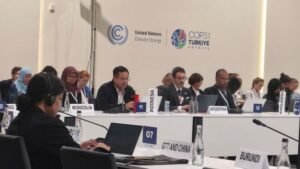
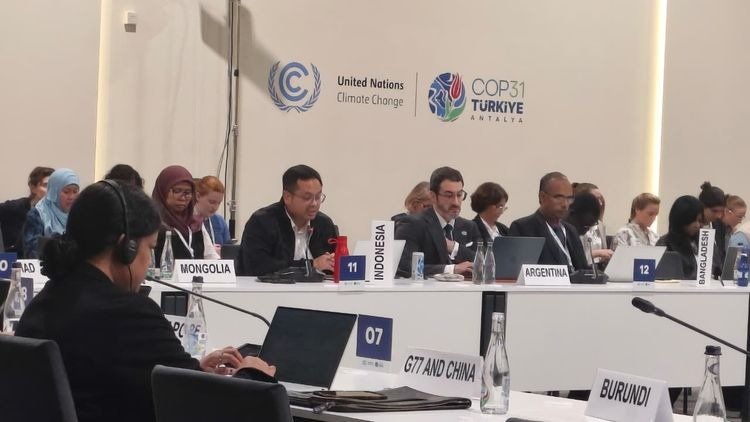
On transparency issues, COP-31 negotiations are shifting towards the single reporting system of the Paris Agreement, but are still marked by heated debates about the readiness and adequacy of financial support for developing countries to prepare Greenhouse Gas (GHG) inventories as well as the Biennial Transparency Reports/BTR). Together with the G77+ China group of developing countries, Indonesia consistently upholds the principle of justice to prevent additional administrative burdens, while affirming the vital role of forest resources as a key pillar of global climate action supported by credible monitoring systems and fair carbon market mechanisms.
Meanwhile, in the discussion of GST and the drafting of the COP 31 Umbrella Decision, the Indonesian Government took proactive steps by proposing that the protection and conservation of peatland ecosystems be recognized as a tangible contribution to slowing the rate of global temperature rise. This strategic step not only positions peatland restoration as a follow-up to global climate assessments but also strengthens Indonesia’s bargaining power to secure international funding and technology transfer support.
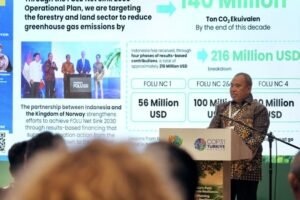
At the national level, this commitment is supported by the accuracy of forestry sector reporting data through the integration of the National Climate Change Control Registry System (SRN PPI) and the National Forest Monitoring System (SIMONTANA) as an absolute requirement to validate Indonesia’s FOLU Net Sink 2030 achievements and open access to result-based funding.
In a series of negotiation sessions related to the impact of implementing response measures, Indonesia, together with the group of developing countries (G77 and China), consistently emphasized that developing countries are the main actors whose interests must be considered in every analysis of the social and economic impacts of global climate policies.
Regarding the discussion of the comprehensive climate contribution (economy-wide NDC), Indonesia emphasized the importance of including the forestry sector within the scope of carbon trading policy instrument analysis—such as the Carbon Border Adjustment Mechanism (CBAM)—to prevent pressure on national economic competitiveness and ensure the transition to low-carbon development remains fair, inclusive, and does not harm communities dependent on natural resources.
Furthermore, Indonesia encourages that all analytical studies on the impact of these response measures be clearly reflected in the Global Stocktake (GST) evaluation process, so that mitigation policies in the land and forestry sectors are always balanced with international cooperation, technology transfer, and adequate funding access to maintain economic growth, create green jobs, and protect the welfare of affected communities.
The Indonesian government continues to consistently push at the negotiating table to secure several key strategic priorities for the national forestry sector, including. overseeing the inclusion of proposals for peatland ecosystem protection and conservation into the final text of the COP 31 Cover Decision. Furthermore, the government also encourages the technical review guidelines on the mechanism of Article 6.2 to still respect the integrity and sovereignty of the national REDD+ methodology under Article 5.2. Furthermore, the government continues to work to secure funding support certainty and capacity building to support the sustainable preparation of BTR reporting, while also preventing the emergence of new reporting burdens for developing countries, including Indonesia.
Through consistent diplomacy in international forums and strengthening domestic forestry governance, the Indonesian Government is fully committed to ensuring that every global climate policy can deliver fair economic benefits, especially for communities both inside and around the forests. (*)