




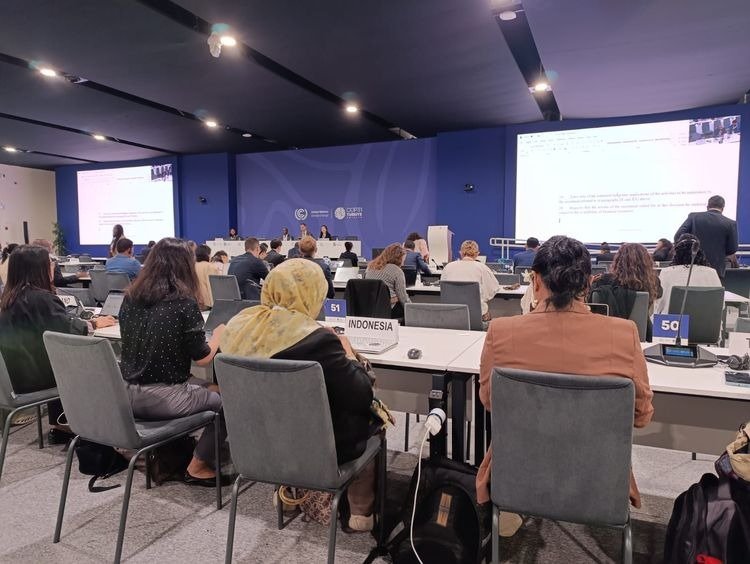
EduAsiaNews, Antalya — The Indonesian government continues to push for increased access to international climate finance to support the implementation of climate change mitigation and adaptation actions, including in the forestry sector. These efforts have become a focus in the negotiations at the United Nations Climate Change Conference (COP31) in Antalya, Türkiye, among other things through discussions on the Green Climate Fund (GCF) and Global Environment Facility (GEF) as important mechanisms to support climate action in developing countries.
Indonesia emphasizes the importance of adequate, predictable, accessible, and sustainable climate finance. This support is expected to increasingly prioritize grants and financing with soft requirements, accompanied by simplification of application procedures and acceleration of fund disbursement. This step is necessary so that international funding commitments can be realized into concrete activities in accordance with the needs and priorities of national development.
One of the main instruments of attention is the Green Climate Fund (GCF), a multilateral climate fund that supports developing countries in reducing greenhouse gas emissions and enhancing resilience to the impacts of climate change. Based on the COP31 negotiation document, the GCF has approved funding of USD 20.4 billion for 359 mitigation and adaptation projects and programs in 135 developing countries. This achievement reflects the GCF’s role in supporting the implementation of climate action in various countries.
In the GCF discussions, Indonesia encouraged increased funding availability through the replenishment of resources in the third phase (GCF-3), as well as strengthening direct access through national institutions. Indonesia also emphasized the importance of supporting project preparation and capacity building of implementing institutions so that funding can be utilized more effectively, transparently, and in line with the priorities of developing countries.
Besides the GCF, the Global Environment Facility (GEF) is an important instrument to support efforts to control climate change and protect the environment in developing countries. COP31 discussions included strengthening funding through resource replenishment of the ninth phase of the GEF (GEF-9), accelerating access to financing, as well as support for technology development and capacity building. GEF also pays attention to strengthening the involvement of indigenous peoples and local communities in conservation activities and sustainable natural resource management.
GEF also supports strengthening climate transparency systems through enhancing the institutional and technical capacity of developing countries in implementing the Enhanced Transparency Framework (ETF) of the Paris Agreement. This support is relevant for strengthening the monitoring and reporting system for climate action in Indonesia’s forestry sector, including to enhance the credibility of emission reduction achievements and increased carbon sequestration.
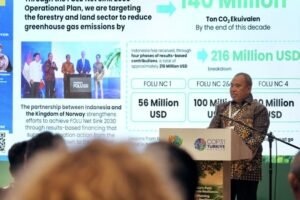
Strengthening funding access through GCF and GEF opens opportunities to support various national priority programs in the Forestry sector, including achieving Indonesia’s FOLU Net Sink 2030, protection and sustainable forest management, forest and land rehabilitation, peatland and mangrove ecosystem restoration, and watershed management. International support also has the potential to accelerate the implementation of ecosystem-based adaptation and strengthen forestry governance that is responsive to climate change.
These funding opportunities are expected to provide real benefits to communities living in and around the forest. Through Social Forestry, Customary Forest management, agroforestry development, and non-timber forest product businesses, communities can gain opportunities to increase income while actively participating in preserving the forest. Ecosystem protection and restoration are also expected to help maintain water availability, reduce disaster risks, and strengthen community livelihood resilience against climate change. (*)