




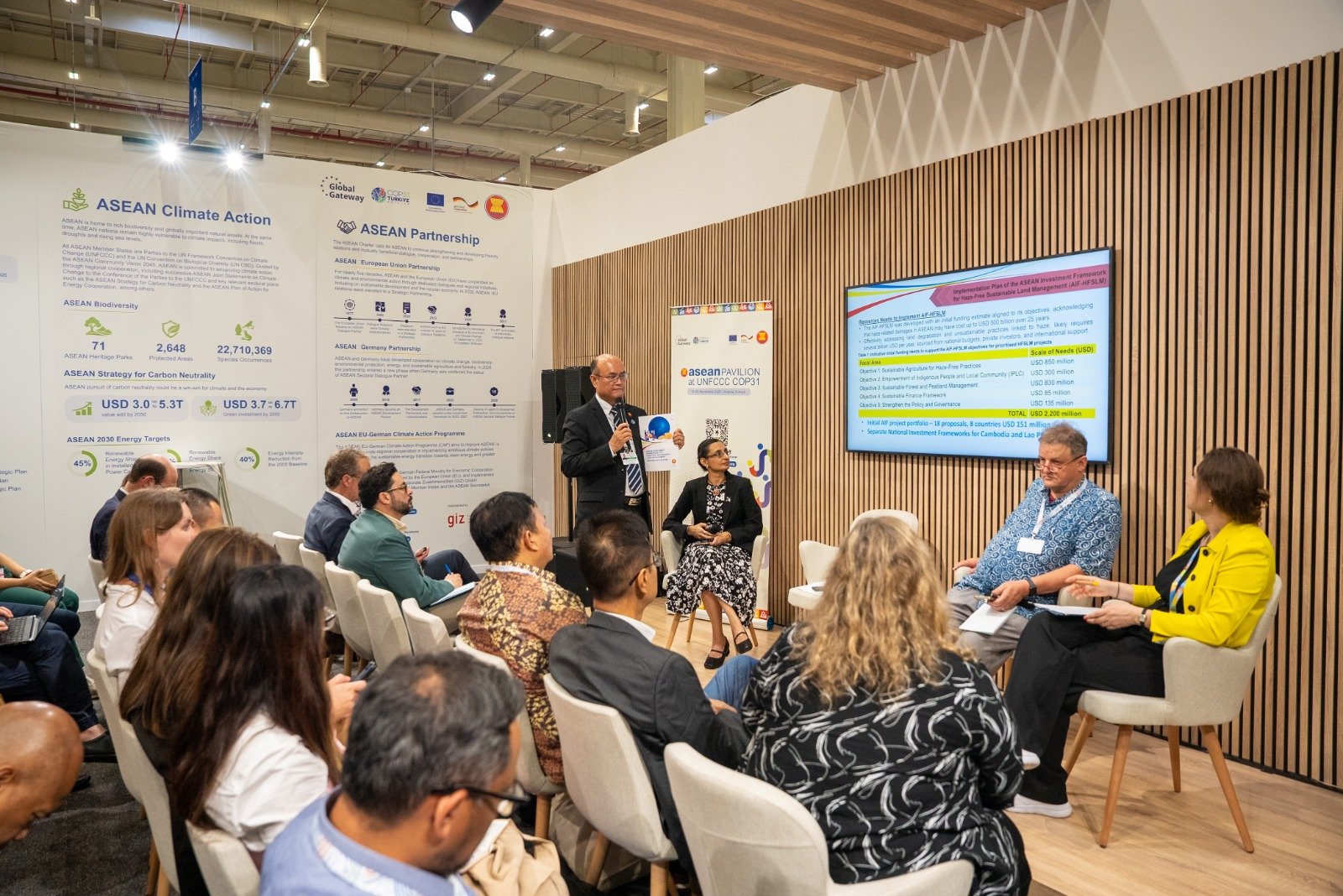
EduAsiaNews, Antalya Turkiye – Indonesia is pushing for stronger sustainable peatland governance through data harmonization, management based on peat hydrological units (KHG) and regional cooperation to prevent fires and transboundary haze in Southeast Asia and the Western Pacific.
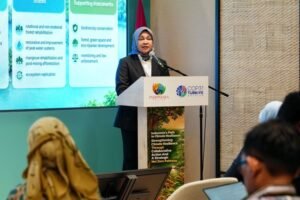
Agus Justianto, head of the interim secretariat of the International Tropical Peatlands Center (ITPC), stressed that peatland management must be based on accurate and accountable data to support policymaking, restoration planning and stronger international cooperation.
“Indonesia has peat hydrological units covering 24.6 million hectares based on peat hydrology mapping. Common data references are essential so that management planning, restoration targets and the systems for measurement, reporting and verification have a consistent basis,” Agus said.
He made the remarks at a dialogue titled “Building Coordination for Multi-stakeholder Collaboration on Sustainable Management in Indonesia, Malaysia and Papua New Guinea,” held under the Western Pacific Sustainable Peatland Management (SAGU) project at the ASEAN Pavilion at the 31st session of the Conference of the Parties to the UN Framework Convention on Climate Change (COP31) on Tuesday.
Bambang Supriyanto, deputy head of the ITPC interim secretariat, said differences in data on the extent of peat ecosystems and forest and land fires need to be examined in terms of methodology, geographic coverage and counting periods.
“Handling peat fires and transboundary haze cannot be left to one country alone. Shared responsibility is needed through government-business partnerships, consistent law enforcement and stronger regional coordination to ensure fire prevention is effective,” he said.
Bambang also highlighted the importance of accountability in investment and operational activities in peatland management, including cross-border investment. Public-private partnerships, he said, must be backed by transparency, oversight and law enforcement so that peatland management does not create environmental risks affecting other countries.
Vong Sok, head of the Environment Division and assistant director of the Sustainable Development Directorate at the ASEAN Secretariat, stressed the need for stronger regional cooperation in sustainable peatland management and in tackling transboundary haze, which affects the environment, public health and the economies of ASEAN countries. He said peat fires require a collective approach through data harmonization, stronger early warning systems and coordination of policies and preventive measures among countries.
“Tackling transboundary haze requires shared commitment and responsibility among ASEAN countries through accurate information exchange, stronger cross-border cooperation and coordinated peat fire prevention measures to protect the environment and communities in the region,” Vong Sok said.
Swetha Peteru, senior scientist and principal investigator of the SAGU project, emphasized collaboration among Indonesia, Malaysia and Papua New Guinea in science-, landscape- and community-based sustainable peatland management. Knowledge exchange, capacity building, financing and monitoring are needed to maintain peatlands’ ecological functions while improving community welfare, she said.
“Through the SAGU project, we are promoting cross-border cooperation that integrates the conservation, restoration and wise use of peatlands to support community economies and the achievement of regional climate targets,” she said.
The forum also discussed opportunities to strengthen policy, climate financing, knowledge exchange and capacity building in measurement, reporting and verification (MRV) systems, climate vulnerability assessments and the implementation of Nationally Determined Contributions (NDCs). Cooperation among Indonesia and Malaysia, as ASEAN members, and Papua New Guinea, as an ASEAN observer, was seen as important to strengthen the region’s collective contribution to implementing the Paris Agreement.
Going forward, regional collaboration through the SAGU project and the ITPC is expected to speed up landscape-based peatland management, data harmonization, fire prevention and community economic development in line with peatlands’ ecological functions. For Indonesia, the steps are a strategic part of supporting the Forestry and Other Land Use (FOLU) Net Sink 2030 target, strengthening climate resilience and ensuring that peatland protection delivers lasting benefits for the environment, communities and the regional economy.