




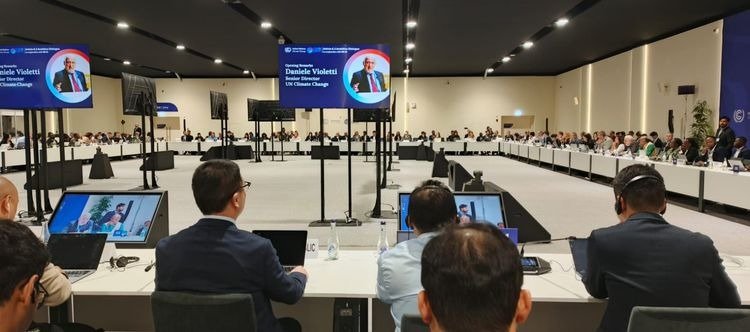
EduAsiaNews, Antalya – The Indonesian government continues to push for the strengthening of the implementation of Article 6 of the Paris Agreement so that international cooperation through market and non-market approaches can support the achievement of climate targets transparently, with integrity, and provide fair benefits, especially for developing countries.
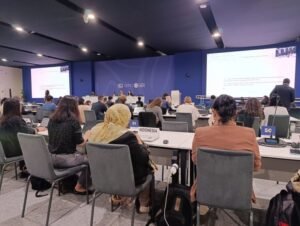
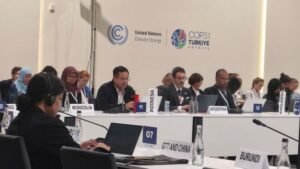
In the COP31 negotiations in Antalya, Indonesia emphasized the importance of opening broad participation opportunities, strengthening funding support and capacity building, as well as accommodating mitigation potential across various sectors while maintaining environmental integrity and supporting the achievement of nationally determined contributions or Nationally Determined Contributions (NDCs).
One of Indonesia’s concerns is the development of methodologies within the Article 6.4 mechanism or the Paris Agreement Crediting Mechanism (PACM), which can accommodate the potential mitigation of the forestry and land use sectors, as well as relevant blue carbon ecosystems. Indonesia considers it important to have a methodology that suits the characteristics of the sector, both for emission reduction and for increasing greenhouse gas absorption.
The methodology of activities approved in PACM still needs to be expanded to accommodate forestry activities. Meanwhile, several related methodology proposals have entered the assessment process. Indonesia encourages that the development and assessment of this methodology continue to receive attention from the Supervisory Body under Article 6.4 mechanism, while still adhering to applicable standards and procedures.
Methodology development needs to ensure that mitigation benefits are real, measurable, verifiable, and meet the principle of additionality. For forestry activities and land use, attention also needs to be given to controlling emission leakage, handling the risk of impermanence and absorption reversal, as well as environmental and social protection.
Indonesia also emphasizes the importance of transparent, accountable, and facilitative governance mechanisms. Adequate and sustained support is needed to strengthen the readiness of developing countries, including in the development of activities, the application of methodologies, measurement and reporting, as well as the fulfillment of mechanism requirements. The implementation of this cooperation needs to support the achievement of the NDC, prevent double counting, and respect the authority of participating countries in accordance with the provisions of the Paris Agreement.
In non-market cooperation based on Article 6.8, Indonesia encourages strengthening developing countries’ access to partners, funding, technology, and capacity building to support mitigation and adaptation. This cooperation is carried out voluntarily, does not involve the transfer of mitigation results, and still meets the agreed criteria.
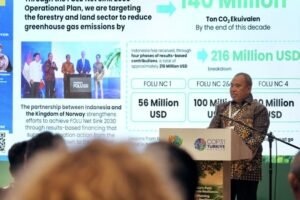
For the Ministry of Forestry, strengthening the implementation of Article 6 is an opportunity to expand support for sustainable forest management, conservation, and ecosystem restoration, while also increasing benefits for communities. The utilization of these opportunities needs to align with national priorities, maintain environmental integrity, and support the achievement of Indonesia’s climate targets.
Indonesia will continue to participate constructively in negotiations to promote the inclusive implementation of Article 6, safeguard the interests of developing countries, and provide tangible benefits for achieving the goals of the Paris Agreement. (*)