




EduAsiaNews, Jember – The existence of traditional markets amid the rapid pace of economic modernization requires a legal framework that is robust, adaptive, and equitable.
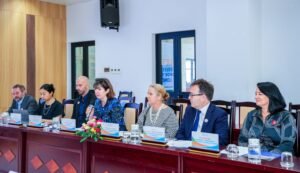
In response to this challenge, the University of Jember (UNEJ) organized a National Seminar entitled “Enhancing Meaningful Public Participation in the Formulation of the Draft Law on the Protection and Empowerment of Traditional Markets” at the Soedjarwo Building on Friday (June 5, 2026).
The seminar was initiated based on the urgent need to involve all elements of society—particularly grassroots economic actors—in the legislative process, ensuring that regulations enacted by parliament genuinely reflect real needs on the ground through meaningful public participation. To explore this issue comprehensively, UNEJ brought together policymakers, academics, and representatives of the Jember Regency chapter of the Indonesian Traditional Market Traders Association (APPSI) to directly voice the aspirations of traditional market traders.
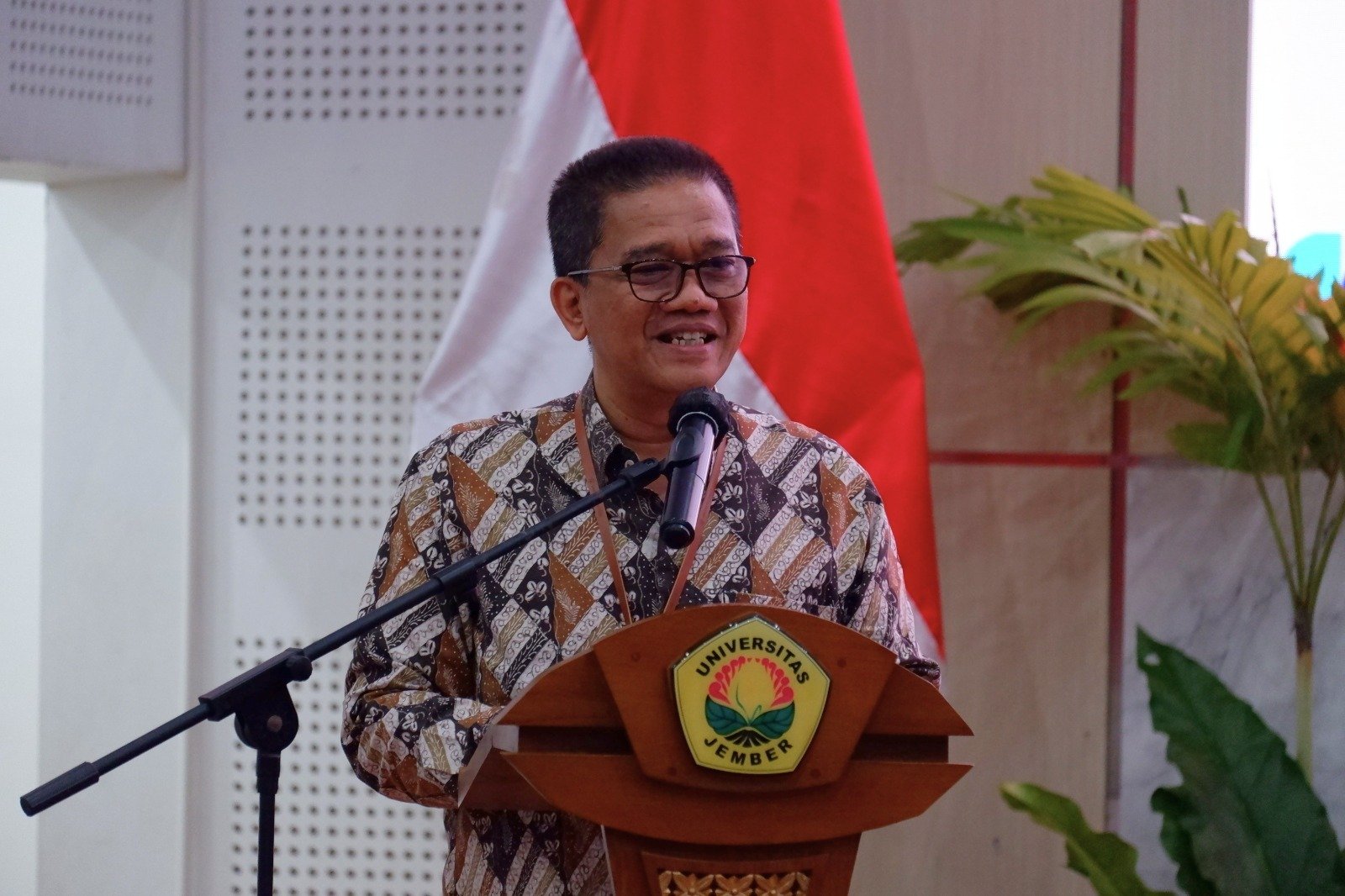
In his opening remarks, Rector of the University of Jember, Dr. Ir. Iwan Taruna, M.Eng., IPM., ASEAN Eng., emphasized that meaningful public participation is a crucial foundation for producing high-quality legislation.
“The public should not merely be present as listeners but must become an integral part of the policymaking process. Citizens have the right to be informed, to express their views, and, most importantly, to receive explanations regarding how their aspirations are considered in the legislative process,” he stated while officially opening the seminar.
He further noted that universities have a strategic role that extends beyond producing graduates and academic publications. Higher education institutions, he said, must actively support legislative studies, human resource development, and the strengthening of evidence-based policymaking.
“Given the characteristics of our region, traditional markets serve as people-centered economic spaces that bring together farmers, MSME actors, and consumers. Therefore, protecting all stakeholders within this ecosystem is imperative,” Iwan Taruna explained.
Echoing this perspective, Head of the DPR RI Expertise Body, Prof. Dr. Bayu Dwi Anggono, S.H., M.H., expressed his deep appreciation for the warm reception and the remarkable potential of the University of Jember. The national figure, who previously served as Dean of the UNEJ Faculty of Law from 2020–2024 and for a second term from 2024–2028 before being appointed Head of the DPR RI Expertise Body in 2025, reaffirmed his commitment to bringing UNEJ’s potential to the national stage.
“We want to introduce UNEJ’s extraordinary potential to the central legislative drafting and technical research teams,” said Prof. Bayu Dwi Anggono during the signing of a Memorandum of Understanding between the DPR RI Expertise Body and the University of Jember.
He further explained that the strategic partnership represents a renewal of the cooperation agreement established in 2021, which is set to conclude in 2026.
“Why is UNEJ important? The university has been extensively involved in national legislative work. Over the past decade, many academics have participated in these efforts, beginning with scholars from the Faculty of Law. This year alone, nearly 20 to 25 academics from various faculties at UNEJ have actively contributed to the preparation of Academic Papers, Draft Laws, and other legislative assignments, including those related to traditional markets,” he explained.
The DPR RI Expertise Body remains committed to ensuring that knowledge and scientific research have a strong influence on national policymaking. Among the hundreds, even thousands, of higher education institutions in Indonesia that serve as sources of knowledge and expertise, UNEJ has become one of its key partners due to the strength of its academic community across various disciplines.
“The benefits for universities are substantial. Throughout 2025, the DPR RI Expertise Body produced 143 academic papers and draft laws, 284 concepts of DPR statements for the Constitutional Court, 1,491 published articles, 29 books, and 12 editions of journals and other publications. The production of all these outputs involved thousands of academics from diverse fields of expertise. No other institution engages as many academics as the DPR RI Expertise Body,” he added.
Looking ahead, the partnership will also provide valuable opportunities for UNEJ students to undertake internships at the DPR RI Expertise Body through the annual Ministry of Manpower Internship Hub Program, with administrative benefits aligned with the Jakarta Provincial Minimum Wage.
Support for traditional markets was also strongly emphasized by Regent of Jember, H. Muhammad Fawait, S.E., M.Sc., in his official address on behalf of the regional government. He underscored that traditional markets constitute a resilient informal economic force that few countries possess. Indonesia’s ability to withstand various global economic crises, he argued, is largely attributable to strong domestic demand driven by the informal sector, including traditional market traders.
“UNEJ is a valuable asset for the Jember Regency Government. We are deeply grateful for UNEJ’s presence, which continues to contribute to economic growth and serves as a center of activity that stimulates the local economy,” he stated.
As a tangible demonstration of the local government’s commitment to traditional markets, the Regent highlighted a significant policy initiative undertaken by the administration.
“The Jember Regency Government has officially reduced market levies by 100 percent—effectively eliminating them—since 2025 in order to ease the burden on informal sector actors. In terms of infrastructure, we have also commenced the construction of Jember’s largest traditional market, Pasar Tanjung, which is targeted for full completion by early 2027. We hope that this national seminar at UNEJ will serve as a strong foundation for protecting traditional markets and the traders who depend on them,” he concluded.