




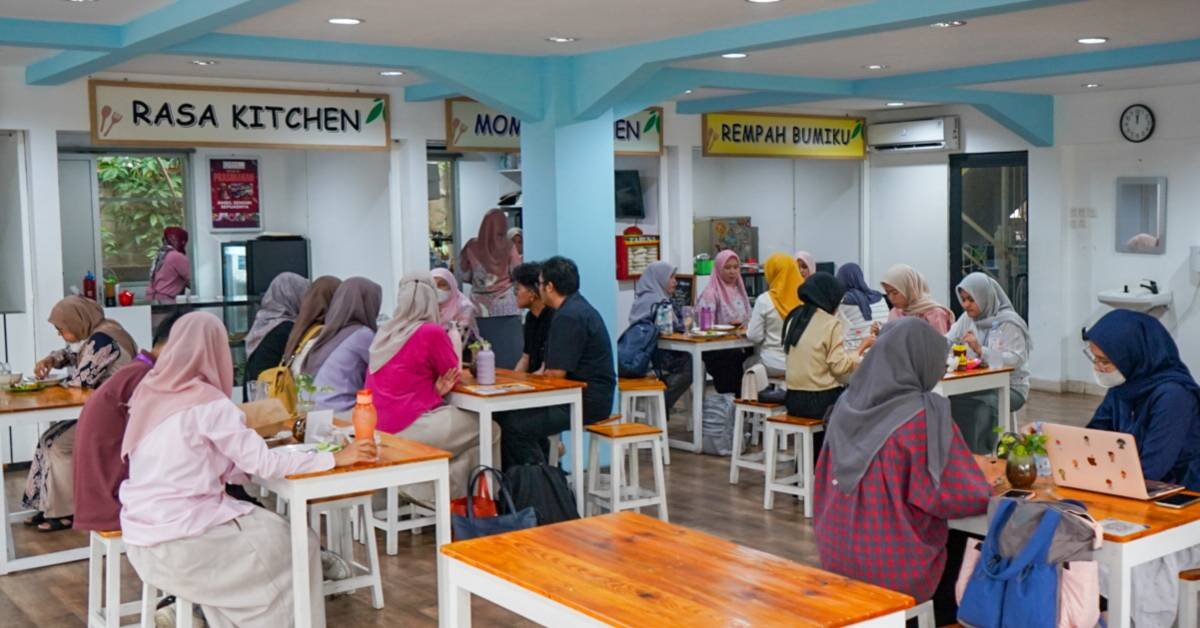
EduAsiaNews, Jakarta — For students of the Faculty of Medicine (FK) at UIN Jakarta, a demanding schedule is part of daily life. From morning until late afternoon, their time is filled with lectures and practical sessions. The need for a comfortable space to rest has therefore become essential. This is where Medicanteen comes in—not merely as a cafeteria, but as a healthy space and a “home away from home” for students.
Previously, the faculty did have a cafeteria; however, its management did not meet students’ expectations and it eventually ceased operations. The faculty then undertook renovations and introduced a new concept. “Vendors must meet nutritional standards. Instant or processed foods are not allowed,” explained the Vice Dean for General Administration at FK UIN Jakarta, Dr. Erike Anggraini Suwarsono.
As a cafeteria within a medical faculty, Medicanteen places health standards as a top priority. Each menu item is required to include carbohydrates, protein, and vegetables. Some tenants are even managed by clinical nutrition specialists, ensuring that caloric composition is carefully calculated. Prices remain affordable for students, ranging from IDR 5,000 to IDR 20,000.
Payments are made cashlessly through a centralized cashier system. The food court concept helps create a more organized flow of service. Within a month, Medicanteen generates a turnover of IDR 60–70 million, reflecting the high level of student trust.
Supporting facilities such as Wi-Fi, a clean environment, music, and a smoke-free area enhance overall comfort. Students are also encouraged to be independent by returning their own dining utensils. On the fourth floor, Medikafe offers a view of Situ Gintung and has become a favorite spot for studying and relaxing.
Looking ahead, Medicanteen is envisioned to develop into a larger common space. The faculty plans to expand it to the second floor, which will serve as an additional dining area as well as Mediklub—a sports space equipped with a gym and a multipurpose hall for basketball, futsal, and badminton. “The idea is for students to be able to eat, socialize, study, and exercise within a single integrated ecosystem,” Dr. Erike concluded.
(Aida Adha/Alden Lee)