


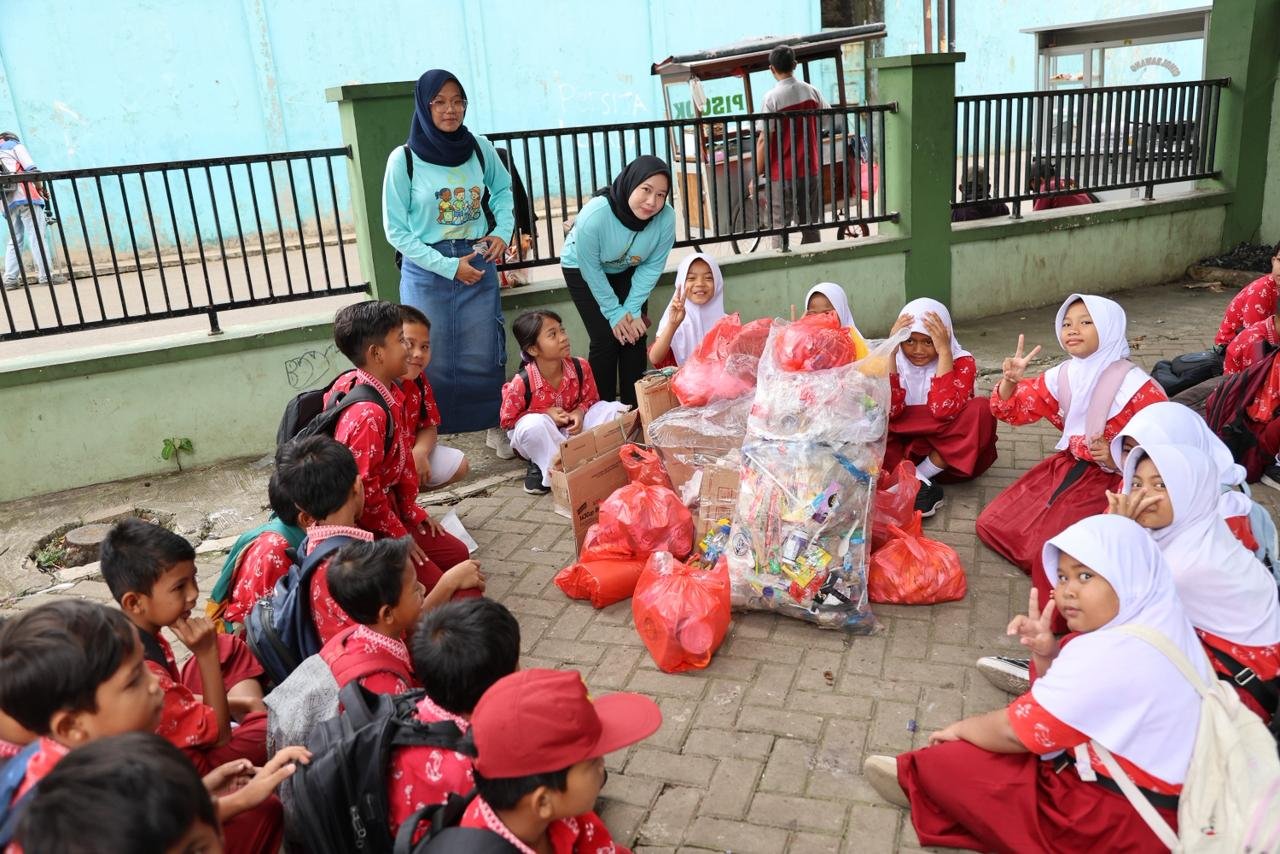
Bekasi City faces significant challenges in waste management that are not proportional to its rapid population growth. Therefore, concrete measures are required to address this issue, including educational initiatives targeting elementary school–aged children through the Inclusive Social Innovation Model for Waste Management: Enhancing Children’s Participation in the Circular Economy. This activity is part of an inter-faculty collaboration between SPPB UI and the Faculty of Humanities (FIB), in partnership with Alamanda Sejahtera Waste Bank. The program aims to instill early awareness of the importance of proper waste management.
A representative of the Universitas Indonesia academic community, Herdis Herdiansyah, stated, “Education on waste segregation in schools requires support from various stakeholders, including educators, community groups, and local residents. However, education alone is not sufficient; a sustainable waste management system is needed to create a more significant impact, such as a waste bank.” He further added that one of the most effective and engaging approaches for children is hands-on practice combined with educational games, as implemented in this program. The five activities conducted include Waste-to-Creation Workshops, My Waste, My Responsibility Program, Waste Exploration Expedition, Eco-Warrior Junior Competition, and the School Mini Waste Bank.
Dwita, a teacher at SDN 5 Bojong Menteng, warmly welcomed the program, stating, “I would like to express my gratitude for your concern for future generations so that they become more environmentally conscious. I hope that through these educational games, children will more easily understand different types of waste, recycling timelines, and the importance of waste sorting and active recycling as members of the Waste Bank.” Through the active involvement of children in waste sorting and reduction at school, a more sustainable mindset toward waste management at the community level can be developed.
This community service and empowerment program is conducted in collaboration with Alamanda Sejahtera Waste Bank, one of the driving forces behind waste bank initiatives in Bekasi City. “We hope that through this activity, children will understand the importance of waste segregation and recognize that waste can generate income and provide other economic benefits,” explained Apriliawati, Chairperson of Alamanda Sejahtera Waste Bank.
This activity marks an initial step toward fostering an environmentally conscious generation capable of managing resources wisely. The program is aligned with the Sustainable Development Goals (SDGs), particularly Goal 15, which focuses on protecting terrestrial ecosystems, and Goal 4, which emphasizes quality education. Through routine annual collaborative programs, Universitas Indonesia remains committed to engaging with communities and making tangible contributions to the development of a more environmentally aware and responsible generation. This program was successfully implemented with funding support from the Directorate of Community Service and Social Innovation of Universitas Indonesia and PT Bumi Resources Minerals Tbk, as well as facilities and manpower support from Alamanda Sejahtera Waste Bank (*).