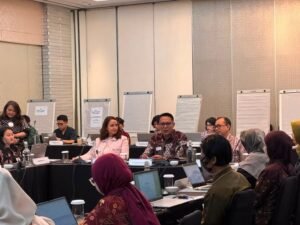





EduAsiaNews, Bangkok — Chulalongkorn University has once again reaffirmed its position as a driving force of healthcare innovation in Thailand. The country’s oldest university presented a series of medical breakthroughs to the National Health Security Office (NHSO), Thailand’s national health insurance authority. The meeting, held on Monday (December 22, 2025), took place at the conference room of the Gastrointestinal Endoscopy Center, King Chulalongkorn Memorial Hospital, under the auspices of the Thai Red Cross Society.
The presentation was led by Professor Dr. Rungsun Rerknimitr, Vice President for Innovation at Chulalongkorn University, together with leading experts in gastroenterology and endoscopy, including Associate Professor Dr. Pinit Kullavanijaya, Dr. Pradermchai Kongkam, and Dr. Phonthep Angsuwatcharakon. Representing the NHSO were Secretary-General Dr. Jadej Thammatacharee and Deputy Secretary-General Dr. Atthaporn Limpanyalert.
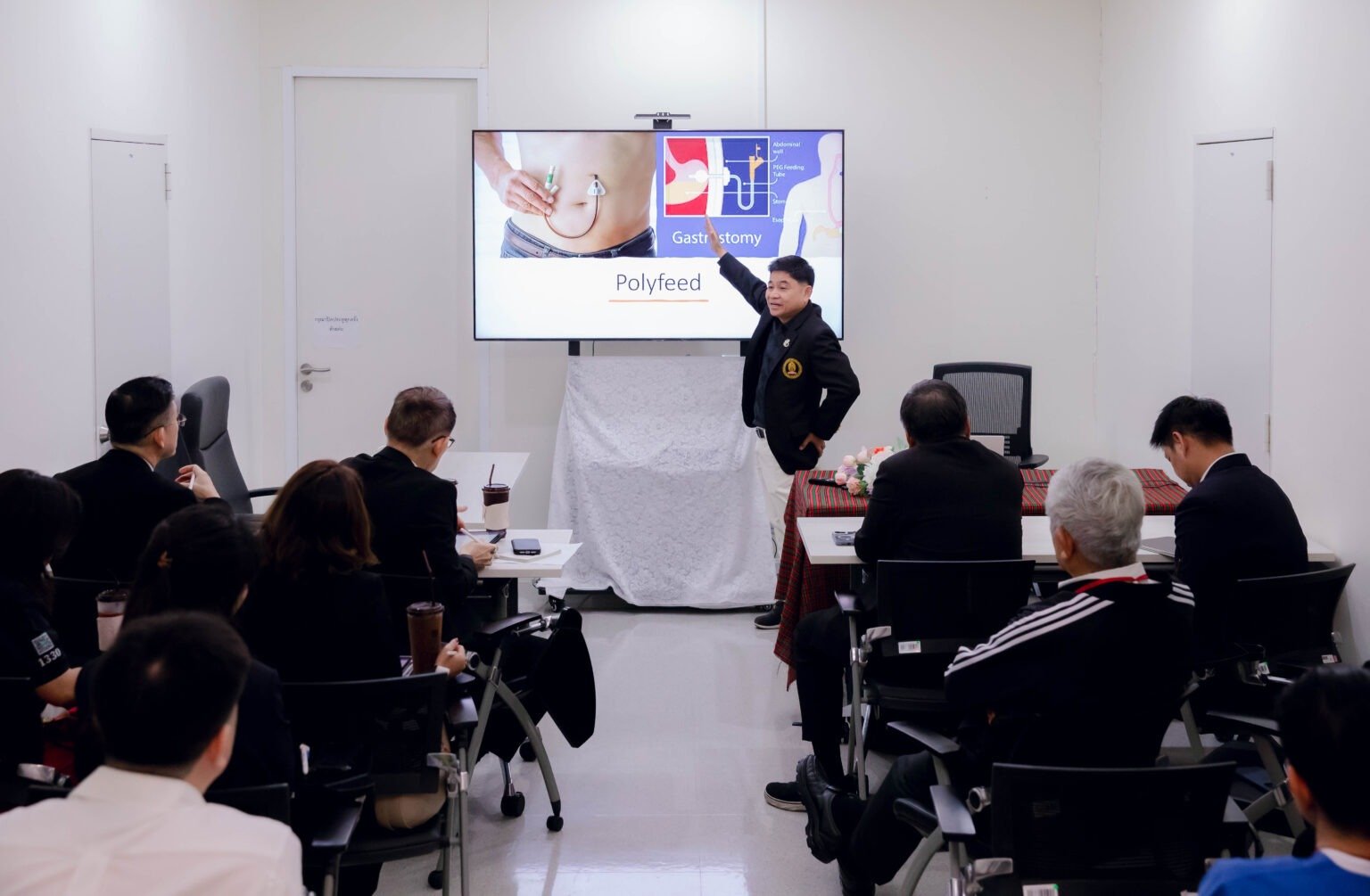
At the forum, Chulalongkorn showcased innovations developed by its lecturers, researchers, and industry partners—ranging from digital medical technologies and medical devices to healthcare service management systems. One of the highlights was Poly Feed, a balloon-type percutaneous feeding tube that enables patients to receive nutrition, fluids, and medications directly into the stomach. The innovation was presented by Suchart Sawatsukhok from the Center of Excellence in Gastrointestinal Endoscopy.
Another innovation was Endoscopic Variceal Ligation (EVL), a technology for the prevention and treatment of bleeding from esophageal varices, presented by Krittima Tumkhanon of Popolo Co., Ltd. Significant attention was also drawn to Deep GI, an artificial intelligence system capable of analyzing endoscopic images to detect abnormalities in the gastrointestinal tract. Developed by the Faculty of Medicine and the Faculty of Engineering at Chulalongkorn University, Deep GI has already received approval from the Thai Food and Drug Administration.
Beyond diagnostics, safety issues were also addressed through the Medical Sharps Disposal Container, an innovation designed to improve the management of sharp medical waste and enhance the safety of healthcare workers. This innovation was presented by Assistant Professor Dr. Shanya Orasutthikul from the Faculty of Architecture, Chulalongkorn University.
For the NHSO, feedback and evaluation of these innovations represent a crucial step in bridging university research with real-world healthcare services, particularly in the context of national health security policy, support for commercialization, and scaling up implementation at the national level. This approach aligns with Thailand’s strategy of advancing national development through science, research, and innovation.
Chulalongkorn University hopes the meeting will serve as a starting point for integrated collaboration among academia, government agencies, and the innovation ecosystem. The goal is clear: to enhance the quality of medical services, improve the efficiency of the universal health coverage system, and create sustainable value for the long-term well-being of the Thai population. (**)