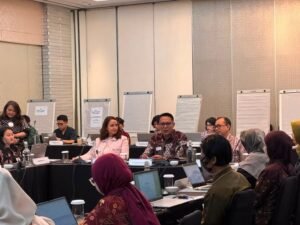





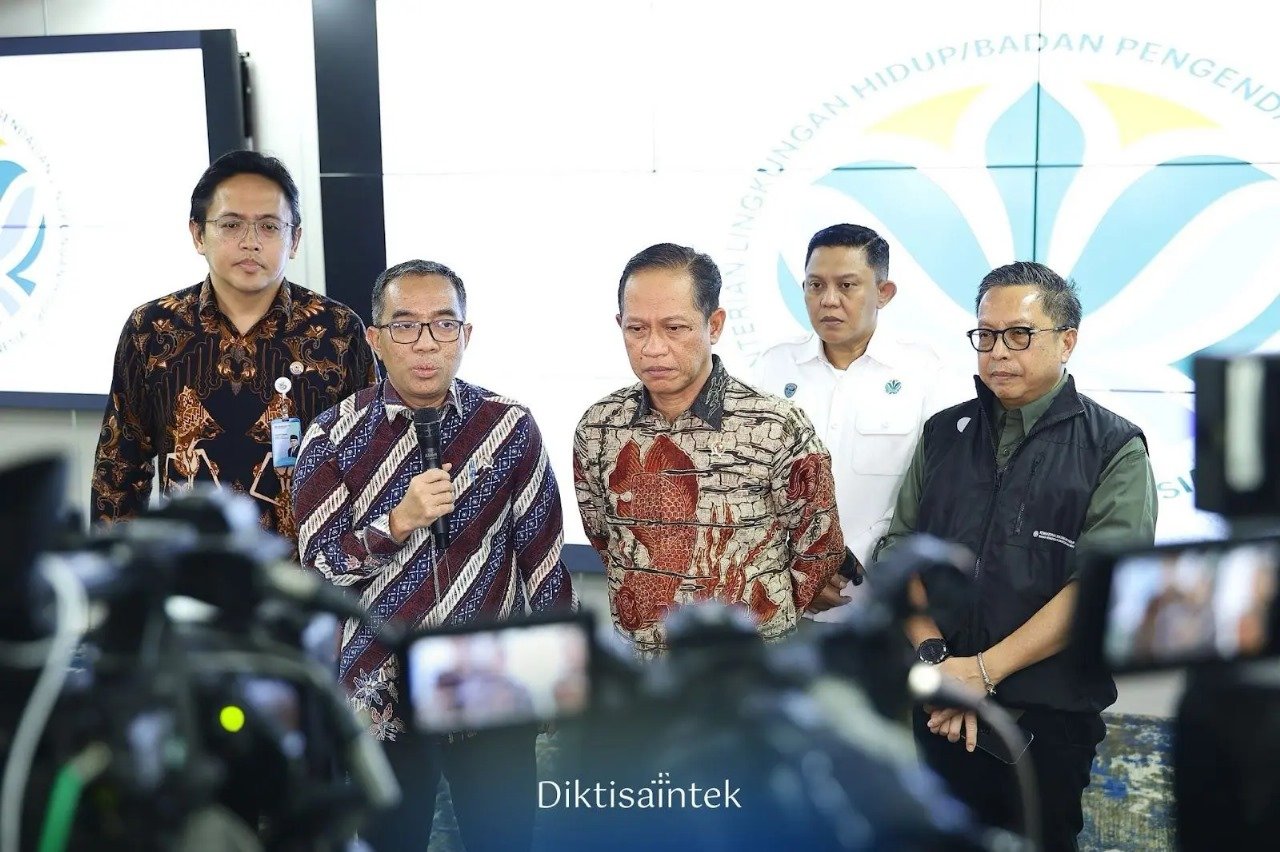
Edu Asia New,Jakarta-The Minister of Higher Education, Science, and Technology (Mendiktisaintek) stated that the management of large-scale disasters requires the involvement of cross-disciplinary experts from higher education institutions. Accordingly, the Ministry of Higher Education, Science, and Technology will deploy lecturers and professors from various fields of expertise, including forestry, environmental science, hydrobiology, civil engineering, spatial planning, and other related disciplines.
“We will be involved in a multidisciplinary team, which will later operate under the direction of the Ministry of Environment to conduct studies and research that are academically, scientifically, and technologically accountable, so that the findings produced are as objective as possible,” said Minister Brian.
The Minister of Higher Education, Science, and Technology emphasized that the involvement of academics in the processes of assessment, research, and environmental auditing is supported by a strong legal framework. Consequently, the experts involved are afforded legal protection in carrying out their scientific duties.
“Article 66 of Law Number 32, as well as regulations issued by the Ministry of Environment, are already in place. Therefore, there are sufficient legal provisions to protect our colleagues—lecturers and professors alike—in relation to environmental issues,” Minister Brian explained.
Meanwhile, the Minister of Environment explained that the disaster was influenced by three main factors: anthropogenic activities in the form of changes in forest cover to non-forest areas, the geomorphological condition of the region which remains relatively young and unstable, and the impacts of climate change, as indicated by extreme rainfall resulting from tropical cyclones.
In response to these conditions, the Ministry of Environment, in collaboration with the Ministry of Higher Education, Science, and Technology, has formulated three main mitigation measures. The first stage involves the implementation of a rapid assessment to provide recommendations for the rehabilitation of residential areas and agricultural land based on scientific studies. The second stage consists of evaluating the alignment of the Strategic Environmental Assessment (SEA/KLHS) with regional spatial planning. The third stage involves evaluating environmental approvals through environmental audits of business activities, including Environmental Impact Assessments (AMDAL) and Environmental Management and Monitoring Efforts (UKL-UPL).
Environmental audits are currently underway in several regions, such as Aceh, West Sumatra, and North Sumatra, involving more than 100 business entities. The results of these audits will serve as the basis for determining sanctions, which may include administrative sanctions in the form of government enforcement measures, civil lawsuits, or criminal proceedings if violations are found to have caused serious impacts, including loss of life.
The Minister of Environment emphasized that enforcement actions are not solely based on licensing status, but rather on the extent of environmental damage caused.
“Even if an activity is licensed, if it is proven to cause environmental damage and result in loss of life, we will still take action in accordance with the applicable regulations,” said Minister Hanif.
The collaboration between the Ministry of Higher Education, Science, and Technology and the Ministry of Environment is expected to strengthen environmental resilience and science-based regional governance, while also serving as a foundation for more sustainable disaster management policies in the future.