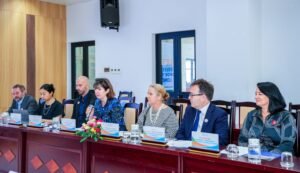





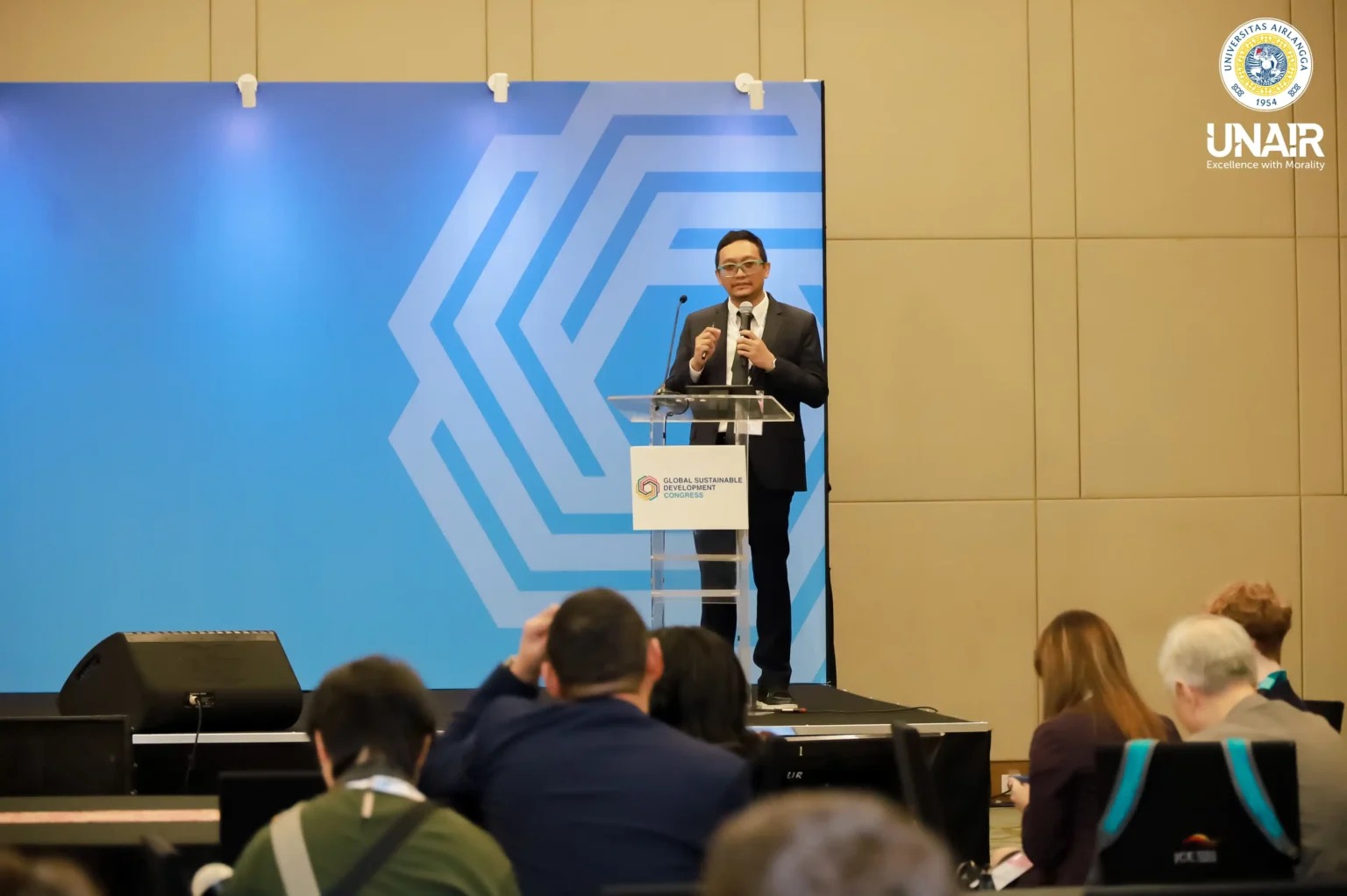
EduAsiaNews, Surabaya – Amid increasingly complex social, economic, and environmental challenges, higher education institutions occupy a crucial position as catalysts for sustainable transformation. “Universities have a strategic role that enables us to address global challenges through three interconnected functions: education, innovation and research, and community engagement,” stated Prof. Muhammad Miftahussurur, MD, M.Kes., Sp.PD-KGEH, Ph.D., FINASIM, Vice Rector for Research, Innovation, and Community Development (RICD) at Airlangga University (UNAIR), during the Global Sustainable Development Congress (GSDC) on Tuesday, June 23, 2026.
Academic Integration
In line with this vision, Prof. Miftah explained that, as a world-class university, UNAIR has adopted several integrated approaches to implementing the Sustainable Development Goals (SDGs). In the academic sphere, for example, UNAIR has incorporated SDGs into its educational curriculum. Furthermore, SDG values are embedded in community-based learning initiatives and international academic collaborations.
“Every year, all incoming students participate in SDG orientation programs through PKKMB (Introduction to Campus Life for New Students). We also promote SDG leadership through the AMORA program, an SDG learning initiative for active UNAIR students. In addition, we actively advocate for the SDGs through the UNAIR SDGs Ambassador program, which aims to empower students as sustainability advocates and changemakers both within the university and in the broader community,” he explained.
Prof. Miftah further highlighted that UNAIR directly engages students in community-based learning activities. Through the BBK (Learning with Communities) program, students, acting as agents of change, apply their knowledge to provide practical solutions and tangible actions in addressing societal challenges.
“Each year, UNAIR deploys approximately 3,000 students in each of two BBK program cycles. These students are distributed across all regions of East Java Province,” he said.
These efforts are further strengthened through initiatives such as UNAIR Sustain Action, the Mangrove Festival, the Floating Hospital (Ksatria Airlangga Hospital Ship), and the Brantas River Sustainability Initiative.
SDG-Based Strategic Planning
At the institutional level, SDG values are also embedded in governance practices and strategic leadership across all aspects of the university’s Tri Dharma of Higher Education. According to Prof. Miftah, the SDGs are integrated into UNAIR’s institutional strategic plan, supported by dedicated organizational structures, including the SDGs Center, which coordinates sustainability initiatives across faculties and university units.
UNAIR’s strategic plan also places a strong emphasis on developing a sustainable campus. This commitment is demonstrated through the publication of an annual Sustainability Report.
Another key approach emphasized by UNAIR in implementing the SDGs is strengthening the engagement of inclusive and vulnerable groups, enhancing partnerships at both national and global levels, and maximizing the impact of sustainable development initiatives.
“Through partnerships, we actively contribute to policymaking and capacity-building efforts, supporting 42 public institutions and 353 assisted villages across various regions. Through collaboration, UNAIR strives to transform knowledge and partnerships into sustainable development impacts at the local, national, and global levels,” he emphasized.
Concluding his presentation, Prof. Miftah underscored the importance of collaboration in achieving sustainable development.
“The future of sustainable development will not be shaped by institutions working in isolation. Rather, it will be built by institutions that are capable of connecting knowledge, innovation, partnerships, and communities to create lasting and sustainable impact,” he concluded.
Author: Yulia Rohmawati