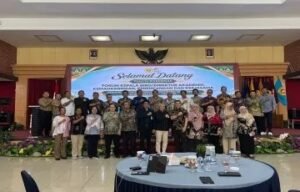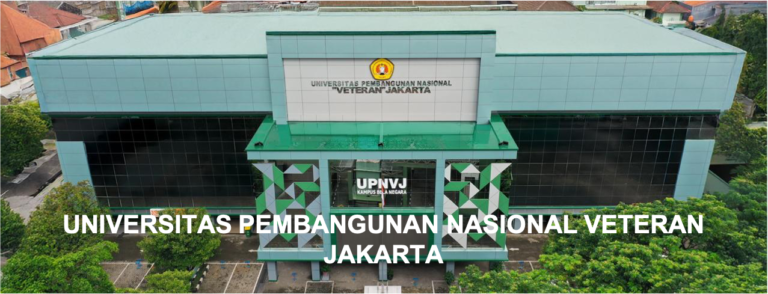





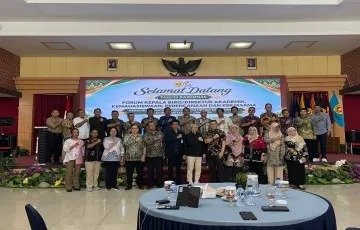
EduAsiaNews, Jakarta – Universitas Pembangunan Nasional “Veteran” Jakarta (UPNVJ) hosted the 2026 National Coordination Meeting (RAKORNAS) of the Forum of Heads of Bureaus and Directors for Academic Affairs, Student Affairs, Planning and Cooperation (AKPK) of state universities and polytechnics across Indonesia on Nov. 5, 2026.
Held at UPNVJ’s Bhinneka Tunggal Ika Auditorium in Jakarta, the meeting served as a strategic forum to strengthen the integration of higher education governance and support policies aimed at delivering tangible benefits to society. The meeting officially opened on Thursday (Nov. 5, 2026).
Under the theme “Transforming State University Governance: Integrating Academic Affairs, Student Affairs, Planning and Cooperation for Impactful Campus Performance,” RAKORNAS 2026 brought together university leaders and AKPK administrators from state universities and polytechnics across the country.
The forum aimed to align policies, strengthen cross-functional coordination and formulate strategic measures to improve the effectiveness of higher education governance.
In his opening remarks, Henry Binsar H. Sitorus, acting vice rector for academic affairs at UPNVJ, emphasized the importance of institutional synergy and policy integration in responding to the changing needs of higher education.
He said transforming university governance required strong coordination among academic affairs, student affairs, planning and cooperation units to ensure that policies were implemented effectively and delivered measurable benefits.
“Transforming university governance cannot be pursued in isolation. Strong integration among academic affairs, student affairs, planning and cooperation is essential to ensure that all university policies and programs work toward a common goal: delivering quality, adaptive higher education that creates a tangible impact on society,” Henry said.
He also described RAKORNAS as an important opportunity to build a shared perspective and strengthen collaborative networks among universities.
Universities, he added, should develop governance systems that go beyond administrative compliance to encourage innovation, improve education services and address the needs of national development.
As host, UPNVJ viewed the national forum as an opportunity to strengthen its institutional contribution to higher education transformation. Collaboration among state universities is expected to produce practical policy recommendations that can be adapted to the characteristics and needs of individual institutions.
Integrating Policies and Strengthening the One Data System for Higher Education
The first day’s main agenda began with an introductory discussion titled “State Universities as Orchestrators of Impactful Innovation in Implementing the Three Pillars of Higher Education.” The session featured Dr. Beny Bandanadjaja, director of learning and student affairs (Belmawa).
The discussion explored the strategic role of universities in integrating education, research and community service to generate innovations that address public needs. Stronger coordination across institutional functions was identified as essential to improving the implementation and outcomes of the Three Pillars of Higher Education.
RAKORNAS also featured a session with Ir. Franova Herdiyanto, head of the Data and Information Management Working Team at the Center for Data and Information Technology (Pusdatin). The session focused on “The Role of One Data in Impact-Oriented Policy Planning and Decision-Making.”
The discussion highlighted data integration as a key foundation for university planning, decision-making and policy evaluation. The availability of accurate, consistent and integrated data is expected to strengthen accountability and improve the precision of higher education program development.
The spirit of integration promoted through RAKORNAS is expected to provide a foundation for more responsive higher education policies in addressing contemporary challenges.
By strengthening synergy among academic affairs, student affairs, planning and cooperation, universities are expected to improve institutional performance while making meaningful contributions to society and Indonesia’s national development.(www.upnvj.ac.id)