




EduAsiaNews, Jakarta — Universitas Negeri Jakarta (UNJ) is studying Banyuwangi’s experience and transformation strategies as a reference for institutional development in the era of state universities with legal entity status (PTN-BH). The lessons were shared by Abdullah Azwar Anas at a seminar and workshop held alongside the signing of a memorandum of understanding (MoU) at the Sabha Swagata Blambangan Pavilion in Banyuwangi, East Java, on Friday, Sept. 25, 2026.
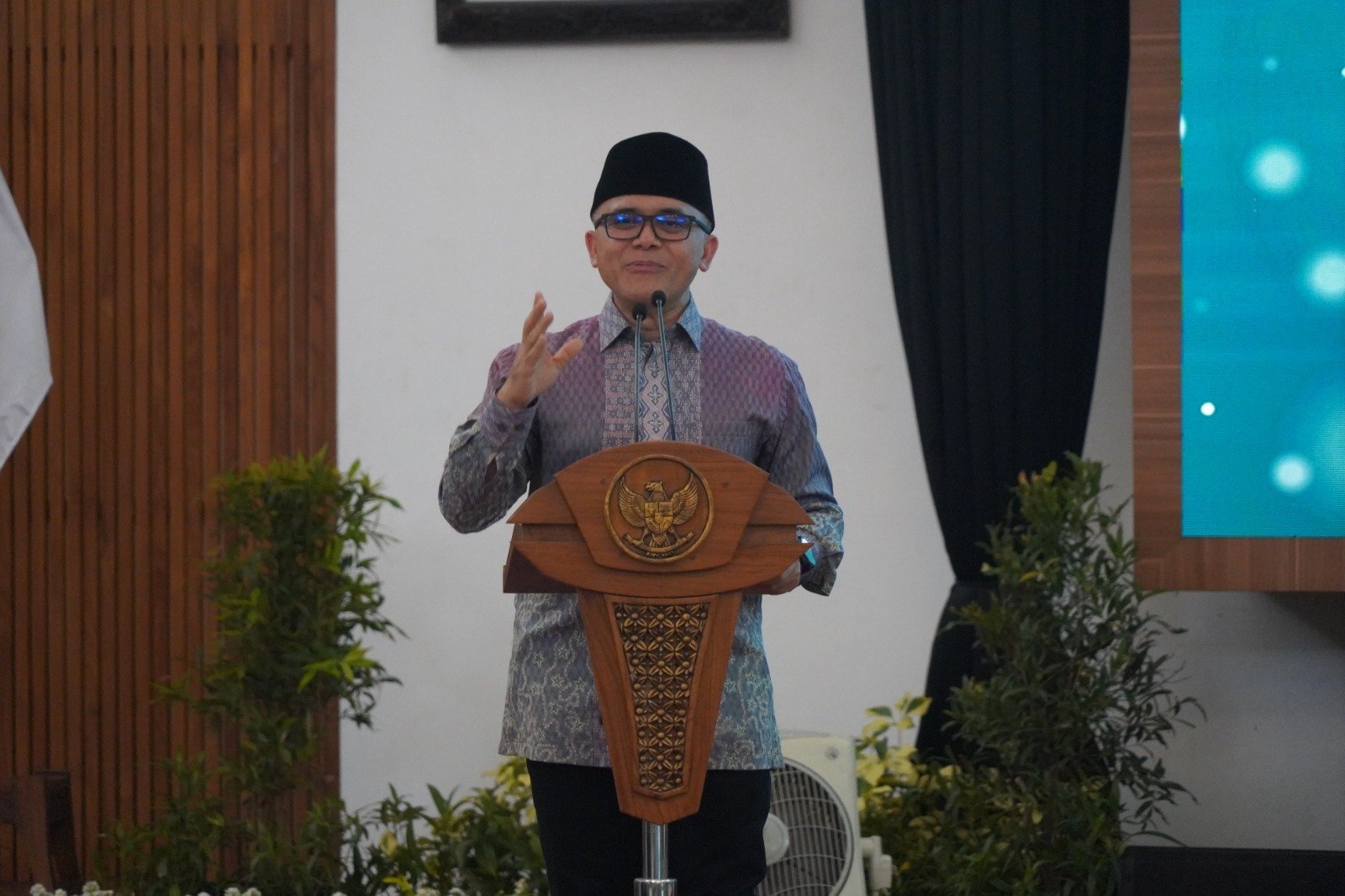
The seminar and workshop brought together UNJ leaders, with Abdullah Azwar Anas serving as the keynote speaker. He shared his experience in transforming Banyuwangi, as well as insights into leadership, innovation, identity building, communication strategies and priority-based program development.
Azwar Anas, who served as Banyuwangi regent from 2010 to 2015 and again from 2016 to 2021, said institutional transformation could be pursued by learning from best practices developed by various institutions. One approach that could be adopted, he said, was the ATM method — Amati, Tiru, Modifikasi (Observe, Imitate and Modify).
Photo: UNJ Public Relations
According to Azwar Anas, UNJ could observe best practices from universities with established reputations, identify approaches that matched its institutional needs and then modify them based on UNJ’s own characteristics and potential.
Beyond development strategies, Azwar Anas highlighted the importance of identity as part of institutional transformation. Banyuwangi’s experience showed that development did not always have to be defined by costly physical infrastructure. Natural resources, culture and local characteristics could become part of an identity that distinguished a region.
In developing several landmarks in Banyuwangi, the local administration worked with architects Andra Matin on the development of the airport and Adi Purnomo on the design of the regent’s pavilion and guesthouse. The approach produced works that combined functionality, environmental considerations and cultural identity.
“Good does not have to be expensive. What matters is that it is clean. Architecture should have cultural markers,” said Azwar Anas, who also served as minister of administrative and bureaucratic reform from 2022 to 2024.
Campus Leaders Need to Strengthen Communication Strategies
In his presentation, Azwar Anas, an alumnus of UNJ’s Faculty of Education, also highlighted the importance of leadership in building an institution’s reputation and communicating its strengths.
He encouraged higher education leaders, including rectors, members of the Board of Trustees (MWA) and the University Academic Senate, to actively communicate their institutions’ potential and achievements.
Photo: UNJ Public Relations
“Every leader has to be a marketer. If you don’t market the product you have created, you won’t get opportunities,” he said.
According to Azwar Anas, higher education institutions’ communication strategies also need to adapt to technological developments and the characteristics of younger generations. The use of digital platforms such as Instagram, WhatsApp and TikTok is important for expanding the reach of information while showcasing an institution’s strengths.
For UNJ, such a communication strategy could help promote its academic achievements, innovations, partnership programs and contributions to society to a wider audience.
Focusing on Priorities and Collaboration
Azwar Anas also shared Banyuwangi’s experience in setting development priorities by making tourism one of the key drivers of regional development, supported by various government agencies. The education, public works and agriculture sectors were directed to contribute to tourism development in an integrated manner.
He said cross-sector collaboration was essential to ensure that development programs did not operate independently but shared a common direction and goals.
He also outlined several developments in Banyuwangi during his tenure. The poverty rate, which stood at around 20.4 percent in 2010, was said to have declined to 8.6 percent. Meanwhile, per capita income increased from around Rp14 million to Rp60 million.
UNJ Rector Prof. Komarudin said Banyuwangi’s experience offered valuable insights for UNJ as it formulates its institutional development strategy as a PTN-BH.
“There is much we can learn from Banyuwangi’s experience, particularly how the region built its identity, set priorities, mobilized collaboration and communicated its achievements to the public. These principles are relevant for us to adapt as we develop UNJ as a PTN-BH,” Prof. Komarudin said.
Photo: UNJ Public Relations
He said institutional transformation required clear direction, collective effort and the ability to identify and harness existing potential. Learning from various best practices could therefore serve as a reference for UNJ in developing strategies suited to the university’s characteristics and needs.
“This seminar and workshop provide a space for UNJ leaders to broaden their perspectives and examine development experiences from a wider point of view. We want to draw relevant lessons, adapt them to the UNJ context and make them part of our efforts to build an impactful, inclusive and globally reputable university,” he added.
Through the event, UNJ not only gained insights into Banyuwangi’s transformation experience but also created an opportunity for its leaders to reflect on the university’s institutional development strategy. Strengthening institutional identity, setting priorities, fostering collaboration across units, promoting innovation and improving public communication will remain important elements in UNJ’s efforts to strengthen governance and competitiveness as a PTN-BH.