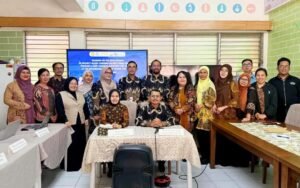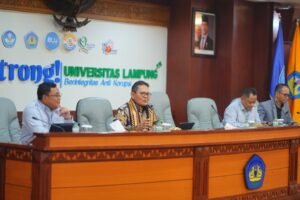





EduAsiaNews, Jember – The Gender Studies Center of the University of Jember (PSG UNEJ), in collaboration with YAPPIKA and SEPAHAM, held a Gender Mainstreaming Training Program for Higher Education Institutions on Sept. 26–27, 2026, at UNEJ’s Jubung Campus.
Held as part of the university’s 62nd anniversary celebrations, the program was aimed at strengthening equitable, safe and inclusive campus policies and services through problem mapping, data collection and the development of action plans.
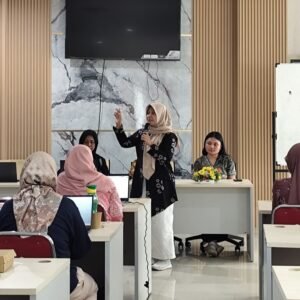
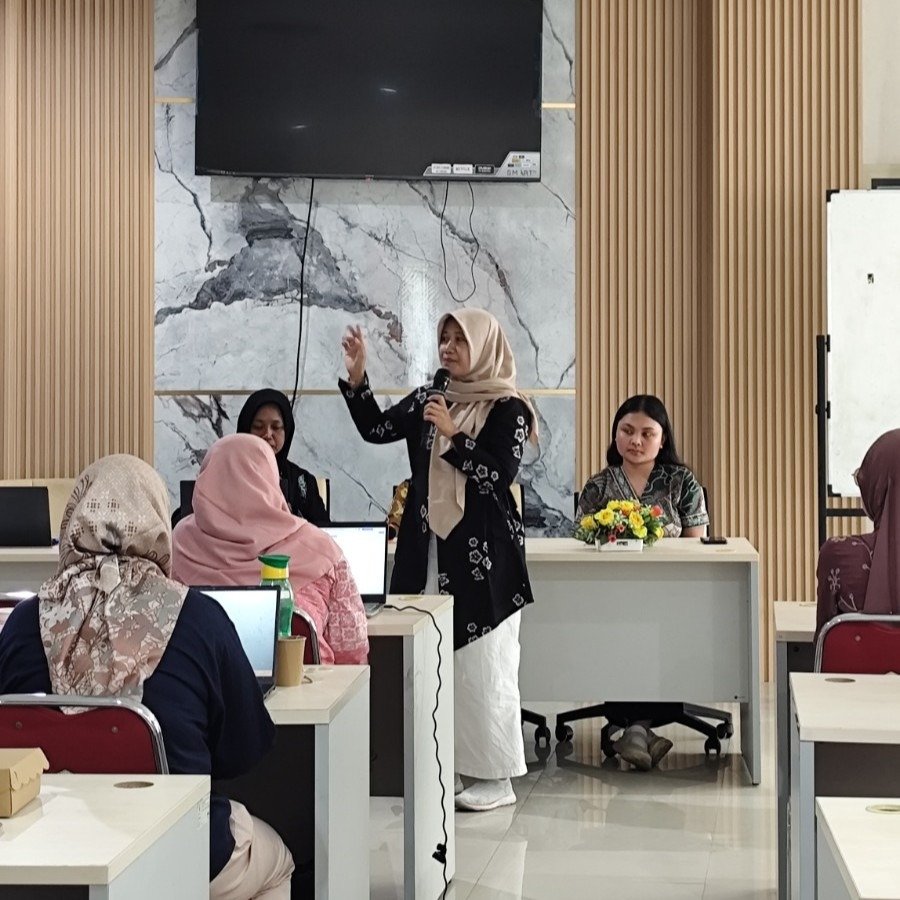
The training brought together lecturers, administrative staff and students from various faculties. On the first day, participants discussed gender concepts, forms of inequality, power relations, human rights and the application of a gender perspective in higher education governance. Sari Wijaya of YAPPIKA and Dr. Lidwina Inge Nurtjahyo of the Faculty of Law at the University of Indonesia delivered sessions on gender mainstreaming and its links to fulfilling the rights of members of the campus community. Participants also learned about gender analysis, disaggregated data, gender-responsive budgeting, and policy monitoring and evaluation.
[Photo: UNEJ]
In her presentation, Sari emphasized the importance of substantive equality, measured through tangible outcomes rather than merely through formal documents. Meanwhile, Lidwina explained that gender constructs are contextual and can change according to time and place. These two perspectives provided a basis for assessing the impact of campus policies on the diverse experiences of members of the university community.
PSG UNEJ Chair Dr. Linda Dwi Eriyanti and Dr. Agustina Dewi Setyari of the PSG UNEJ Research Division led discussions on regulations and the availability of facilities within university units. Through faculty-based group discussions, participants identified needs related to equal opportunities in study, employment and leadership; the prevention of discrimination and violence; support for pregnancy and breastfeeding; and access to reporting and recovery mechanisms.
UNEJ’s 2026 disaggregated data show that the university has 785 female lecturers (52.5 percent) and 710 male lecturers (47.5 percent), out of a total of 1,495 lecturers. Among active students, women account for 24,484 students (66.9 percent), while men account for 12,133 students (33.1 percent), out of a total of 36,617 students. Although women constitute the majority in both groups, representation across different areas needs to be examined separately. For example, of the university’s 101 professors, only 27 are women.
[Photo: UNEJ]
Various case studies were used to examine gender bias in leadership programs, teaching materials, research, community service and violence-reporting services. The discussions underscored that the existence of regulations alone is insufficient if members of the campus community are unable to access and use them effectively.
[Photo: UNEJ]
On the second day, the program continued with interactive discussions, data collection and the development of an action plan for gender mainstreaming at UNEJ. Data from university units were used to identify gaps, determine priorities and formulate practical steps that could be implemented and evaluated.
As a follow-up, PSG UNEJ will organize a series of activities, including a leadership forum, a social media campaign competition and Youth-Led Civic Action (YLA). The center is also working to ensure that the outcomes of the training are followed up through policies, procedures, facilities and budgeting that address the needs of the campus community.
The commitment to building an equitable campus should ultimately be measured by the implementation of action plans and the changes experienced by students, lecturers and administrative staff.