



EduAsiaNews, Surabaya – Career opportunities for students of Universitas Airlangga (UNAIR) in the industrial sector, as well as global academic networks, have become a particular concern among parents of new students. They conveyed their aspirations regarding both areas to UNAIR’s leadership during the Gathering with Parents of New Students (SILMABA) held on Sunday (August 23, 2026), at the Airlangga Convention Center (ACC), MERR-C Campus.
Responding to the concerns raised by parents, UNAIR Rector Prof. Dr. Muhammad Madyan, S.E., M.Si., explained that UNAIR is continuing to strengthen partnerships with industry at both national and international levels.
“We will, God willing, strengthen our collaboration with industry. We will seek to minimize the gap between the education sector and industry,” he said.
Expanding Global Networks
The Rector also emphasized that UNAIR continues to expand its international networks. One example is the university’s oldest faculty, the Faculty of Dental Medicine (FKG), which has established partnerships with various educational institutions in Japan.
“For example, FKG currently has extensive collaborations with universities overseas, including in Japan. Many FKG graduates are pursuing further education in Japan, and many of them have received scholarships,” he explained.
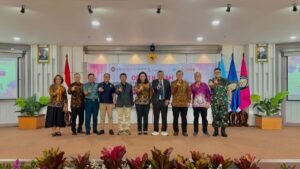
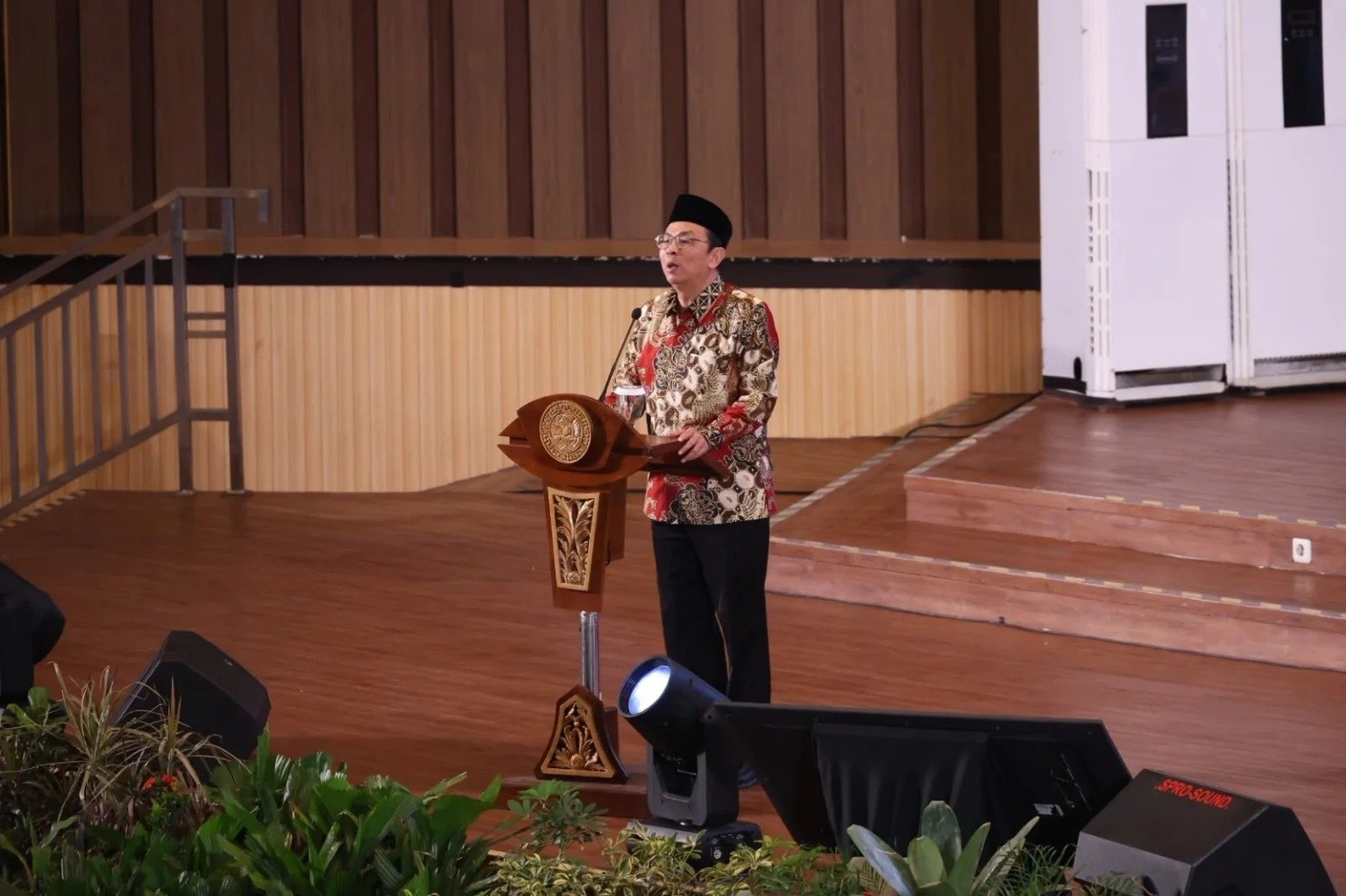
The Secretary of the UNAIR Directorate of Student Affairs with parents of new students during the SILMABA event. (Photo: UNAIR Public Relations)
One of UNAIR’s strategic programmes to expand students’ career opportunities is to increase the availability of internship programmes. These programmes are offered not only domestically but also internationally.
Internship Programmes
UNAIR Vice Rector for Academic Affairs, Student Affairs, and Alumni, Prof. Ir. Mochammad Amin Alamsjah, M.Si., Ph.D., added that internships are one of the indicators of students’ academic success.
“Why has this become one of our priorities? Because it is closely related to academic reputation,” he said.
UNAIR also provides students with opportunities to develop their skills before entering the professional world. This support is provided through the university’s facilitation of student activity units (UKMs) and other student organizations.
“Student activity units and organizations are well prepared so that they can help develop students’ soft skills, which will be essential when they enter the workforce,” he added.
UNAIR, he continued, also remains committed to supporting its graduates. During the transition period before graduates secure employment, the university provides various programmes aimed at strengthening both hard and soft skills.
Through these various efforts and strategies, UNAIR expects its graduates to be better prepared to enter the industrial sector while contributing to strengthening UNAIR’s reputation at both the national and global levels.
Writer: Yulia Rohmawati