




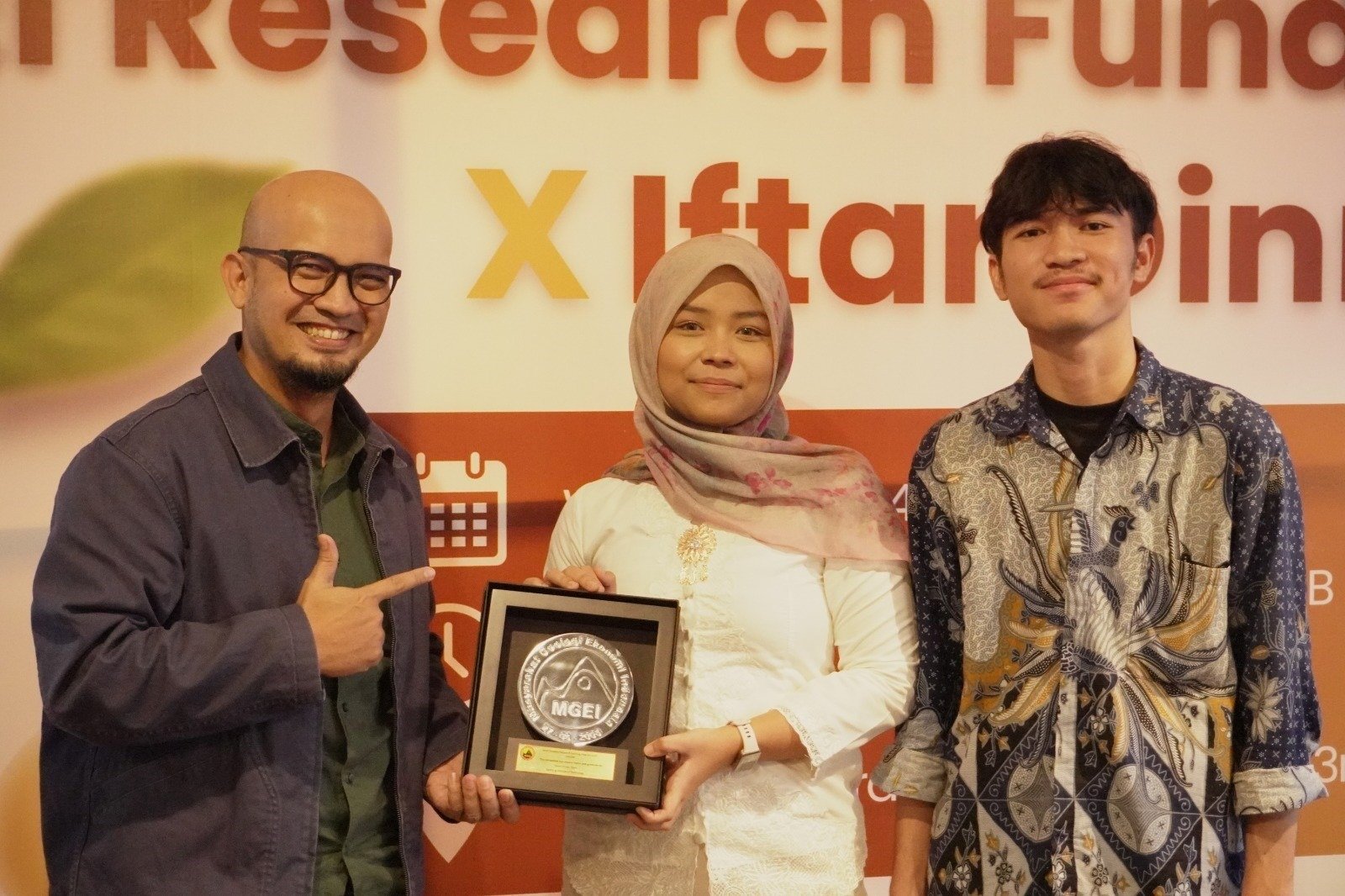
EduAsiaNews, Bandung — Two students from the Geological Engineering Study Program, Faculty of Earth Sciences and Technology (FITB), Institut Teknologi Bandung (ITB), who are part of the TIMah Primer team—A. Zaky Aditya and Wenny Yusvicka—have been awarded funding through the Masyarakat Geologi Ekonomi Indonesia (MGEI) Student Research Funding 2025 program. In this program, TIMah Primer presented their research entitled “Geochemical Evolution of Klabat Granite and Its Implications for Sn-REE Enrichment: A Case Study from Greisen-Type Primary Tin Deposits in Pangkalan Baru, Bangka Island” and was selected as one of the winning teams on Wednesday (March 4, 2026).
This research grant program, organized by the Indonesian Society of Economic Geologists (MGEI), aims to encourage high-quality research among the younger generation while strengthening students’ academic and technical capacities in the geosciences field. Each selected team receives research funding of up to IDR 50 million to carry out their project over a six-month period.
Through a rigorous and competitive selection process, the team was chosen from the top 15 proposals to proceed to further evaluation stages before the final grant recipients were announced.
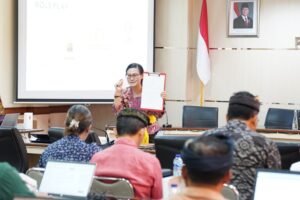
“After being selected, we conducted research over six months with several milestones, including progress reports, presentations at the MGEI Annual Convention, and a final presentation on March 4, 2026,” said A. Zaky Aditya.
The research, conducted within the Mining Business Permit (IUP) area owned by PT Timah Tbk in Pangkalan Baru, Bangka Island, examines how geological and geochemical processes control the formation of tin and REE mineralization on the island. The team carried out hydrothermal alteration zone mapping, analysis of geological structures controlling fluid flow, and identification of mineralization stages. In addition, the study investigates the distribution of REEs, which indicates characteristics of highly fractionated S-type granite.
From these findings, the team successfully developed a structural-hydrothermal model for Sn-REE mineralization, which is expected to serve as a reference for future exploration strategies. This understanding is considered crucial for improving the efficiency of discovering new reserves, particularly for primary tin deposits in Indonesia.
Nevertheless, the research journey was not without challenges, including managing time between academic responsibilities and research activities. Conducting research in an active mining area also required a high level of adaptability to dynamic field conditions. However, these experiences provided valuable learning opportunities beyond those obtained in the classroom.
Through this program, the team gained extensive experience, ranging from proposal writing and field research execution to geochemical data analysis and presentations before industry professionals.
They also shared several tips for participating in similar competitions, emphasizing the importance of aligning research topics with industry needs, employing strong methodologies, and being well-prepared for interview sessions.
“We hope that more Indonesian students will be encouraged to engage in research from an early stage, as it is through such efforts that innovations emerge—enabling Indonesia to compete at regional and global levels, particularly in the natural resources sector, which is one of the nation’s greatest strengths,” they concluded.