




EduAsiaNews, Jember – The Faculty of Law of the University of Jember (FH UNEJ) hosted the 16th Episode of the Perisai Badilum National Seminar (Regular Meeting and Interactive Discussion Forum of the General Courts Agency), organized by the Directorate General of the General Courts Agency of the Supreme Court of the Republic of Indonesia, on Saturday, June 20, 2026.
Held at the Mayapada Building of FH UNEJ, the seminar carried the theme “Reflections on Law Enforcement Following the Implementation of the New Criminal Code.” Under the concept of Badilum Goes to Universitas Jember, the event brought together academics, judges, legal practitioners, students, and judicial officers to discuss the various challenges surrounding the implementation of Indonesia’s New Criminal Code (KUHP), which has recently come into effect as a milestone in the reform of the nation’s criminal justice system.
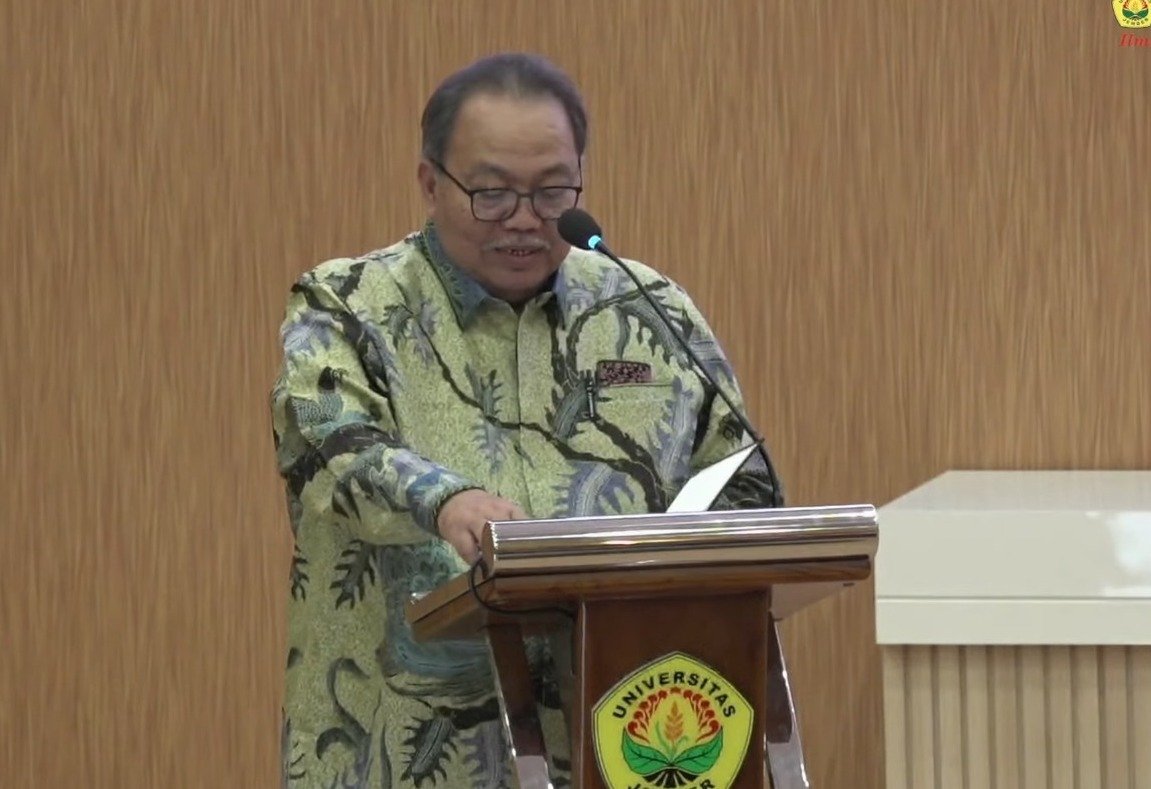
Serving as the keynote speaker, the Deputy Chief Justice for Judicial Affairs of the Supreme Court, Suharto, S.H., M.Hum., emphasized that the successful implementation of the New Criminal Code depends not only on changes in legal norms but also on institutional readiness, regulatory harmonization, and the transformation of Indonesia’s legal culture.
“The implementation of the New Criminal Code marks a new chapter in the history of Indonesia’s criminal justice system. Sentencing is no longer solely oriented toward retribution but is directed toward rehabilitation, restoration, and social reintegration,” he stated.
According to Suharto, new legal instruments such as supervisory sentences, community service sanctions, judicial pardon mechanisms, the strengthening of restorative justice approaches, and the recognition of living law within society form part of the new paradigm introduced by the National Criminal Code.
He also highlighted the importance of victim protection within the criminal justice system.
“The interests of victims must be genuinely represented in court proceedings, not merely as witnesses, but as parties whose recovery serves as one of the indicators of successful sentencing outcomes,” he said.
On the same occasion, Suharto explained that until the implementing regulations of the New Criminal Code are fully enacted, law enforcement agencies may continue to rely on existing regulations as the basis for implementation.
“As long as new implementing regulations have not yet been issued, including those related to restorative justice mechanisms, we will continue to apply Supreme Court Regulation No. 1 of 2024 until new implementing provisions are established,” he explained.
Meanwhile, the Director of Technical Guidance for General Courts at the Supreme Court, Dr. Hasanudin, S.H., M.H., underscored the importance of forums such as Perisai Badilum in bringing together academia and judicial practice within a constructive dialogue.
“The New Criminal Code has only been in effect for approximately six months. It is natural that various implementation issues still need to be discussed collectively. Forums such as this provide an opportunity for reflection and for identifying common ground between theory and practice,” he stated.
He further emphasized that understanding of the New Criminal Code must continue to be developed collectively through academic discussions, scholarly studies, and evolving judicial practices.
“Different individuals may interpret the Code differently. Therefore, we must continue to engage in dialogue and scholarly examination to develop a shared understanding of the spirit and objectives of the New Criminal Code,” he added.
Hasanudin also reaffirmed the Supreme Court’s commitment to promoting restorative justice as one of the key instruments of Indonesia’s criminal law reform. He noted that case resolution through restorative justice has become one of the judiciary’s key performance indicators.
“We regularly monitor and evaluate cases that meet the criteria for restorative justice. Courts are also strongly committed to optimizing the settlement of eligible cases through this mechanism,” he said.
On the academic side, the Dean of the Faculty of Law, University of Jember, Prof. Dr. I Gede Widhiana Suarda, S.H., M.Hum., welcomed the trust placed by the Supreme Court in selecting FH UNEJ as a partner institution for the 16th Episode of Perisai Badilum.
According to him, the event serves as an important momentum to strengthen collaboration between higher education institutions and judicial bodies in preparing legal professionals who are both competent and ethical.
“We hope that universities will continue to serve as independent institutions while upholding integrity in law enforcement. Law faculties bear the responsibility of producing future law enforcement professionals who are not only academically capable but also possess strong integrity,” he remarked.
He added that academic forums such as this would remain a priority for FH UNEJ in fostering students’ legal awareness, integrity, and understanding of evolving legal issues within society.
In addition to the national seminar, the event also featured the signing of a Cooperation Agreement between the Directorate General of the General Courts Agency of the Supreme Court of the Republic of Indonesia and the Faculty of Law, University of Jember. The agreement covers collaboration in education, research, human resource development, and opportunities for judges to pursue higher academic qualifications at the Faculty of Law, University of Jember.
“I hope this collaboration will further strengthen the relationship between academia and judicial practice while supporting our shared efforts to build a professional, ethical, and just legal system in Indonesia,” he concluded.
(is)