




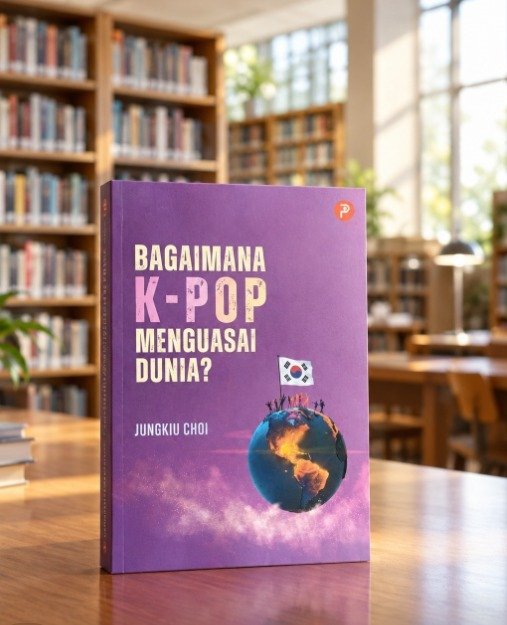
These themes are explored in How K-Pop Conquered the World, a book by Jungkiu Choi that will be launched by Palmerah Syndicate at Kinokuniya Bookstore, Grand Indonesia, Jakarta, on Sunday (Sept. 27, 2026).
EduAsiaNews, Jakarta — K-Pop’s success in breaking into global markets did not happen overnight. Behind its worldwide popularity lies a long process driven by discipline, hard work, teamwork and government support. South Korea’s experience offers valuable lessons for Indonesia as it seeks to develop its popular culture industry.
These themes are explored in How K-Pop Conquered the World, a book by Jungkiu Choi that will be launched by Palmerah Syndicate at Kinokuniya Bookstore, Grand Indonesia, Jakarta, on Sunday (Sept. 27, 2026).
With more than three decades of experience in the K-Pop performance industry, Jungkiu traces the development of South Korea’s entertainment industry into a global cultural phenomenon. He argues that K-Pop’s success rests not only on music and the popularity of its idols, but also on an industry system built through a long-term and carefully planned process.
Discipline and hard work are central to the development of K-Pop idols. They undergo rigorous training and a highly competitive process that demands skills, consistency and teamwork. At the same time, government support through policies and various forms of facilitation has also contributed to the growth of South Korea’s cultural industries.
The combination of human resource development, creativity among industry players and government support has helped Korean cultural products reach audiences in international markets.
Zaini, a lecturer at the Korean Language and Culture Study Program at the Faculty of Humanities, Universitas Indonesia, who will serve as a discussant at the book launch, said K-Pop’s success was the result of hard work and a lengthy, competitive process.
According to Zaini, Indonesia has the potential to develop its own popular culture industry along the lines of South Korea. However, realizing that potential requires a willingness to undertake a long-term process and develop a well-planned strategy.
“The question is, are we ready for that long process?” he said.
Zaini said popular culture products in Indonesia were still often viewed primarily as entertainment and a way to fill people’s leisure time. Yet the cultural industry has significant economic potential, with benefits that can extend beyond industry players to society at large. (**)