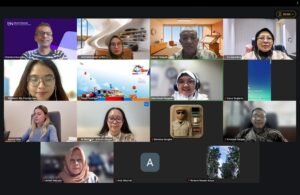





EduAsiaNews, Jakarta – The international consortium implementing the Green Sociopreneurship Education and Training in Indonesia (GreenSETI) project held its inaugural online meeting to discuss project governance, institutional responsibilities and implementation arrangements. The project is funded under the European Union’s Erasmus+ Capacity Building in Higher Education (CBHE) program.
The meeting marked the start of collaboration among seven institutions from Indonesia, Norway and Romania. Under the agreed schedule, November is GreenSETI’s first month of implementation, with activities planned over 36 months.
The consortium comprises Universitas Terbuka (UT) as coordinator, Gadjah Mada University (UGM), Veteran National Development University of Jakarta (UPNVJ), BINUS University, the Indonesian Business Incubators Association (AIBI), the University of South-Eastern Norway (USN) and Romania’s National University of Political Studies and Public Administration (SNSPA).
Establishing the steering committee
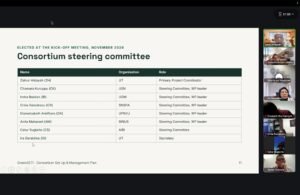
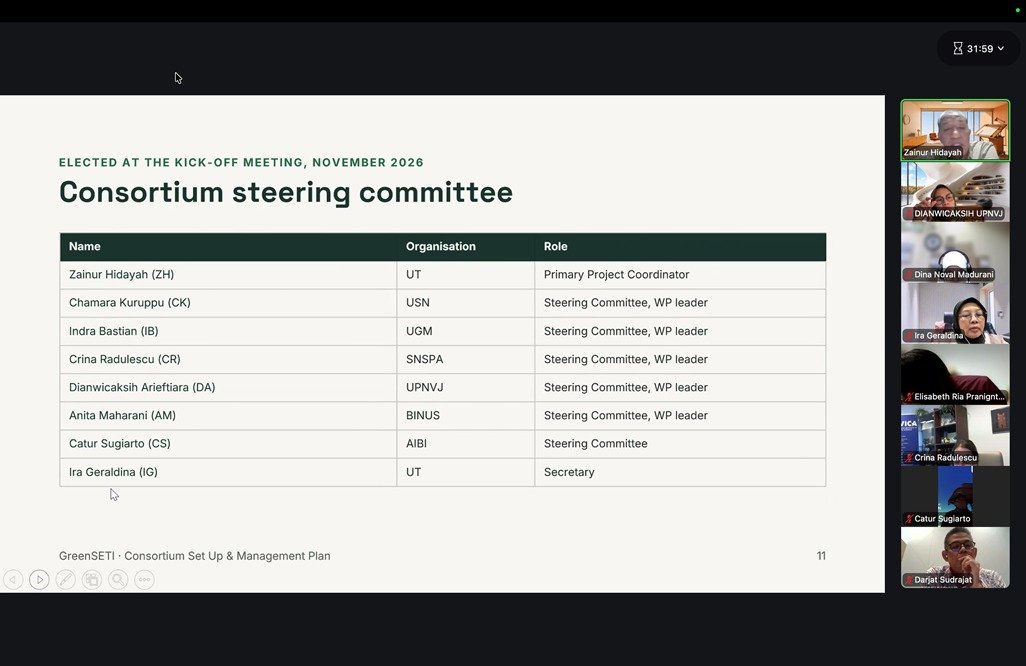
A central agenda item was the establishment of the project steering committee, which will guide strategic decisions, coordinate partners and oversee progress toward the project’s objectives.
Zainur Hidayah of UT was appointed primary project coordinator. Prof. Dianwicaksih Arieftiara of UPNVJ was appointed to the steering committee and as a work package leader.
Other committee members are Chamara Kuruppu (USN), Indra Bastian (UGM), Crina Radulescu (SNSPA), Anita Maharani (BINUS University) and Catur Sugiarto (AIBI). Ira Geraldina of UT was appointed project secretary. The governance structure provides a framework for coordinated and accountable implementation.
UPNVJ to lead green curriculum development
The consortium also discussed eight work packages covering management, curriculum innovation, academic capacity building, green business incubation and the dissemination of project results.
UPNVJ leads Work Package 3 (WP3), which focuses on curriculum revision and professional competencies in nutrition science, public health and accounting for green education and certification. Planned activities include focus group discussions, curriculum workshops, expert reviews and institutional approval processes.
The UPNVJ team comprises Arieftiara, Prof. Netti Herawati, Kusumajanti and Fachru Nofrian. Through WP3, the university is expected to strengthen the relevance of its academic programs to green employment and sustainable development.
Ensuring accountability and long-term impact
The meeting also addressed governance principles, communication, quality assurance and reporting. Under the Consortium Set Up and Management Plan, implementation will be monitored through quarterly progress reports, periodic reviews and annual consortium meetings.
Each work package leader is responsible for meeting agreed deadlines, documenting milestones and ensuring that activities comply with Erasmus+ requirements and consortium agreements. These mechanisms are designed to identify implementation challenges and support corrective action.
As GreenSETI begins, the consortium aims to deliver the objectives of the approved proposal and generate practical benefits through sustainability-oriented curricula, digital learning, academic capacity development and support for green entrepreneurs across Indonesia.