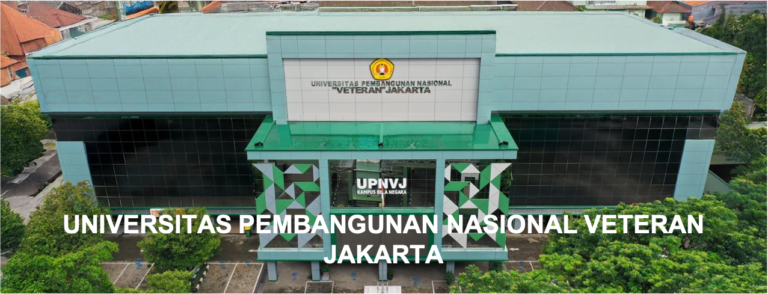





EduAsiaNews, Jakarta — Universitas Pembangunan Nasional “Veteran” Jakarta (UPNVJ) has organized a Learning Stimulation Program to improve human resource quality by strengthening students’ character, ethics, collaboration, creativity and mindset. The program is designed to equip students with the soft skills needed to navigate workplace challenges while preparing them to become adaptable, innovative and responsible individuals with integrity.
The program responds to developments in higher education, where balancing academic knowledge with nontechnical skills has become increasingly important. Students are expected not only to demonstrate intellectual ability but also to think critically, work collaboratively, make ethical decisions and apply creativity to solve various problems.
Through a more interactive and stimulating learning approach, UPNVJ seeks to provide an educational experience that goes beyond mastering course materials. The program encourages students to participate actively, develop their potential and internalize positive values in both academic and social settings.
The Learning Stimulation Program featured seven speakers from diverse academic backgrounds who addressed key aspects of character building and student competency development.
Dr. dr. Taufiq Fredrik Pasiak, M.Kes., M.Pd.I., M.H., CIPA, delivered a session titled “Character Building Based on Neuroscience,” focusing on character development through a neuroscience-based approach. The session explored the relationship between brain function, behavior, self-control and the development of positive character traits in the learning process.
Meanwhile, Dr. Bambang Saras Yulistiawan, S.T., M.Kom., discussed “Digital Mindset,” highlighting the importance of developing an adaptive mindset in response to advances in digital technology. The session aimed to help students use technology wisely, productively and responsibly to support their academic activities and personal development.
Strengthening critical thinking was another key focus. Prof. Dr. Eng. Ir. Teguh Firmansyah, S.T., M.T., IPM., ASEAN Eng., delivered a session on “Critical Thinking,” encouraging students to analyze information objectively, evaluate different perspectives and make decisions based on logical and systematic reasoning.
Addressing moral values, Dr. Muthia Sakti, S.H., M.H., presented “Ethical Thinking,” emphasizing the importance of ethical awareness in reasoning and decision-making. This understanding is intended to equip students to uphold integrity, responsibility and moral values in academic life and society.
Prof. Dr. Acim Heri Iswanto, S.K.M., MARS., then explored “Growth Mindset,” emphasizing the importance of developing a mindset focused on continuous growth. Through this approach, students were encouraged to view challenges as learning opportunities, remain open to feedback and continually improve their abilities and personal development.
Creativity, entrepreneurship and teamwork were also emphasized through sessions on “Creativity,” “Entrepreneurship” and “Collaboration,” delivered by Prof. Dr. Amrie Firmansyah, M.M., M.Ak., M.E. The material integrated the ability to generate innovative ideas, cultivate an entrepreneurial mindset and build effective collaboration to address various challenges.
Completing the series, Pribadi Sutiono, S.S., M.A., Ph.D., delivered a session on “Achievement Motivation,” focusing on strengthening students’ drive to succeed. The session aimed to encourage students to set clear goals, build self-confidence and maintain consistency in pursuing academic and nonacademic achievements.
Building High-Achieving, Character-Driven and Adaptable Students
The seven sessions were designed to complement one another in developing students’ competencies holistically. Character development through neuroscience, critical and ethical thinking, digital awareness, creativity, collaboration and achievement motivation provide an important foundation for preparing graduates to navigate a changing world.
The program also reflects UPNVJ’s commitment to an educational approach that focuses not only on academic achievement but also on personal development, social skills and the ability to adapt to changing professional environments.
By integrating these different competencies, students are expected to participate more actively in learning activities, express ideas constructively, respect differing viewpoints and build productive working relationships.
Strengthening ethical values and integrity is also essential to developing students’ awareness of their personal and social responsibilities. These competencies are expected to serve them not only throughout their university studies but also as they enter the workforce and contribute to society.
Through the Learning Stimulation Program, UPNVJ continues to foster an educational environment that supports the full development of students’ potential. The initiative further reinforces the university’s commitment to producing graduates who are intellectually capable, principled, ethical, creative and collaborative, and who can make positive contributions to society and national development.(www.upnvj.ac.id)