




EduAsiaNews, Thailand – The Faculty of Medicine at Chulalongkorn University, in collaboration with the Health Systems Research Institute (HSRI), MK Restaurant Group Public Company Limited, the Pa Thong Kham Foundation, and the Department of Disease Control under Thailand’s Ministry of Public Health, has announced the findings of a research project aimed at improving treatment for patients with hepatitis C who do not respond to antiviral drugs.
The study, entitled “Development of Treatment Guidelines for Patients Resistant to Hepatitis C Antiviral Drugs Using Data on Viral Genotype Diversity, Viral Load, Hepatitis Virus Antibodies and Antigens, and Mutations,” seeks to use detailed virological data to support more targeted treatment decisions.
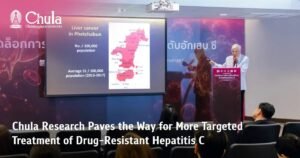
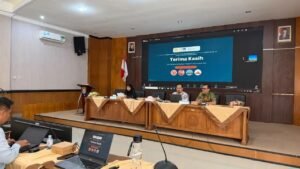
The findings were presented at a press conference on Oct. 19, 2026, in the Theatre Room on the first floor of the Faculty of Medicine Library Building at Chulalongkorn University. The event brought together representatives from the university and its partner organizations.
The delegation was led by Chulalongkorn University Vice President Professor Dr. Rungsun Rerknimitr; Faculty of Medicine Associate Dean for Research and Deep Innovation Professor Dr. Worasak Chotiyarnwong; Acting Director of HSRI Dr. Supakit Sirilak; MK Restaurant Group Public Company Limited Assistant Managing Director for Human Resources Nattapong Taksinamanee; Dr. Chatree Chulaphet of the Division of AIDS and Sexually Transmitted Infections at the Department of Disease Control; HSRI Deputy Director Assistant Professor Dr. Jaruayporn Srisasalux; Phetchabun Deputy Provincial Chief Medical Officer Dr. Wijitra Phaengkha; and Professor Dr. Yong Poovorawan, Head of the Centre of Excellence in Clinical Virology at the Faculty of Medicine, Chulalongkorn University.
Professor Rungsun said the research reflected the university’s role in developing innovations that improve lives and address major societal challenges. The initiative is aligned with Chulalongkorn University’s World-Changing Research and Impactful Growth strategies, which aim to advance world-class research and contribute to the United Nations Sustainable Development Goal on good health and well-being.
He added that the findings demonstrated the ability of the university’s faculty members and researchers to produce work that improves quality of life. Chulalongkorn University remains committed to supporting medical research through its “Chula Power of Togetherness” initiative, with the aim of delivering sustainable benefits to patients and Thai society.
Professor Worasak said the study reflected the Faculty of Medicine’s commitment to research and innovation in addressing major health challenges. He noted that a deeper understanding of hepatitis C viruses could help clinicians develop more precise and effective treatment plans for patients who do not respond to antiviral medication.
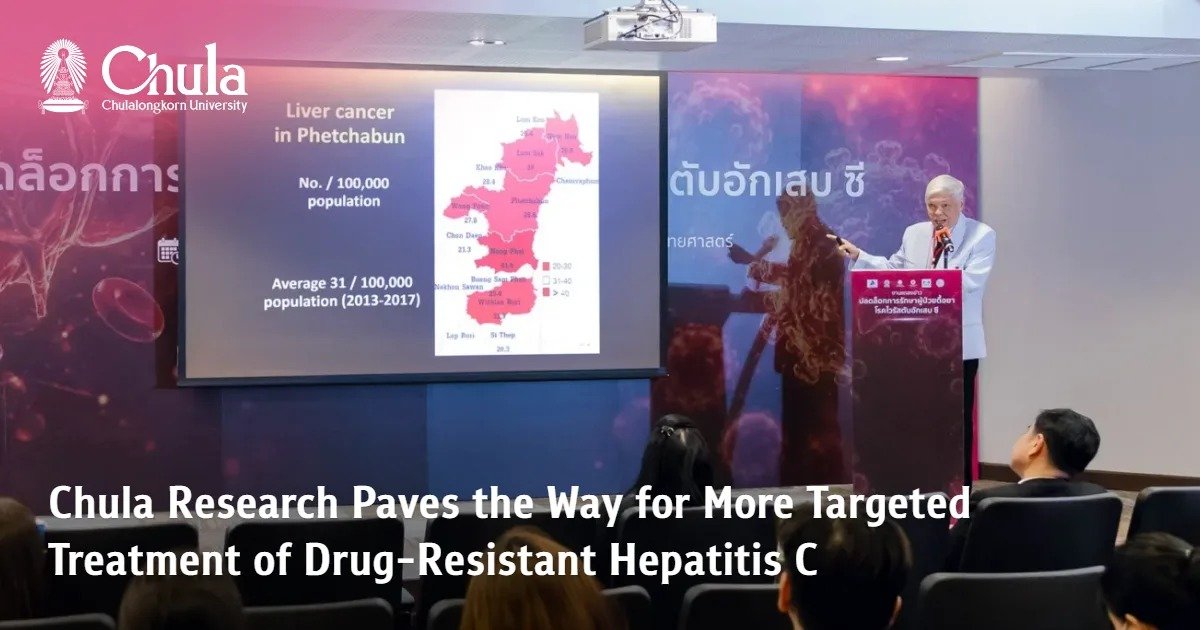
Professor Yong, the project’s principal investigator, presented the research findings in detail. He reported that a model implemented in Phetchabun Province had successfully integrated hepatitis C screening and treatment using direct-acting antiviral (DAA) medication, achieving 97.3 percent coverage. The results demonstrate Thailand’s potential to meet the World Health Organization’s goal of eliminating hepatitis C by 2030.
The study found that treatment failure was not caused by viral mutations. Instead, it was associated with patients’ medication-taking behavior and underlying health conditions. These factors can be addressed by adjusting drug regimens or treatment duration to better suit individual patients.
The research team also recommended accelerating efforts to identify hepatitis C infections among older adults, while strengthening preventive measures among high-risk populations to support sustainable disease elimination.
“Looking ahead, future policies and implementation strategies should prioritize proactive case finding among older adults, who represent a reservoir of infections acquired in the past. At the same time, systematic measures should be established to prevent new infections among high-risk populations. These efforts will help break the chain of transmission and move Thailand toward sustainable disease elimination,” Professor Yong concluded.