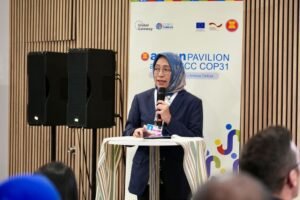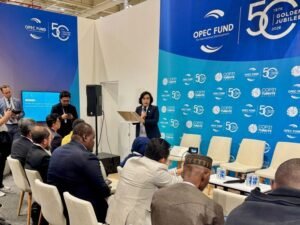





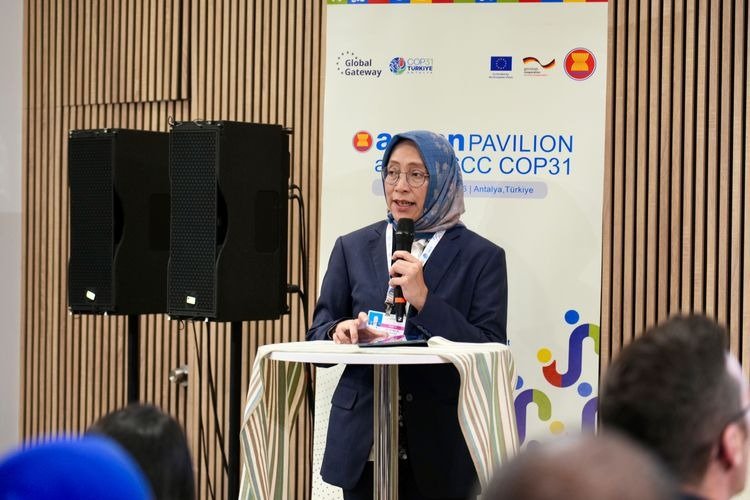
EduAsiaNews, Antalya Turkiye – The Forestry Ministry has stressed the importance of ensuring that climate financing and forest carbon development deliver real and fair benefits to communities, especially women, indigenous peoples and vulnerable groups. Social Forestry Director General Catur Endah Prasetiani made the remarks in closing comments at a session titled “Who Benefits from Nature-based Solutions and Forest Carbon? Women and Communities in ASEAN’s Climate Finance” at the ASEAN Pavilion at the 31st session of the Conference of the Parties to the UN Framework Convention on Climate Change (COP31) on Monday.
Catur Endah said the success of nature-based solutions (NbS) and forest carbon initiatives cannot be measured merely by the amount of carbon absorbed or funding raised. It must also be reflected in the protection of biodiversity, improved welfare and stronger livelihoods for communities that protect and manage forests.
“One of the main messages of this discussion is that climate action and forest carbon initiatives must deliver real benefits to the communities that protect and manage forests. Success is measured not only by the amount of carbon absorbed or financing mobilized, but also by its contribution to biodiversity conservation and community welfare,” she said.
Indonesia’s experience through its social forestry program shows that communities can be key actors in sustainable forest management and climate action, she said. Through secure access and management rights, stronger capacity and institutions, and the development of forest-based businesses, communities can improve their welfare while keeping ecosystems intact.
Catur Endah also stressed the need to ensure that women have equal opportunities to lead, take part in decision-making and benefit from forest management. A Gender Equality, Disability and Social Inclusion (GEDSI) approach is needed so that forestry programs and climate financing do not leave behind groups that have long faced barriers to resources and economic opportunities, she said.
At the forum, the ministry pushed five priority steps: integrating social forestry and NbS into climate and conservation agendas; strengthening community management rights and participation; developing inclusive and transparent climate financing with fair benefit sharing; strengthening women’s leadership and GEDSI implementation; and expanding cooperation and knowledge exchange among countries, particularly in ASEAN and Africa.
“Climate financing must be backed by credible governance, transparent mechanisms and fair benefit sharing. Women, indigenous peoples, local communities, people with disabilities and other vulnerable groups must be able to participate meaningfully and benefit from climate action,” she said.
The dialogue featured speakers from the Zambia Forestry Agency, the Food and Agriculture Organization (FAO), the International Tropical Timber Organization (ITTO), Parabukas and the Indonesian Forestry Ministry. They discussed experiences with social forestry and NbS in supporting climate action, women’s leadership in forest management, GEDSI implementation, lessons from community-based forest carbon initiatives in Africa and sustainable forest management practices in ASEAN.
Catur Endah said these lessons need to be translated into action through supportive policies, capacity building, access to financing and cross-sector and cross-country cooperation. Collaboration among governments, civil society, financial institutions, businesses and development partners is needed to expand good practices and ensure that climate financing truly reaches communities on the ground, she said.
“Protecting forests is not only about保护 carbon, but also about empowering the communities who look after them and ensuring that the benefits of climate action reach those who need them most,” she said.