




EduAsiaNews, Purwekerto – Unsoed, through its Institute for Research and Community Service (LPPM), in collaboration with Deutsche Gesellschaft für Internationale Zusammenarbeit (GIZ) Indonesia & ASEAN, has launched a Climate-Resilient Livelihoods Strengthening Program in Menganti Village, Kesugihan District, Cilacap Regency. The initiative aims to strengthen the economic resilience of coastal communities through productive business development, sustainable fisheries and stronger community institutions.
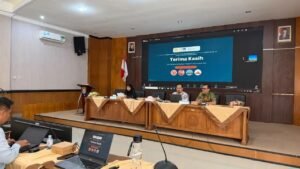
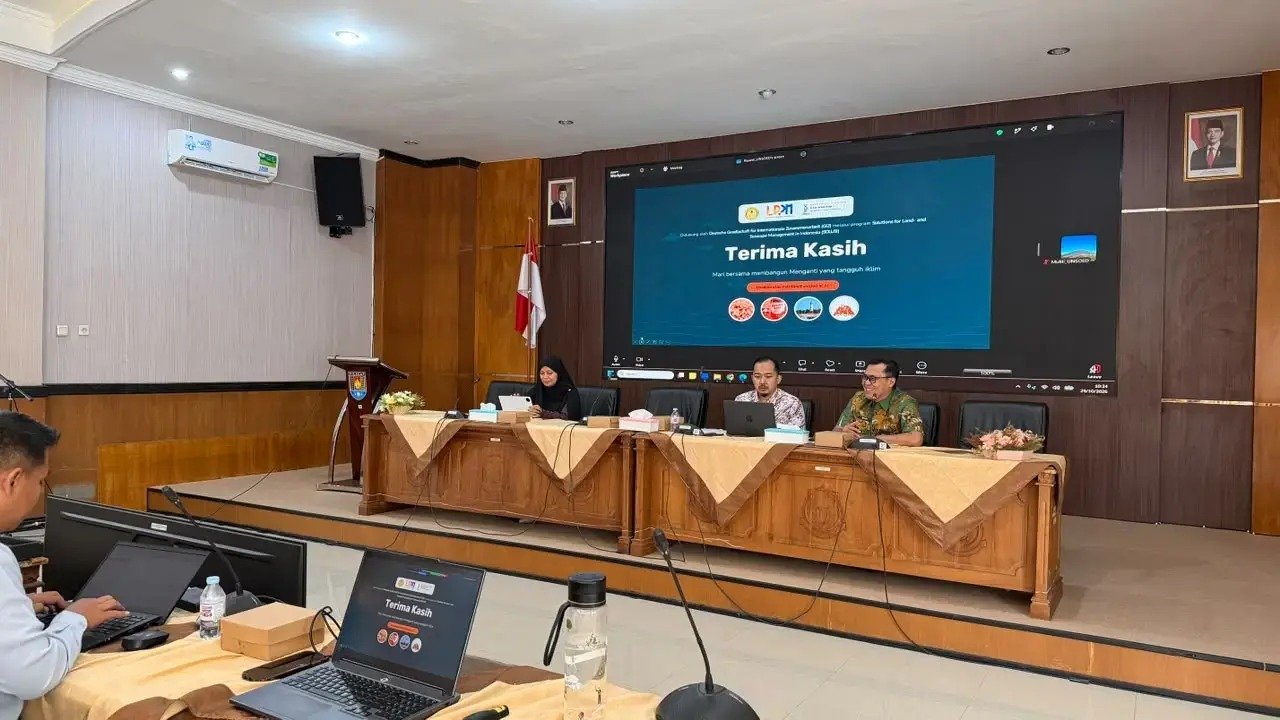
The program, part of the Solutions for Land- and Seascape Management in Indonesia (SOLUSI) initiative, began with an outreach and kick-off event at the Cilacap Regional Development Planning Agency (BAPPEDA) Hall on Thursday (Oct. 29, 2026). Representatives from 16 regional government agencies (OPDs) in Cilacap Regency attended the event to build cross-sectoral cooperation and support.
Head of the LPPM Unsoed Center for Biodiversity and Maritime Affairs Dr. rer. nat. Riyanti, M.Biotech, explained that coastal communities in Menganti Village depend heavily on marine resources. This makes their livelihoods vulnerable to climate change, fluctuations in fish catches, limited post-harvest handling, low product value-added, and restricted access to markets and financing.
“Coastal livelihoods in Menganti continue to face various challenges. Therefore, an integrated approach is needed to strengthen community capacity so that residents can develop more diverse sources of income and adapt to climate change,” she said.
The program, implemented by the LPPM Unsoed Center for Biodiversity and Maritime Affairs team under Dr. Riyanti’s coordination, focuses on four areas of intervention.
The first is increasing the value of fishery products and improving post-harvest handling. Activities include developing processed rebon shrimp products, vacuum packaging for Menganti’s signature Gapitan fish, testing solar-biomass hybrid dryers, and producing fish meal for animal feed.
The second is strengthening sustainable capture fisheries through assistance with the use of selective fishing gear, education on minimum catch sizes, recording fishing activities, and aligning fishing practices with marine conservation areas.
The third is diversifying livelihoods by developing independent fish-feed businesses, household-scale smart farming, and using newly accreted land to develop the Cemara Laut coastal tourism area.
The fourth is strengthening community institutions, financial access and markets through the establishment of Joint Business Groups (KUB), revitalization of cooperatives, improved access to financing, and expanded market opportunities through business matching and digital platforms.
The program will run from September 2026 to December 2027. Its targets include helping at least 30 households explore climate-resilient alternative livelihoods and establishing at least two partnerships with buyers, cooperatives or financial institutions. Implementation will also prioritize Gender Equality, Disability and Social Inclusion (GEDSI) principles.
During the discussion, several regional government agencies expressed support for the initiative. The Cilacap Social Affairs, Women’s Empowerment and Child Protection Agency said it was ready to assist in establishing and strengthening Joint Business Groups, including through institutional support and business-legalization assistance. The Fisheries Agency also pledged support for training in independent fish-feed production, licensing, packaging and digital marketing.
Riyanti emphasized the importance of cross-sectoral collaboration in ensuring the program’s long-term sustainability.
“Menganti has considerable marine potential, from rebon shrimp and Gapitan fish to the Cemara Laut area. Through this program, we want these resources to generate tangible added value for fishers and coastal communities while making their livelihoods more resilient to climate change. Support from Cilacap Regency’s regional government agencies is essential to ensure that the results continue beyond the program’s completion,” she said.
The next stage will involve a focus group discussion (FGD) with the Menganti Village community to agree on activity priorities and action plans. This process is intended to ensure that the program addresses local needs while promoting the sustainable management of the village’s coastal resources.