





EduAsiaNews, Vietnam – Rabies virus detection in cell cultures could soon become faster and more accessible, thanks to a world-first AI system developed by researchers at the University of Surrey’s Institute for People-Centred AI (PAI) in collaboration with the Rabies and Viral Zoonoses team at the Animal and Plant Health Agency (APHA).
Credit: Getty Images
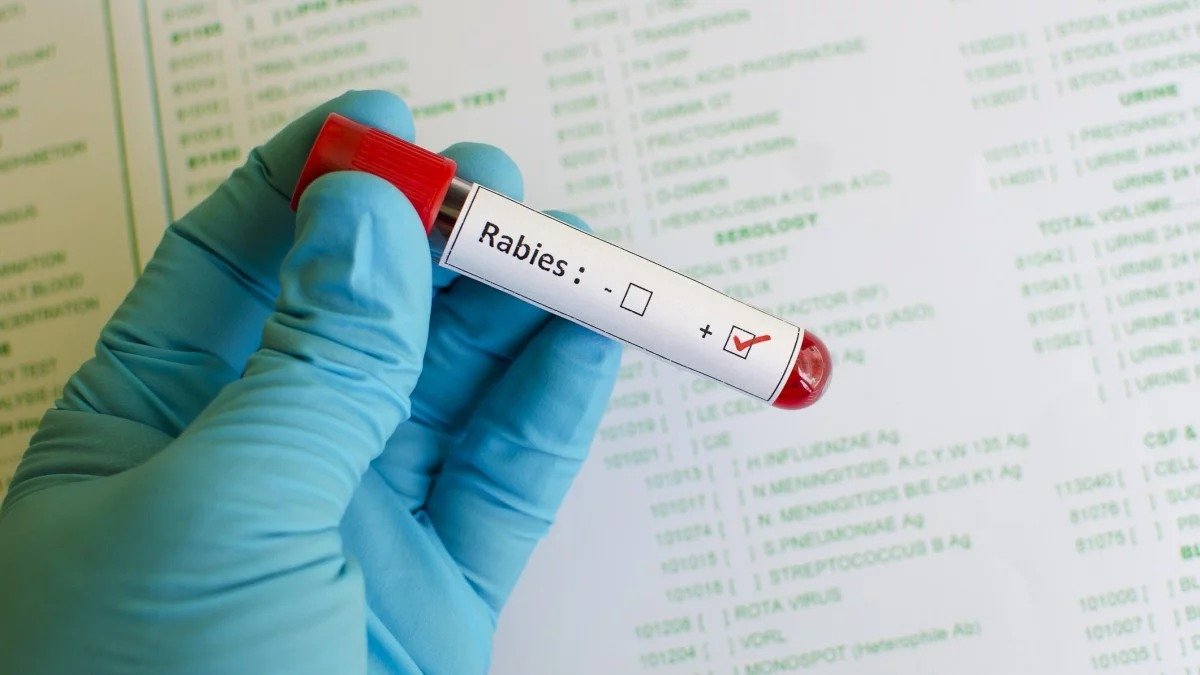
Blood sample with rabies virus positive
The breakthrough is designed to help improve surveillance of one of the world’s deadliest infectious diseases and deliver practical, laboratory-ready tools that can be adopted in endemic countries.
Despite being almost entirely preventable through vaccination, rabies causes around 59,000 human deaths every year. Current practices for diagnosis and measuring protective antibodies through vaccination still rely on specialists manually examining thousands of microscope images – which can be slow, labour-intensive and open to differences in interpretation.
In a DEFRA-funded study published in Nature Scientific Reports, the research team created the first AI-based workflow capable of identifying rabies virus infection in cell cultures and accurately measuring antibody concentration levels.
Using more than 2,300 fluorescence images containing over 36,000 annotated image sections, the team trained several deep learning models to recognise rabies virus infection within cells. The best-performing model correctly classified 99.6 per cent of samples and almost perfectly distinguished infected from uninfected cells, avoiding false alarms.