




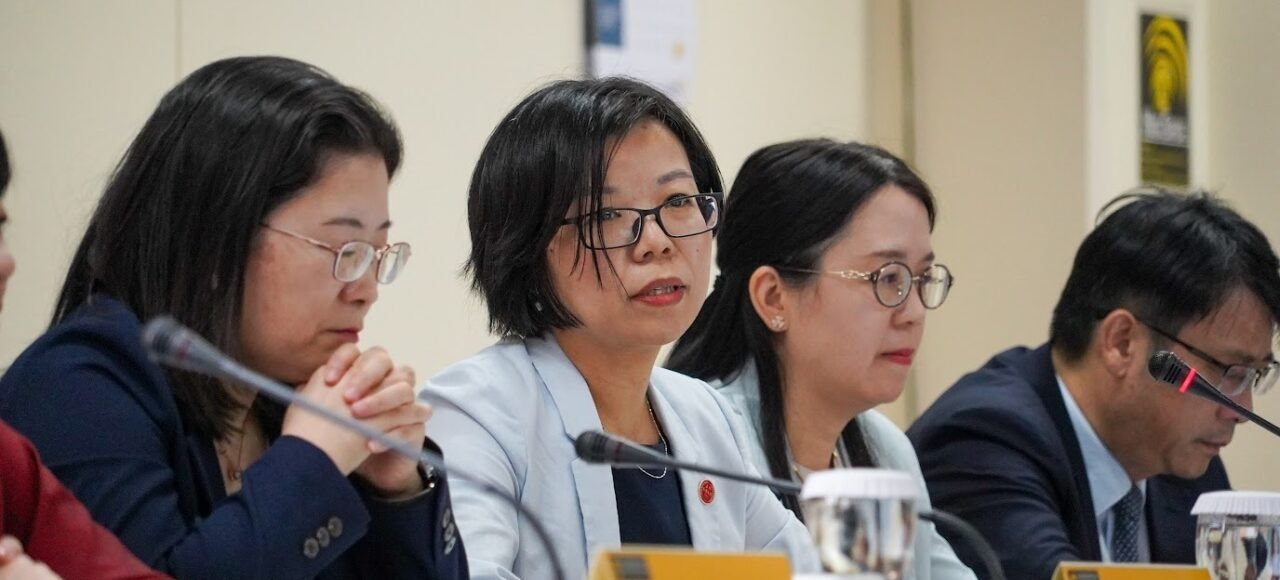
EduAsiaNews,Depok — Universitas Indonesia (UI) hosted a courtesy visit by Shanghai International Studies University (SISU) on Thursday (Sept. 24). Held at UI’s Rectorate Building on the Depok campus, the meeting marked an important opportunity to renew and strengthen cooperation, particularly in the humanities, collaborative research and international talent mobility.
The SISU delegation was led by SISU President Prof. Meng Zhongjie and received by UI Vice Rector for Academic Affairs Prof. Ir. Mahmud Sudibandriyo, M.Sc., Ph.D. Prof. Mahmud said UI was open to renewing its cooperation with SISU, as the previous agreement had expired.
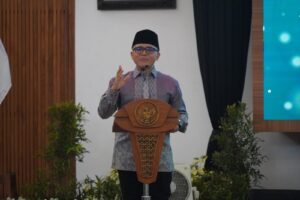
“Renewing the cooperation will open opportunities for a range of impactful collaborative programs, from student exchanges and joint research to international publications,” Prof. Mahmud said. He added that UI’s Chinese Studies Program at the Faculty of Humanities (FIB) could serve as a gateway for strengthening cooperation with SISU.
As a national key university receiving special support from the Chinese government to develop as a center of excellence in education and research, SISU is known for its strengths in the humanities, particularly languages and literature. The university also has expertise in the social sciences, law, economics, management and journalism.
SISU has 23 schools and departments and offers 56 undergraduate programs across various fields, ranging from languages and literature, including English, Arabic, Japanese and Indonesian, to social sciences such as law, politics and international relations, as well as economics, management, journalism and data technology. SISU has more than 12,000 students, including around 3,000 to 4,000 international students each year from more than 100 countries. With international students accounting for around 25 percent of its total student population, SISU is among China’s highly internationalized universities.
During the meeting, UI Director of Educational Internationalization Fadhilah Muslim, S.T., M.Sc., Ph.D., DIC., offered cooperation on short-course programs featuring tailor-made curricula. The programs could include intensive Indonesian language courses, cultural training and thematic academic modules in areas such as law, economics and communication.
Dr. Junaidi, S.S., M.A., manager of cooperation and ventures at FIB UI, said SISU students would have the opportunity to spend one semester at UI and obtain an Indonesian language certificate after taking a language proficiency test. He also highlighted FIB UI’s Chinese Studies Program as the oldest of its kind in Indonesia and its relevance to the country’s estimated 20 million people of Chinese descent.
Meanwhile, Choky R. Ramadhan, S.H., LL.M., Ph.D., manager of international cooperation and international rankings at the UI Faculty of Law, proposed exploring a 3+1 framework, under which students would spend three years at their home university and one year at a partner university, as well as developing international publication collaborations. He said joint publications could strengthen the academic capacity of both universities while supporting UI’s academic reputation.
He also introduced the cotutelle scheme, an international doctoral program that allows students to prepare their dissertations under joint supervision from two universities and receive degree recognition from both institutions.
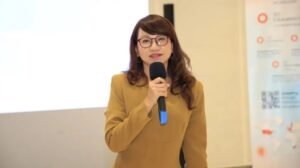
The SISU delegation emphasized the importance of strengthening cooperation in the humanities. Prof. Mao Xiaohong, deputy director of the Office of International Cooperation and Exchange at SISU, said the university had hundreds of international faculty members and students from more than 100 countries. She also highlighted opportunities for student exchanges, joint-degree programs, joint publications, think-tank collaboration, and strengthening Asian studies and cultural heritage studies.
Prof. Yang Xiaolan, dean of the School of Business and Management at SISU, said there were opportunities for joint research with UI in economics and business, particularly on the impact of artificial intelligence (AI) on global banking and finance. SISU also offered a fully English-taught MBA program for UI academics.
The meeting was also attended by faculty leaders and officials from UI’s University Administration Center (PAU), including Prof. Debora Eflina Purba, S.S., M.Si., Ph.D., director of UI’s Research Funding and Ecosystem; Dr. Kushartanti, M.Hum., head of the Indonesian Literature Study Program at FIB UI; and Ir. Jaka Fajar Fatriansyah, M.Sc., Ph.D., ASEAN Eng., IPU, head of the Subdirectorate for International Education Development at UI’s Directorate of Educational Internationalization.
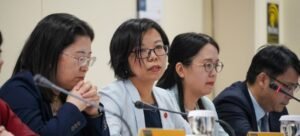
Representing SISU were Prof. Zhang Haibi, dean of the Graduate School and the Law School; Prof. Pan Xiang, dean of the School of Business and Management; Prof. Wang Huihua, secretary-general of the SISU Alumni Association and the SISU Education Development Foundation; and Prof. Yu Qian, an Indonesian language and Indonesian Studies lecturer at the School of Asian and African Studies.
UI’s commitment to increasing its international student population, particularly by attracting students from SISU, is in line with its goal of welcoming 7,000 international students over the next four years as part of its accelerated internationalization efforts. The cooperation is therefore expected to strengthen not only the academic relationship between UI and SISU but also UI’s strategic efforts to expand global talent mobility and enhance its international reputation.