





EduAsiaNews, Jakarta — K-pop’s global popularity is not driven solely by catchy songs, elaborate performances or the fame of its idols. Behind its worldwide reach is a broad ecosystem connecting the entertainment industry, technology, business strategies, media and fan communities.
Fandom has become one of the key forces behind K-pop’s expansion beyond South Korea. Fans are not merely consumers. They actively share information, create content, build communities and help extend the reach of artists and their work.
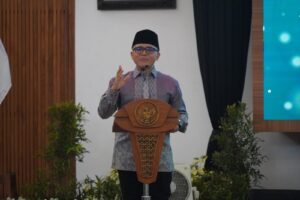
The phenomenon was discussed at the launch and discussion of How K-Pop Conquered the World? by Dr. Jungkiu Choi at Books Kinokuniya Grand Indonesia in Jakarta on Sunday (Sept. 27, 2026). The book was published by Palmerah Syndicate.
Jungkiu said K-pop’s success could not be separated from a long-term process and a system built consistently over time. Discipline, teamwork, business strategy, the use of technology and an understanding of markets have all played a role in its development.
He said K-pop should be viewed as more than a music product. The industry has grown through the involvement of interconnected stakeholders, ranging from artists and entertainment companies to creative workers, digital platforms, media and fans.
Fans as a driving force
Within this ecosystem, fandom occupies a distinctive position. K-pop fans across countries have formed active communities that interact through social media and various digital platforms.
They do more than listen to music or watch performances. Fans share information, produce videos and other creative content, follow artists’ activities and organize community events.
Such activities can help K-pop works reach wider audiences, while digital technology has strengthened connections between artists and fans across national borders.
As a result, communication within the K-pop industry is not simply a one-way relationship between artists and audiences. Fans have also become part of the process through which content is circulated and popularity is built.
Zaini, a lecturer at the Korean Language and Culture Study Program at the Faculty of Humanities of the University of Indonesia, who participated in the discussion, said K-pop should also be viewed as part of the broader development of the Korean Wave, or Hallyu.
K-pop has developed alongside other Korean cultural products, including television dramas, films, food, language, cosmetics and other creative products. Interest in one aspect of Korean culture can encourage audiences to explore others.
From culture to industry
The development of K-pop demonstrates how cultural products can evolve into industries with an international reach. Music may serve as the entry point, but the ecosystem surrounding it allows its influence to extend much further.
Jungkiu said the development of K-pop offered lessons that could be considered by other countries, including Indonesia. Cultural wealth alone, however, is not enough to create cultural products capable of competing in global markets.
Human resources, creativity, technology, supporting industries, marketing strategies and collaboration among stakeholders are also needed. Consistency in building an ecosystem is another important element.
Indonesia has substantial cultural assets, ranging from music and dance to cuisine, film, crafts and diverse local traditions. The challenge is to develop these assets sustainably so they can become not only cultural heritage but also part of a competitive creative economy.
The discussion, moderated by Zahra Ramdania Dewi, highlighted that the K-pop phenomenon is ultimately about more than the success of individual South Korean music groups.
Behind popular songs and crowded concert stages is a network of mutually reinforcing actors. Artists, the industry, technology, media and fandom together form an ecosystem that has enabled K-pop to evolve from a local cultural product into a global phenomenon. (**)