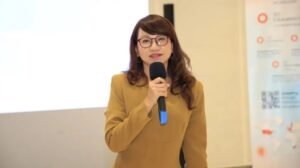






EduAsiaNews, Jakarta — The global success of K-pop has been driven by more than the popularity of its music and idols. Behind South Korea’s cultural phenomenon is an industrial ecosystem that brings together creativity, technology, management, business and fan communities. These themes were discussed at the launch of Bagaimana K-Pop Menguasai Dunia? (How K-pop Conquered the World?), a book by Jungkiu Choi, at Kinokuniya Bookstore in Grand Indonesia, Jakarta, on Sunday (Sept. 27, 2026). Published by Palmerah Syndicate, the book examines K-pop as a cultural industry that generates economic value while expanding South Korea’s international influence.
Jungkiu Choi, a management practitioner who has worked at McKinsey & Company, Boston Consulting Group and Standard Chartered, said his interest in K-pop grew out of his love for Korean music. His experience as a fan, from buying albums and attending concerts to joining fan communities, has given him insights into the role of fandom in sustaining the industry. While working in China, including in Inner Mongolia, Choi discovered that many of his colleagues were fans of Super Junior. On one occasion, they danced and sang the group’s hit song Sorry, Sorry together. The experience demonstrated how music can transcend national, linguistic and cultural boundaries while fostering a sense of community among fans.
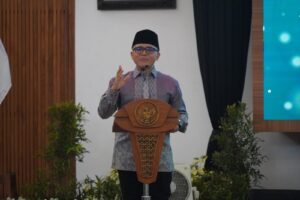
Choi said K-pop’s success could not be separated from integrated industry management, artistic creativity, the use of technology and a supportive ecosystem, including government policies. Zaini MA, a lecturer at the Faculty of Humanities at the University of Indonesia who pursued his master’s degree in South Korea, shared a similar perspective. He explained that the Asian financial crisis of the late 1990s contributed to a shift in South Korea’s approach to culture. Given the country’s limited natural resources, culture was increasingly developed as an economic asset capable of creating jobs and generating foreign exchange. Policies and facilities were subsequently directed toward supporting the cultural industry. Although artistic activities and festivals had existed since the 1960s, greater integration among talent, industry, markets and institutional support helped expand the global reach of Korean culture.
South Korea’s experience offers valuable lessons for Indonesia, a country rich in arts, traditions, music, literature, film, culinary heritage and handicrafts. Choi expressed hope that Indonesia would develop its cultural potential into a global force. Zaini emphasized that building a cultural ecosystem should not depend solely on government assistance or facilities. Initiative, creativity and the willingness of cultural practitioners to produce works must go hand in hand with support from the public and the government. In line with the Culture Ministry’s policy direction to promote the cultural economy, the challenge is to establish professional management, expand the use of digital technology and ensure the continuity of production and marketing.
Indonesia does not need to replicate the K-pop model wholesale. Instead, South Korea’s experience can serve as a reference for developing a cultural industry suited to Indonesia’s own character and diversity. The country’s cultural wealth needs to be transformed into works with greater added value that can compete in international markets while preserving local identities. By bringing together creativity, management, technology, communities and institutional support, culture could become a source of economic growth, create jobs and strengthen Indonesia’s cultural diplomacy. The challenge is no longer simply to possess abundant cultural resources, but to build an ecosystem that enables them to flourish and gain recognition on the world stage. **