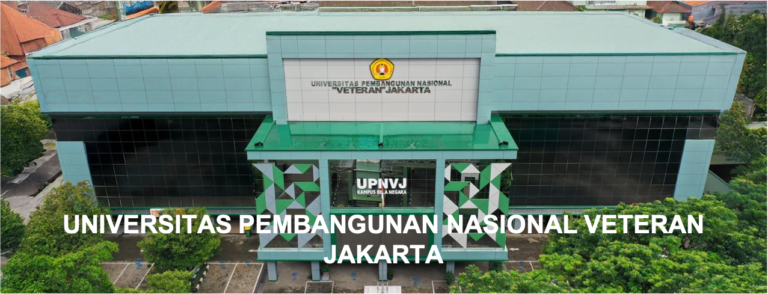





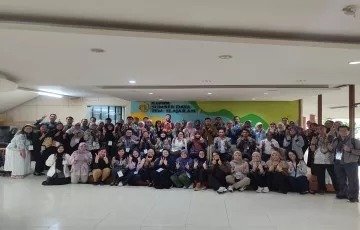
EduAsiaNews, Jakarta – The Institute for Quality Assurance and Learning Development of Universitas Pembangunan Nasional “Veteran” Jakarta (LPMPP UPNVJ), through its Center for Learning Development, sent lecturers from various faculties and study programs to participate in the Active Learning in Higher Education Training Program (PAPT) held on July 8–9, 2026. Conducted at the Directorate of Digital Education Development Building, Universitas Indonesia, the training aimed to strengthen lecturers’ competencies in implementing student-centered active learning. The UPNVJ delegation was led by the Head of the Center for Learning Development, Dr. Ns. Arief Wahyudi Jadmiko, M.Kep., M.Pd.Ked.
Over the two-day program, participants explored the principles and practical application of Student-Centered Learning (SCL). The training combined lectures with group discussions, simulations, hands-on exercises, teaching experience sharing, and the development of instructional designs that can be adapted for classroom implementation.
On the first day, participants examined the philosophy of active learning and constructivist learning theory, which serve as the foundation for Student-Centered Learning. The sessions emphasized that students should be positioned as active participants who construct knowledge through experience, interaction, reflection, and problem-solving.
Participants also learned strategies for fostering students’ critical thinking skills. Topics included providing constructive feedback and designing Socratic questioning techniques that encourage students to analyze information, present well-reasoned arguments, and evaluate issues more critically.
The training introduced several active learning methods through practical demonstrations, including Think–Pair–Share, Reciprocal Teaching, Fishbowl Discussion, Group Quiz, and Gallery Walk. These approaches enable lecturers to create more interactive classroom environments while encouraging students to collaborate, exchange ideas, engage in discussion, and learn from one another.
Participants were also introduced to learning outcome assessment as a tool for ensuring the achievement of intended learning outcomes. Assessment was presented not merely as a grading process but as an integral component of continuous improvement in teaching strategies, learning activities, and the overall student learning experience.
The second day focused on implementing more advanced active learning approaches. Participants attended sessions and simulations on role-playing, Experiential Learning, and Collaborative Learning, all of which encourage students to construct knowledge through interaction and teamwork.
The training continued with the application of Problem-Based Learning (PBL), Project-Based Learning (PjBL), and Research-Based Learning (RBL). These pedagogical approaches encourage lecturers to integrate real-world problems, project-based activities, and research experiences into the learning process.
Through Problem-Based Learning, students develop critical and analytical problem-solving skills. Project-Based Learning encourages them to produce projects that integrate knowledge, practical skills, and professional attitudes. Meanwhile, Research-Based Learning connects classroom instruction with research activities, enabling students to develop scientific reasoning, analyze information, and draw evidence-based conclusions.
Throughout the program, lecturers not only participated as trainees but also assumed the role of students during active learning simulations. This experience provided valuable insights into the challenges, support mechanisms, and instructional approaches required when implementing active learning in the classroom.
The PAPT program concluded with remarks from the Head of LPMPP UPNVJ, Satria Yudhia Wijaya, S.E., M.S., Ak., who expressed appreciation to the speakers, facilitators, organizing committee, and participants for their contributions throughout the training. Awards were also presented to the Best Participant and Best Group in recognition of their active participation, collaboration, and achievements during the program.
Following the training, participants are expected to become champions of active learning within their respective faculties and study programs. The knowledge and instructional designs developed during the program are expected to be translated into Semester Learning Plans (RPS), classroom activities, assessment methods, and more meaningful interactions between lecturers and students.
Strengthening lecturers’ competencies through the PAPT program aligns with UPNVJ’s commitment to integrating quality assurance with educational innovation. As the university’s quality assurance body, LPMPP plays a strategic role in enhancing educational quality and advancing learning practices that deliver measurable improvements in academic excellence.
The initiative also supports the strategic direction of UPNVJ Rector Prof. Dr. Anter Venus, M.A., Comm., who has identified innovation—including the development of innovative teaching methodologies—as a key component of the university’s institutional transformation. Through consistent follow-up and implementation, the PAPT program is expected to evolve beyond a professional development initiative into a catalyst for creating an innovative, collaborative, adaptive, and student-centered learning environment at UPNVJ. (www.upnvj.ac.id)