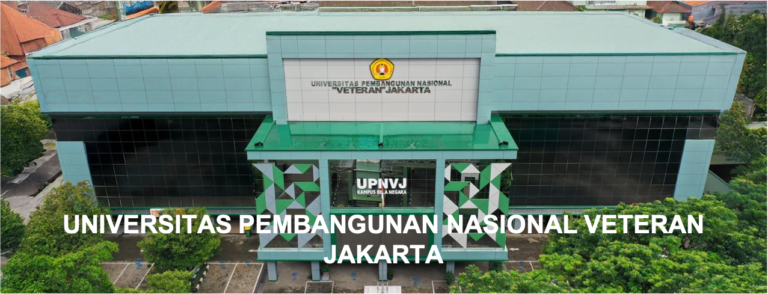





EduAsiaNews, Jakarta – Universitas Pembangunan Nasional “Veteran” Jakarta (UPNVJ) has reaffirmed that the restructuring of non-State Civil Apparatus (non-ASN) personnel within the university is part of the Indonesian government’s broader national bureaucratic reform agenda, which applies to all government institutions, including public universities. The policy is not a unilateral institutional decision but rather the implementation of a series of statutory regulations governing public sector human resource management. UPNVJ is carrying out the process gradually, prudently, and in strict compliance with prevailing regulations to ensure legal certainty for employees while safeguarding the continuity of the university’s Tri Dharma missions.
The restructuring of non-ASN personnel has been a national policy direction since the government introduced Government Regulation No. 48 of 2005 concerning the Appointment of Honorary Personnel as Prospective Civil Servants. The regulation was subsequently refined through Government Regulation No. 43 of 2007 and Government Regulation No. 56 of 2012, which initially provided mechanisms for eligible honorary employees to be appointed as prospective civil servants under specified requirements.
The policy direction changed fundamentally following the enactment of Law No. 5 of 2014 on the State Civil Apparatus (ASN). Under this legislation, the ASN workforce consists exclusively of Civil Servants (PNS) and Government Employees with Work Agreements (PPPK). The law established the foundation for a merit-based civil service system, whereby personnel management is based on qualifications, competencies, performance, and organizational needs.
For newly established public universities, the government subsequently issued Presidential Regulation No. 10 of 2016 concerning Academic and Educational Personnel at Newly Established Public Universities. The regulation stipulates that lecturers and educational staff at these institutions may be appointed as PPPK through special recruitment allocations designed to meet institutional human resource requirements in accordance with applicable laws and regulations.
The policy was further reinforced through Government Regulation No. 49 of 2018 on PPPK Management, which explicitly prohibits personnel management authorities from appointing non-PNS and/or non-PPPK employees to ASN positions. At the same time, the government provided a transition period to enable public institutions to gradually and systematically restructure their non-ASN workforce.
Within the higher education sector, this policy direction has also been strengthened through regulations issued by the ministry responsible for higher education. Public universities are no longer permitted to recruit permanent non-PNS lecturers as a new mechanism for meeting faculty staffing needs. Instead, academic personnel requirements must be fulfilled through ASN recruitment proposals or by engaging qualified professionals as non-permanent lecturers in accordance with prevailing regulations.
Subsequent implementation measures have included comprehensive mapping of non-ASN personnel, the cessation of new non-ASN recruitment, and the formulation of strategic plans to resolve employment status across government institutions. These initiatives form part of the government’s broader effort to establish a more professional, transparent, and legally accountable public sector workforce.
The government’s commitment to restructuring non-ASN personnel was reaffirmed through Law No. 20 of 2023 on the State Civil Apparatus, which identifies the restructuring of honorary personnel as one of its principal policy objectives while reiterating that the ASN workforce consists solely of PNS and PPPK employees. Accordingly, every government institution is required to implement this policy in accordance with its authority, organizational needs, and applicable legal provisions.
As a public university operating under the Ministry of Higher Education, Science, and Technology, UPNVJ remains committed to implementing the restructuring of non-ASN personnel responsibly, proportionately, and in full compliance with the regulatory framework. The process is being conducted with due consideration for legal certainty, accountability, the continuity of academic services, and the university’s institutional requirements in supporting education, research, and community service.
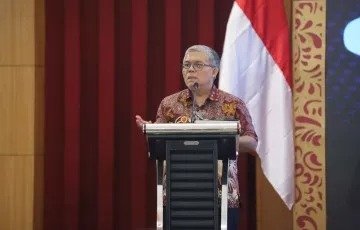
UPNVJ Rector Prof. Dr. Anter Venus, M.A., Comm., emphasized that the university has a responsibility to implement national policies in an orderly manner while maintaining a strong commitment to humanitarian considerations and the continuity of educational services.
“UPNVJ is implementing the restructuring of non-ASN personnel as part of its compliance with national regulations. Our guiding principles are clear: adherence to the law, ensuring legal certainty, and carrying out every stage of the process with due care so that the university’s Tri Dharma missions continue to be delivered effectively,” said Prof. Venus.
According to Prof. Venus, human resource restructuring extends beyond an administrative exercise; it represents an integral component of the university’s broader governance transformation. Through this initiative, UPNVJ seeks to establish a more orderly, professional, and sustainable personnel management system that aligns with the national bureaucratic reform agenda while reinforcing the university’s commitment to delivering high-quality higher education services to the public.(www.upnvj.ac.id)