




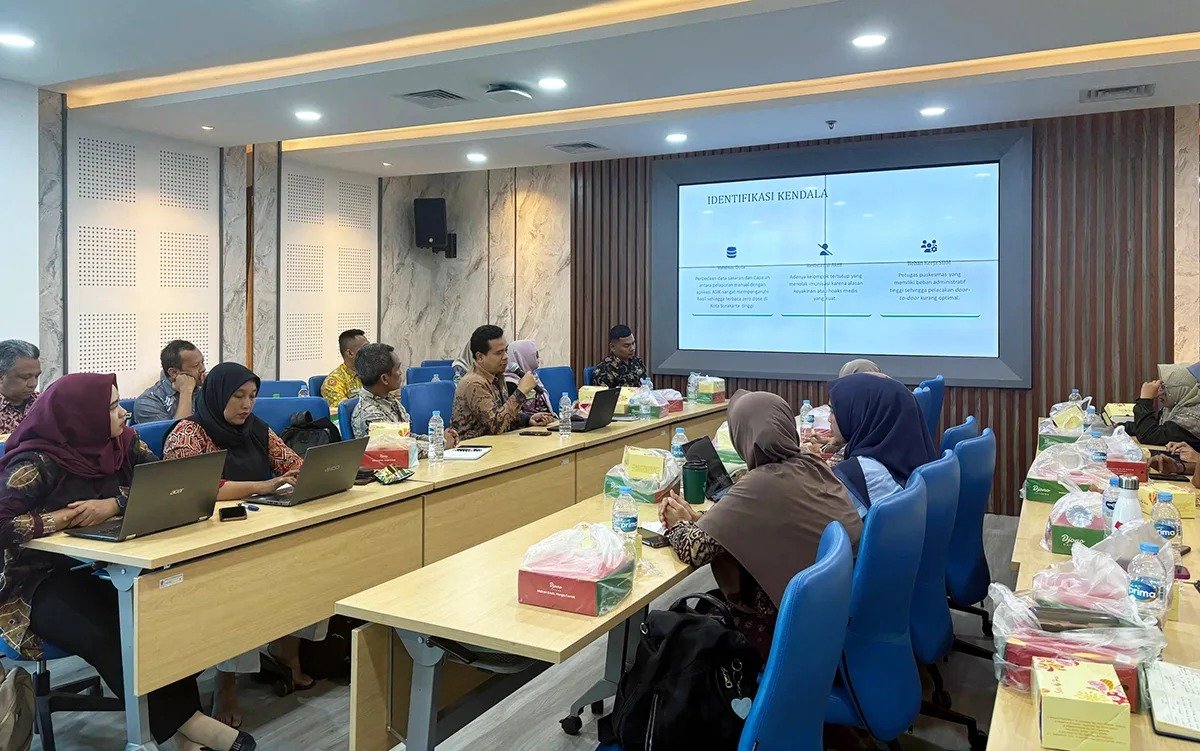
EduAsiaNews, Semarang – The Center for Health Research (Puslitkes) under the Institute for Research and Community Services of Diponegoro University (LPPM UNDIP), in collaboration with UNICEF, organized a Monitoring and Evaluation of Advocacy Activities for Accelerating Routine Immunization to Reduce Zero-Dose Children and Introduce New Vaccines in Central Java on Friday (June 19). The event was held in the Seminar Room of LPPM Diponegoro University on the fourth floor of the ICT Centre Building, Tembalang, Semarang.
The activity served as a follow-up to a series of advocacy initiatives previously conducted in five target regencies and municipalities—Magelang City, Surakarta City, Tegal Regency, Wonosobo Regency, and Pekalongan Regency—in collaboration with the Central Java Provincial Government. The monitoring and evaluation aimed to assess the progress of implementing the commitments that had been agreed upon to increase routine immunization coverage, reduce the number of zero-dose children, and strengthen the introduction of new vaccines across Central Java.
The event was officially opened by Prof. Dr. Ing. Suherman, S.T., M.T., Chair of LPPM Diponegoro University. In his opening remarks, he emphasized the importance of cross-sector collaboration in ensuring the success of regional immunization programs.
“Efforts to increase immunization coverage and reduce the number of zero-dose children cannot be undertaken by a single institution alone. Strong synergy among government agencies, academia, international organizations, and all stakeholders is essential to ensure that established policies are implemented in a sustainable manner,” he stated.
He also reaffirmed Diponegoro University’s commitment to actively contributing through research, technical assistance, and evidence-based policy development to support public health advancement.
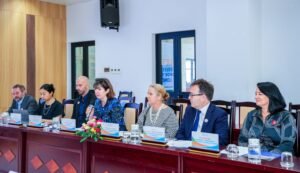
The event was attended by representatives from regional Health Offices, immunization program managers, and Legal Affairs Divisions of the Regional Secretariats from the five target regencies and municipalities, as well as representatives of the Central Java Provincial Government. During the main session, each participating region presented updates on the implementation of commitments resulting from the advocacy program, including the establishment and operationalization of Working Groups (Pokja), the formulation of Regional Action Plans (RAD), and various strategies implemented to accelerate immunization coverage in their respective areas.
In addition to the regional presentations, the program featured interactive discussions on achievements, challenges, enabling factors, best practices, and the support required to strengthen program implementation. The outcomes of these discussions are expected to serve as the basis for strategic recommendations to reinforce policy support, enhance cross-sector coordination, and ensure the sustainability of immunization programs throughout Central Java.
On the occasion, Ermi Ndoen, Health and Nutrition Specialist at UNICEF Indonesia’s Surabaya Field Office, emphasized that immunization is one of the best health investments for a child’s future.
“The best first birthday gift a child can receive is complete immunization. By ensuring that every child receives immunizations according to the recommended schedule, we are providing the best possible protection for their health and future,” she said.
Through this monitoring and evaluation initiative, the Center for Health Research of LPPM Diponegoro University and UNICEF hope that the commitments established through the advocacy process will continue to be translated into concrete actions at the regional level. Sustained collaboration among government institutions, universities, and various stakeholders is expected to accelerate improvements in immunization coverage, reduce the number of zero-dose children, and ensure that every child enjoys their right to optimal health protection.