


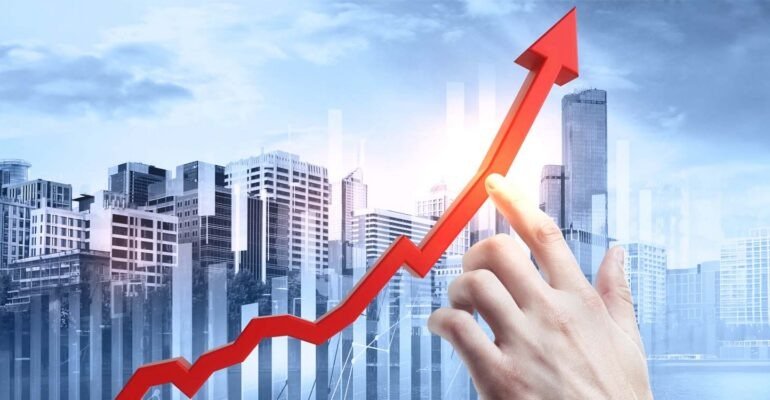
EduAsiaNews, Bogor – A report from Statistics Indonesia (BPS) stating that Indonesia’s economic growth in the first quarter reached 5.61 percent — the highest level in the past 13 years — has sparked public debate. Several economic observers argue that the growth figure does not yet reflect the actual conditions experienced by society.
Responding to the issue, IPB University academic Prof. Irfan Syauqi Beik stated that the debate cannot be separated from differing perspectives on the concept of economic growth itself.
Three Concepts of Economic Growth
Prof. Irfan explained that there are at least three fundamental concepts of economic growth: classical growth, growth with equity, and growth through equity.
“This is not merely a matter of semantics, but rather carries profound philosophical meaning within the context of economic development. Each concept influences the paradigm of economic growth, along with the policy derivatives implemented to achieve its objectives,” he explained.
The first concept, classical growth, focuses on increasing gross domestic product (GDP). Every year, GDP is accelerated and targeted to reach a certain percentage.
“In reality, there is often a trade-off between growth and equity. Economic growth may increase sharply, while at the same time inequality also rises significantly,” said Prof. Irfan, who also serves as Dean of the Faculty of Economics and Management at IPB University.
He further elaborated that this condition results from the failure of the trickle-down effect mechanism, which grants privileges and various incentives to large industries to support the national economy, but is not accompanied by mechanisms for sharing opportunities and providing broader access to the general public.
“As a result, wealth becomes concentrated in the hands of only a small group, with the top one percent of the population enjoying the largest share of the economic pie. Growth without equity creates vulnerability to social unrest and political instability. It is like constructing a skyscraper on a fragile foundation,” he explained.
The second concept is growth with equity. In addition to making growth the primary engine, the government also intervenes through aggressive redistribution policies, such as progressive taxation and social assistance programs, to ensure that economic growth is enjoyed more evenly.
However, Prof. Irfan noted that this concept often positions the poor merely as recipients of aid rather than active participants in the economy. Public purchasing power is maintained to stabilize consumption levels, as consumption contributes the largest share to GDP.
“In other words, what is maintained is the demand side of the economy. Yet on the supply side, control remains in the hands of capital owners. This is the weakness of the concept frequently observed in the economic realities of many nations,” he explained.
The third concept, growth through equity, is considered the most ideal approach. In this framework, equity itself becomes the engine of growth. “Growth through equity will create economic justice and inclusiveness,” Prof. Irfan emphasized.
Three Supporting Factors
He explained that this concept is supported by three main factors. The first is strong economic resilience through the significant role of small business actors. Economic resilience becomes stronger when the contribution of small-scale economic actors to GDP is substantial.
“This means that MSMEs must be positioned as one of the main pillars of the national economy, rather than merely serving as a complement,” Prof. Irfan stressed.
The second factor is distributive justice through broad access to financing, mentoring, and development programs for productive community enterprises, including the optimization of zakat and waqf instruments.
“In addition to government-to-people transfer programs such as social assistance and the People’s Business Credit (KUR) scheme, social finance instruments such as zakat and waqf must be optimized as alternative resources for strengthening the people’s economy in a way that reflects public justice,” he said.
According to him, if zakat and waqf are managed properly within an integrated ecosystem, they can create new centers of economic growth based on local communities and local potential in a more equitable and inclusive manner.
The third factor is sustainability through investment in education, enabling people to develop stronger economic capacities. “The poor must be given broad access to education — formal, informal, as well as various forms of training and certification — so that their capacities can improve,” he stated.
He added, “This economic independence will ultimately elevate Indonesia’s economy, which is currently still trapped within the middle-income country category.”
Therefore, Prof. Irfan emphasized that merely pursuing growth is now an outdated approach. Growth with equity may serve as an initial step, but growth through equity represents a more superior long-term strategy. “In this way, the national economy will not only expand numerically, but will also become structurally stronger and socially just,” he said.
He also highlighted that strategic programs such as the Free Nutritious Meals Program (MBG) and the Red and White Fishermen’s Village Program (KNMP) have significant potential to embody the concept of growth through equity. However, these programs must be supported by a large number of small community-based enterprises.
“Otherwise, inequality will continue to widen, and the wealthy will enjoy the largest share of the economic gains,” he concluded.
(*/Rz)