




EduAsiaNews, Jakarta — Universitas Negeri Jakarta (UNJ) has officially concluded the implementation of the Computer-Based Written Examination – National Selection Based on Test (UTBK-SNBT) for 2026 on Saturday, May 2, 2026. The entire series of examinations, which commenced on April 21, 2026, was conducted smoothly, orderly, and without any technical issues or indications of misconduct by participants.
The continued trust placed in UNJ as one of the official UTBK-SNBT test centers reflects the institution’s consistency in maintaining the quality of national selection services. This year, the examinations at UNJ were held in two sessions daily, with an additional day scheduled on May 2, 2026, to accommodate technical requirements and ensure optimal service for all participants.
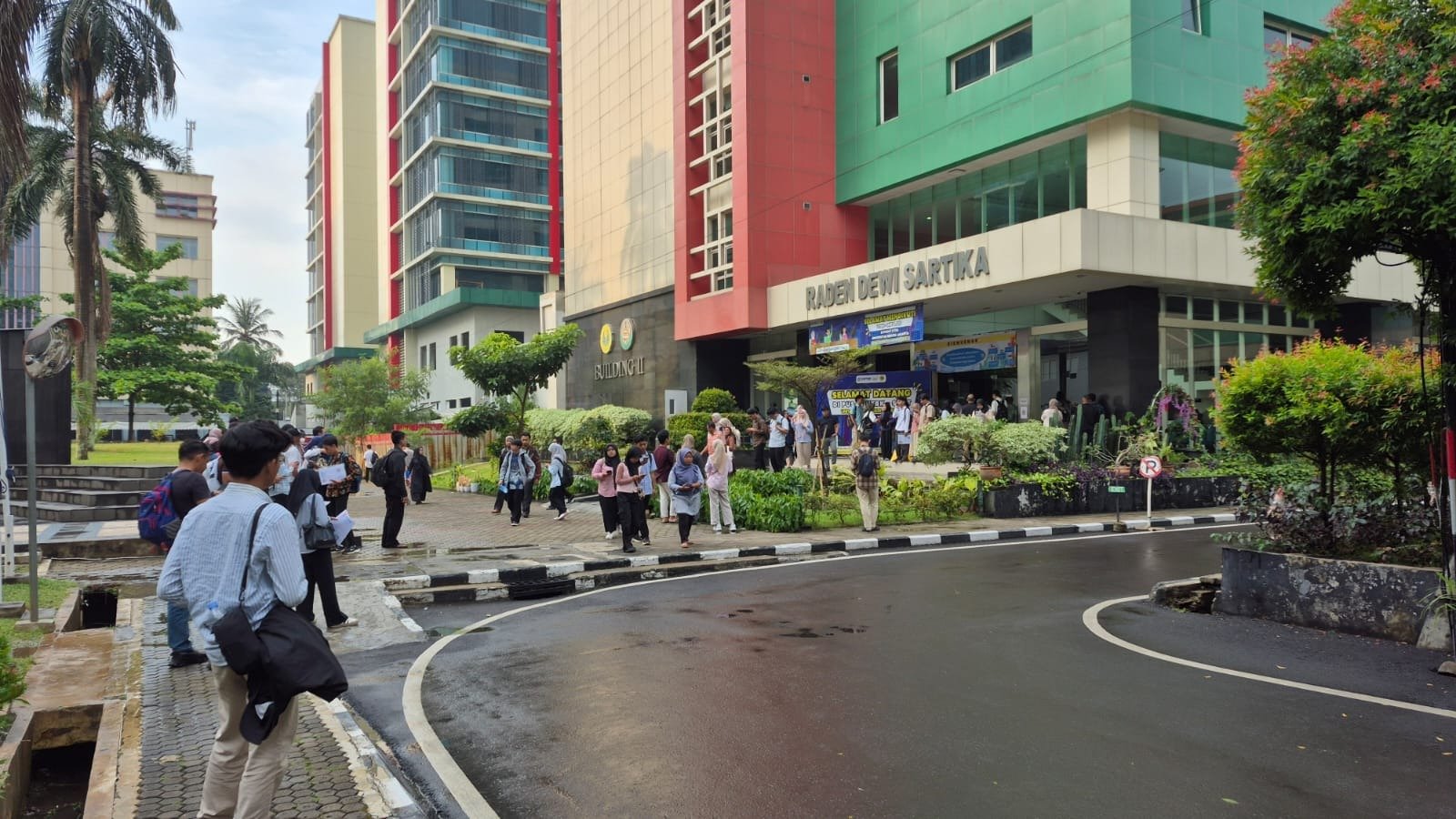
Across the campus, UTBK-SNBT was conducted at 11 strategic locations, including Dewi Sartika Building (5th and 7th Floors), Building L (3rd Floor), SFD Tower A (8th Floor), SFD Tower B (3rd Floor), and PUSTIKOM Building (3rd and 4th Floors). In addition, UNJ expanded its service reach by collaborating with several partner schools, such as SMKN 1 Jakarta, SMKN 10 Jakarta, SMKN 40 Jakarta, SMKN 44 Jakarta, SMKN 48 Jakarta, and SMKN 50 Jakarta, as additional examination venues.
UNJ also ensured that all information technology infrastructure, network systems, and supervision mechanisms based on standard operating procedures were thoroughly prepared. As a result, all examination sessions proceeded without significant disruption, while maintaining the integrity of the selection process.
In terms of participation, UTBK-SNBT 2026 at UNJ demonstrated a significant upward trend. A total of 63,003 participants took the examination at the UNJ UTBK center this year, an increase compared to 61,646 participants in 2025, 59,673 in 2024, 43,388 in 2023, and 39,431 in 2022. This rise reflects the growing public interest in test-based selection pathways as a gateway to public universities.
On this occasion, Prof. Komarudin, Rector of UNJ and Director of UTBK UNJ, expressed appreciation for the smooth implementation of this year’s UTBK-SNBT. He emphasized that this success was the result of the collective efforts of the organizing committee, supervisors, technical staff, and the support of all involved parties.
“The implementation of UTBK-SNBT 2026 at UNJ has been exceptionally successful, with no technical issues or violations by participants. This demonstrates the readiness of our systems, our commitment to integrity, and the professionalism of the entire committee in delivering a credible national selection process,” he stated.
He further highlighted that transparency and accountability are the primary principles in the implementation of UTBK. According to him, public trust in the national selection system can only be maintained through honest, fair, and fraud-free practices.
Similarly, Prof. Ifan Iskandar, Vice Rector for Academic Affairs, Student Affairs, and Alumni at UNJ, who also serves as Head of the UNJ UTBK Center, noted that strong coordination was the key factor behind the successful implementation of this year’s UTBK-SNBT.
He explained that UNJ had undertaken various anticipatory measures, including system simulations, network reinforcement, and intensive training for supervisors and technicians. In addition, a multi-layered supervision system was implemented to ensure that all participants complied with the established regulations.
“No significant instances of cheating were detected during the examinations. This indicates that the supervision system at UNJ has been effective and also reflects the participants’ awareness in upholding the value of honesty throughout the selection process,” he remarked.
Prof. Ifan Iskandar also added that collaboration with partner schools played an important role in expanding participant access while reducing congestion at the main campus locations. This approach enabled the examinations to be conducted more comfortably and efficiently.
The conclusion of UTBK-SNBT 2026 at UNJ not only marks the end of the examination series but also serves as a reflection of UNJ’s commitment to supporting a high-quality national selection system. With a smooth and fraud-free implementation, UNJ once again affirms its role as an adaptive, professional, and integrity-driven higher education institution dedicated to advancing the future of education in Indonesia.