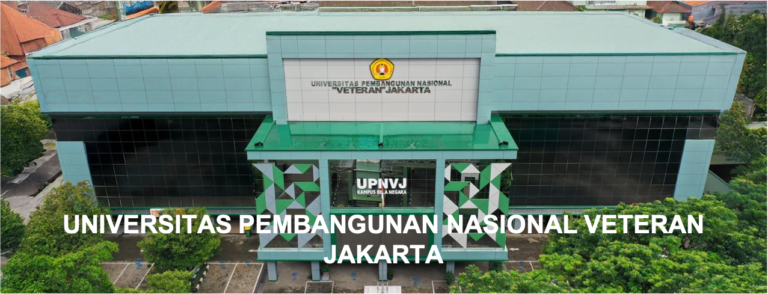




EduAsiaNews, Jakarta — Universitas Pembangunan Nasional “Veteran” Jakarta (UPNVJ) continues to demonstrate its commitment to supporting sustainable environmental management through a waste management training program focused on shredding plastic bottle caps and compressing the shredded output.
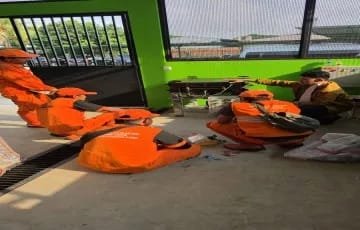
This activity involved multiple stakeholders, including UPNVJ faculty members, Public Infrastructure and Facilities Handling (PPSU) officers from Pondok Labu Urban Village, administrative staff, members of FORSEPSI (Forum Sahabat Emas Peduli Sampah Indonesia), and representatives of Dharma Wanita UPN Veteran Jakarta. This cross-sector collaboration represents a concrete manifestation of synergy between higher education institutions and the community in creating a more structured and economically valuable waste management ecosystem (April 20, 2026).
The training aimed to enhance participants’ capacity to process plastic waste—particularly bottle caps—into recyclable raw materials with higher market value. The shredding process was carried out using a plastic shredding machine, followed by compression to improve storage and distribution efficiency.
During the program, participants gained not only technical knowledge regarding machine operation but also insights into the importance of waste management based on circular economy principles. Waste that was previously considered valueless can, through proper processing, become an additional source of income while simultaneously reducing environmental burden.
A representative of the UPNVJ faculty team stated that this initiative forms part of efforts to strengthen the role of the UPNVJ Waste Bank as a waste collection hub that serves not only the campus environment but also the surrounding community, particularly the Pondok Labu area.
“Through this training, we hope to facilitate the transfer of knowledge and skills to the community, enabling independent, sustainable waste management practices that also generate economic benefits,” the representative stated.
This activity also marks an initial step in developing a collaborative model between the university and the community for integrated waste management. Moving forward, UPNVJ plans to expand its training programs, strengthen systems for recording and managing waste outputs, and develop partnership networks with various stakeholders, including offtakers and recycling industries.
Through this initiative, UPNVJ further affirms its role not only as an educational institution but also as an agent of change in promoting sustainability practices and community empowerment grounded in environmental stewardship..(www.upnvj.ac.id)