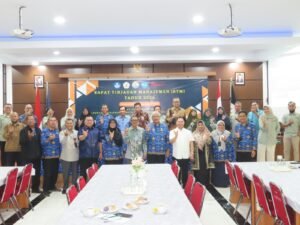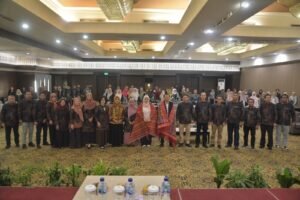





EduAsiaNews, Bandung – Universitas Padjadjaran (Unpad) has once again recorded a significant achievement in its efforts to develop the Integrity Zone (ZI). A total of 16 faculties and 2 schools successfully completed and submitted the Integrity Zone Development Evaluation Worksheet (LKE) on time, on March 31, 2026. This year, Unpad placed a strong emphasis on improving the quality of the LKE.
Various strategies were implemented in a structured and intensive manner to ensure that each unit could produce comprehensive and high-quality evaluation documents. The Head of the State University Assessment Team for Integrity Zone Development at Unpad in 2026, Restuning Widiasih, PhD, explained that the series of assistance activities—from LKE preparation to submission—was carried out systematically.
“This year, we monitored the process more intensively. We conducted one directive session from the Ministry of Higher Education, Science, and Technology, followed by three internal consortium meetings, and involved a national expert team on ZI WBK/WBBM development to strengthen both understanding and the quality of LKE preparation,” she stated.
In addition, Unpad conducted two LKE feedback sessions to ensure that each unit received constructive input from the TPPTN before finalizing documents for submission to the TPSK. This approach proved effective in improving the accuracy, depth, and quality of evidence presented in the LKE.
“Maximum efforts have been made by all faculties and schools. We have observed a significant improvement in the quality of LKE this year. With this achievement, we are optimistic that the targets of achieving the Corruption-Free Area (WBK) and Clean and Service-Oriented Bureaucratic Area (WBBM) designations can be attained,” Restuning added.
This success reflects Unpad’s strong commitment to building clean, transparent, and accountable governance. With continuous quality improvement efforts, Unpad is steadily advancing toward becoming a higher education institution with integrity and strong competitiveness at both national and international levels.
The Head of Unpad’s Bureaucratic Reform Team, Mutakin, Ph.D., expressed his highest appreciation and gratitude to the 16 faculties and 2 schools for their dedication, commitment, and collaboration throughout approximately one year of Integrity Zone development.
“All the processes undertaken—from strengthening commitment, fulfilling evidence requirements, to cross-unit coordination—are essential parts of promoting clean, accountable, transparent governance at Universitas Padjadjaran, with a strong orientation toward public service,” he stated.
He further emphasized that Integrity Zone development is not merely about fulfilling documentation or administrative assessment, but rather a transformation of work culture that requires consistency, integrity, and continuous innovation across all organizational levels.
“The commitment that has been built must be maintained and enhanced, so that the values of integrity, professionalism, and excellent service truly become part of the work culture at Unpad. Thank you for the hard work, contributions, and spirit shown. Let us continue this journey together to realize a clean, service-oriented, and integrity-driven Unpad,” he added.
Meanwhile, the Director of Institutional Affairs and Governance at Unpad, Ika Komalasari, also expressed appreciation to faculty and school leaders, Integrity Zone teams, and all contributing parties for ensuring the smooth implementation of the process.
“Alhamdulillah, this year Universitas Padjadjaran has once again successfully submitted the Integrity Zone Evaluation Worksheet, involving 18 work units consisting of 16 faculties and 2 schools. This achievement not only reflects administrative success but also serves as a strong indicator of the consistency and seriousness of all units in building transparent, accountable governance oriented toward continuous improvement in public service quality,” she said.
Beyond merely compiling documents, the completion of the LKE is interpreted as part of a broader transformation of work culture emphasizing integrity, effectiveness, and collaboration. Through systematic assistance, monitoring, and evaluation, each unit is encouraged to ensure real implementation in practice.
Following the assessment stage by TPPTN at the university level, the process will proceed to ministerial evaluation through TPSK, with the expectation that all proposed units will maintain implementation quality and achieve WBK and WBBM designations.