




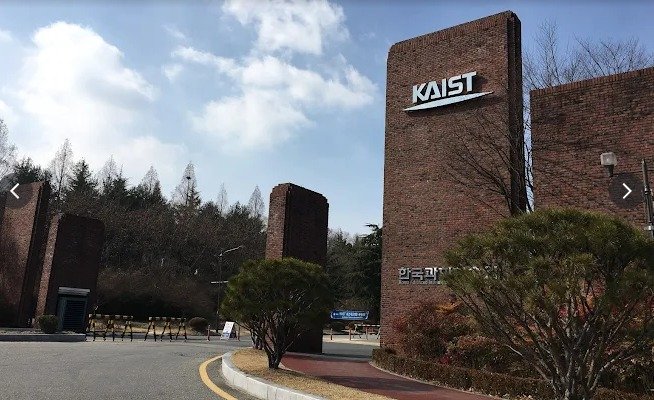
EduAsiaNews, Daejeon — Researchers at the Korea Advanced Institute of Science and Technology (KAIST) have successfully developed the world’s first artificial intelligence semiconductor capable of learning a user’s speech patterns, preferences, and emotions in real time. The chip, dubbed “SoulMate,” is a personalized large language model accelerator designed to evolve according to each user’s unique characteristics. The breakthrough has been hailed as a leap toward the era of hyper-personal AI, surpassing the “AI for everyone” concept that has long dominated the technology industry.
At the core of SoulMate’s technology is its on-device AI capability, which processes data directly within the device without relying on external servers or cloud computing infrastructure. The research team, led by Professor Yoo Hoi-jun of KAIST’s Graduate School of AI Semiconductor, implemented two key technologies directly into the semiconductor: Retrieval-Augmented Generation (RAG), which produces tailored responses based on stored conversation history, and Low-Rank Adaptation (LoRA), which enables the chip to learn instantly by reflecting user feedback. Through the combination of both technologies, SoulMate is capable of responding to users within 0.2 seconds while simultaneously continuing to learn.
Another standout feature of the innovation is its remarkably low power consumption. The semiconductor is able to perform complex learning and inference tasks simultaneously at an ultralow power draw of just 9.8 milliwatts, approximately 1/500th of the power consumed by a typical smartphone processor, allowing it to operate on mobile devices without draining the battery.
SoulMate is also equipped with a “Security-Complete AI” architecture, in which all personal data is processed within the device and never transmitted to external servers, fundamentally eliminating the risk of personal data leakage. Professor Yoo Hoi-jun stressed that the significance of this research goes far beyond a mere technical innovation. “This research lays the technological foundation for AI to grow into a true companion for users, by emulating the process through which humans build friendships with one another,” said Yoo. “The AI of the future will go beyond being a simple tool, to become like a ‘best friend’ that understands its users most deeply, anytime and anywhere, while fully protecting their privacy.” The paper, which features doctoral student Hong Sung-yeon as lead author, was selected as a Highlight Paper at the prestigious International Solid-State Circuits Conference (ISSCC) in San Francisco last February.
The “SoulMate” AI chip is scheduled for commercialization around 2027 through OnNeuroAI, a startup founded by KAIST academics. The innovation is regarded as a significant milestone for South Korea in the global AI semiconductor race, while also ushering in a new era of AI services that are more personal, private, and energy-efficient. (**)
(Sources: The Korea Herald, KAIST News Center, TechXplore)