



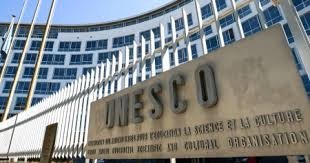
EduAsiaNews, Paris — The United Nations Educational, Scientific and Cultural Organization (UNESCO) officially launched a roadmap document titled Transforming Higher Education: Global Collaboration on Visioning and Action on 12 March 2026 at UNESCO Headquarters in Paris. The document emerged from the third World Higher Education Conference (WHEC) and a series of consultations involving more than 15,000 participants, 250 sessions, 1,500 contributions, and 250 knowledge products from across the globe. The launch marks a new chapter in the global effort to reform higher education institutions to be more adaptive in facing the challenges of the 21st century.
The UNESCO roadmap affirms that the number of students worldwide has surpassed 269 million, spread across more than 22,000 accredited higher education institutions — a figure more than double the approximately 100 million students recorded in 2000. On average, 43 per cent of the college-age population now participates in higher education, the highest rate ever recorded in history.
Noah Sobe, UNESCO’s Senior Specialist in Higher Education, stressed that the organisation remains committed to a human rights-based approach and regards higher education as a public good, not merely a market commodity.
The document outlines a shared agenda to strengthen the higher education sector’s capacity to contribute to sustainable and inclusive development, with the recognition that higher education itself must continuously evolve in order to fully realise its transformative potential. Seven guiding principles are established as a compass for transformation: commitment to equity and pluralism, academic freedom, critical thinking and creativity, human-centred use of digital technology and artificial intelligence, collaboration and solidarity, sustainability, as well as quality and relevance.
The launch event also served as a global stage for policymakers, higher education leaders, researchers, students, international organisations, and private sector partners to advance knowledge, debate, and action that connects today’s higher education with the opportunities of the future. On that occasion, UNESCO also introduced the Higher Education Policy Observatory, a freely accessible online portal designed to continuously monitor developments in higher education policy worldwide. For UNESCO, the unique value of this document lies in its ability to bring together diverse stakeholders to focus on what can be agreed upon and pursued collectively, from guaranteeing freedom of teaching and research, to fostering international cooperation that is inclusive and equitable. For Indonesia, the direction of transformation outlined by UNESCO is closely aligned with the Kampus Berdampak (Impactful Campus) paradigm currently championed by the Ministry of Higher Education, Science, and Technology, particularly in strengthening integrated Tridharma, problem-based learning, and deepening the linkages between campuses and communities, industries, and local governments to generate tangible impact for national development.(**)
(Sources: UNESCO, WHEC 2022, UNESCO IESALC, Higher Education Strategy Associates (HESA)).