




EduAsiaNews,SEOUL Jan. 26 (Korea Bizwire) — At a university auditorium in Hanoi last October, a single figure electrified the room: 900 million dong — equivalent to roughly US$50,000. Visiting professors from Seoul National University (SNU) told students that this was the starting salary for a new hire at Samsung Electronics.
The murmurs that followed reflected a quiet but significant shift underway in South Korea’s higher education strategy.
Confronted with a deepening shortage of engineering talent at home — driven largely by a surge of students opting for medical schools — Seoul National University’s College of Engineering has begun actively recruiting top science and engineering students from Vietnam, one of Southeast Asia’s fastest-growing talent pools.
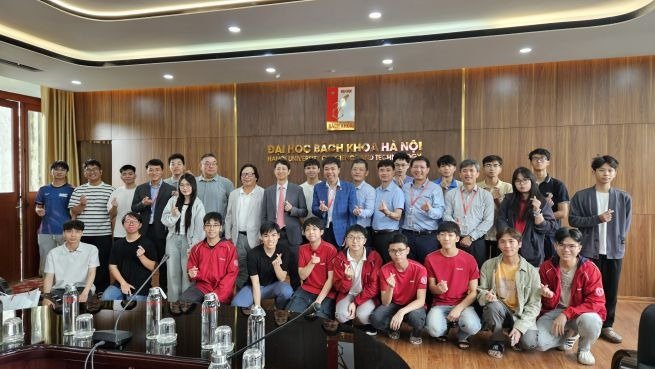
Over the past two years, senior faculty members have made repeated visits to Hanoi and Ho Chi Minh City, holding recruitment briefings at leading institutions such as Hanoi University of Science and Technology, often compared to Korea’s KAIST, according to Korean media reports. The aim has been to encourage high-performing students to pursue undergraduate studies in Seoul.
The recruitment drive is part of SNU’s EXCEL initiative, a program designed to attract exceptionally talented students from developing countries by offering generous scholarships and research funding. Selected foreign students can receive up to 60 million won, or approximately US$45,000, in financial support.
The effort underscores growing concern within South Korea’s academic and industrial sectors that the nation’s engineering talent pipeline is thinning just as demand for advanced technology expertise continues to accelerate. University officials say overseas recruitment has become a matter of necessity rather than ambition.
Interest in the program has been steadily increasing. Attendance at SNU’s engineering briefings in Vietnam roughly doubled last year to around 30 students, despite the program’s highly competitive admissions process. Applicants must pass rigorous document screening and examinations, and successful candidates are required to enroll as first-year students, effectively restarting their undergraduate studies.
To date, only one Vietnamese student has enrolled through the program, but faculty members say momentum is building.
“I think Korea is now being recognized as a serious alternative to Japan in Asia,” said Hwang Won-tae, a professor of mechanical engineering who has led several recruitment visits. “Rising interest in Korean technology and culture has clearly played a role.”
One successful applicant, Phan Thai An, 20, transferred from an automotive engineering program in Hanoi. He said he was drawn by South Korea’s global leadership in semiconductors. “The language barrier is challenging,” he said, “but the intensity of the education makes me feel that I am growing quickly.”
Looking ahead, Seoul National University plans to expand partnerships with overseas institutions through exchange programs, internships, and joint research, while also considering whether to allow transfers for outstanding international students.
“Our goal is to cultivate global engineers who can contribute to Korea’s scientific, technological, and industrial competitiveness,” said Kim Young-oh, dean of the College of Engineering. “To achieve that, we must be more open to the world.”