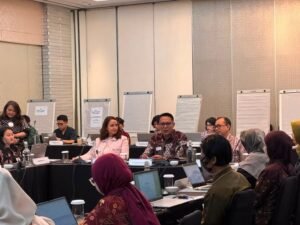





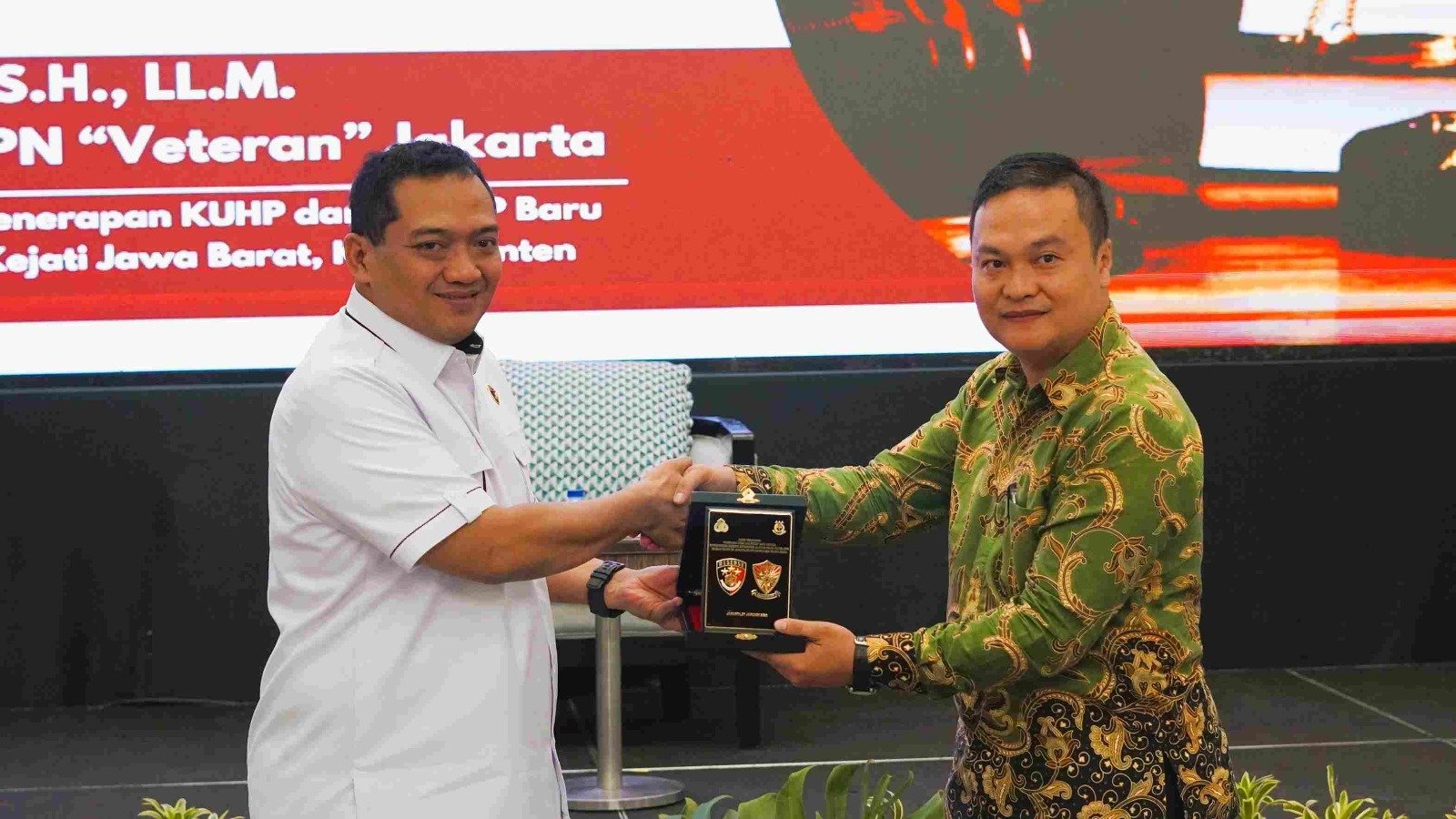
EduAsiaNews, Jakarta — The meeting room at Le Meridien Hotel, Jakarta, on Wednesday morning, January 7, 2026, was filled with law enforcement officers. Around 250 investigators and prosecutors from the Jakarta Metropolitan Police and the High Prosecutor’s Offices of Jakarta, West Java, and Banten sat side by side. They shared a common concern: how to interpret and implement the new Criminal Code (KUHP) and Criminal Procedure Code (KUHAP) in a uniform manner.
At the forum, Dr. Beniharmoni Harefa, S.H., LL.M., Vice Dean for Academic Affairs at the Faculty of Law, Universitas Pembangunan Nasional Veteran Jakarta (UPNVJ), appeared as the main speaker. He outlined the fundamental changes in Indonesia’s national criminal law that came into force on January 2, 2026—the Criminal Code enacted under Law Number 1 of 2023 and the Criminal Procedure Code under Law Number 20 of 2025. For Beniharmoni, the reform is not merely a matter of revising legal provisions, but a reconfiguration of how the state treats its citizens before the law.
The coordination meeting was opened by the Director of General Criminal Investigation of the Jakarta Metropolitan Police, Senior Commissioner Dr. Iman Imanuddin, together with the Assistant for General Crimes of the Jakarta High Prosecutor’s Office, Dr. Safrianto Zuriat Putra, and the Assistant for General Crimes of the West Java High Prosecutor’s Office, Agus Setiadi. Before the participants, Beniharmoni reminded the audience that the previous Criminal Procedure Code had been in effect for 44 years since its enactment in 1981. Over that period, the legal landscape, technology, and demands for human rights protection have changed dramatically.
He emphasized that the new Criminal Procedure Code was designed to align with the new national Criminal Code while simultaneously strengthening the protection of human rights. The principle of restorative justice now occupies a clearer place, as does the recognition of the rights of witnesses and victims. Vulnerable groups—persons with disabilities, women, and the elderly—are explicitly identified as subjects requiring protection within the criminal justice process.
The reforms also touch the core of everyday legal practice. The role of defense lawyers has been strengthened, the scope of pretrial review expanded, and judicial proceedings are encouraged to make greater use of information technology. In terms of evidence, the new Criminal Procedure Code broadens the types of admissible evidence: not only witness testimony, expert opinions, documents, and statements of the accused, but also physical evidence, electronic evidence, judges’ observations, and any materials lawfully obtained for the purposes of court proceedings.
In the following session, the discussion was broadened with the participation of the Vice Minister of Law and Human Rights, Prof. Dr. Edward Omar Sharif Hiariej, and Professor of Law at the University of Indonesia, Prof. Dr. Topo Santoso. Both highlighted the challenges of implementation on the ground—ranging from institutional readiness to the potential for differing interpretations among agencies. Cross-institutional coordination, they agreed, is essential to ensure that criminal law reform does not remain merely on paper, but truly delivers fair and humane law enforcement(www.upnvj.ac.id)