




EduAsiaNews, Bekasi City — In a community hall in Bojong Menteng, Rawalumbu, Bekasi City, on Sunday morning, waste was not discussed as a source of complaint. It was framed as an opportunity. The Department of Economics, Faculty of Economics and Business, Universitas Indonesia (UI), together with the Alamanda Sejahtera Waste Bank, chose a quiet yet strategic path: educating housewives so that household waste no longer ends up as a burden on the city, but instead becomes a source of economic value.
Bekasi is indeed grappling with a classic urban challenge. Data from the National Waste Management Information System show that in 2024 the city generated more than 614,000 tons of waste. Nationally, more than half of all waste comes from households. This figure underscores a clear point: solutions to the waste problem cannot rely solely on landfills or government policy; they must begin in kitchens and backyards.
From this awareness, UI launched the Social Innovation Program on Women’s and Housewives’ Participation in Early Waste Sorting through a circular economy approach. The program is the result of cross-faculty collaboration—among FEB, FISIP, and SPPB UI—in partnership with the Alamanda Sejahtera Waste Bank. In the hands of academics and environmental activists, the concept of a circular economy is translated into grounded, everyday practices.
“Housewives play a key role in managing domestic waste and have great potential to support the circular economy,” said Dwini Handayani, a representative of the UI academic community. According to her, education on proper waste management is not merely about cleanliness, but also a gateway to sustainable, waste-based economic empowerment.
Enthusiasm came from local residents. The head of RW 02 Bojong Menteng, Dain Santoso, described women’s involvement as a crucial foundation for environmental management. “Women play a central role in the household, from education to building environmental awareness. These practices can also spark small-scale business ideas from waste,” he said. In this context, waste is no longer synonymous with leftovers, but with raw materials.
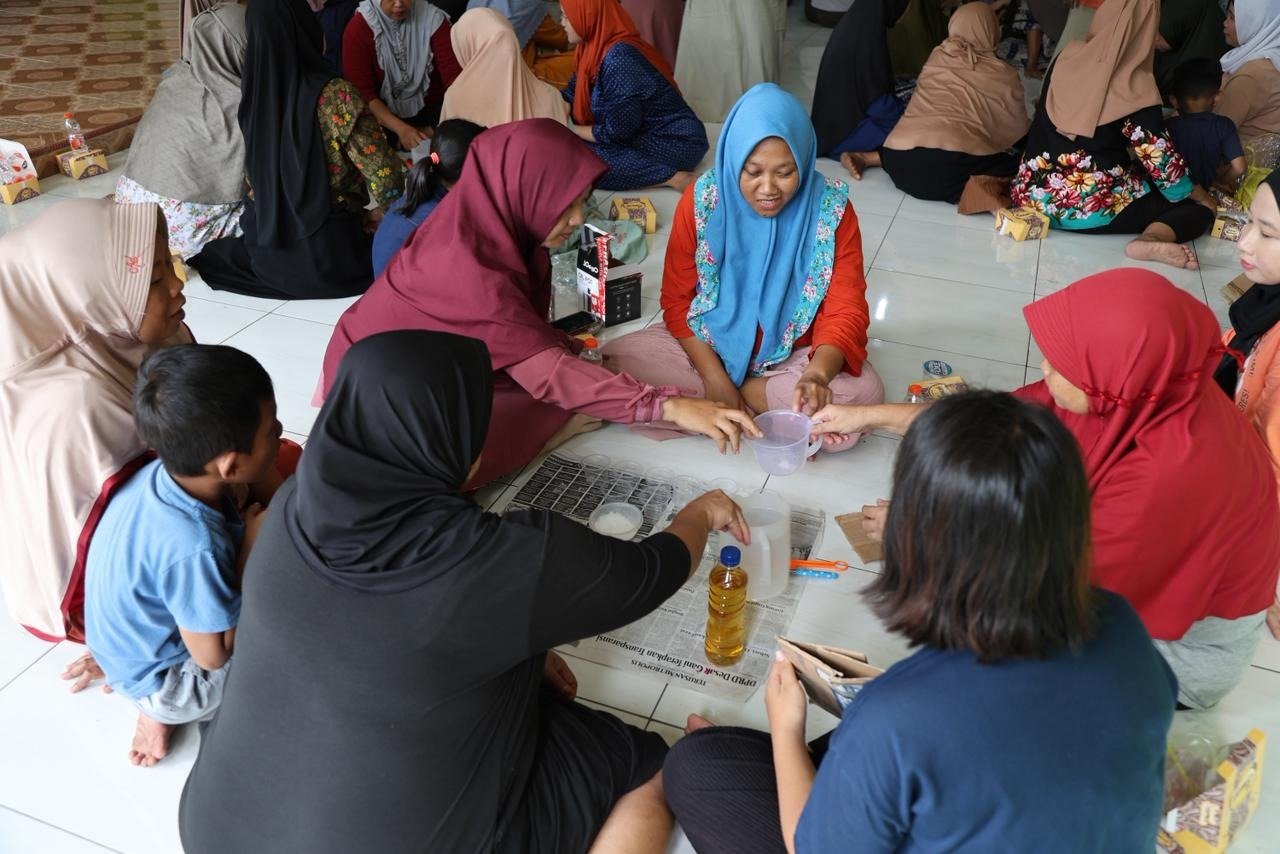
The program’s activities were designed to be practical and applicable: assistance in establishing a waste bank unit, processing used cooking oil into aromatic candles, weaving sachet packaging into handicrafts, and mentoring on branding recycled products. Beyond production, the program also addressed marketing strategies and regulatory advocacy with relevant stakeholders. “Through this training, housewives can save recyclable waste, generate income from household waste, and gain other economic benefits,” explained Apriliawati, Chair of the Alamanda Sejahtera Waste Bank.
In Bojong Menteng, this small initiative reflects a larger agenda. The community service program aligns with the Sustainable Development Goals: Gender Equality (SDG 5), Decent Work and Economic Growth (SDG 8), and Responsible Consumption and Production (SDG 12). With funding support from UI and PT Bumi Resources Minerals Tbk., as well as facilities and manpower from the Alamanda Sejahtera Waste Bank, the first steps have now been taken—from households, from mothers, and from waste given new meaning. (**)